

Which Appliances Need Testing in Your Workplace?

A kettle in the staff kitchen, a laptop charger under a desk and an extension lead in a meeting room can all look harmless. Yet each is a portable electrical appliance that may develop a fault through everyday use. Knowing which appliances need testing helps you manage electrical safety properly, without testing items unnecessarily or creating disruption for your team.
For businesses, landlords and organisations, PAT testing is a practical way to support your wider duty to keep electrical equipment safe. It combines visual inspection with appropriate electrical checks, clear appliance labels and records you can refer to when an insurer, auditor or internal safety review asks for evidence.
What counts as a portable appliance?
A portable appliance is generally any electrical item that is connected to the mains supply by a plug and can be moved or disconnected without altering the fixed wiring. It does not have to be small enough to carry easily. A fridge, photocopier or larger piece of workshop equipment may still fall within a sensible testing programme if it plugs into a socket outlet.
In a typical workplace, appliances needing attention often include:
computers, monitors, docking stations and chargers
kettles, microwaves, coffee machines and fridge freezers
extension leads, multiway adaptors and power supplies
printers, shredders, projectors and other office equipment
hand tools, cleaning equipment and portable heaters
equipment brought in by staff, contractors or visitors
The plug is not the only deciding factor. Equipment may be Class I or Class II, used occasionally or all day, kept in a clean office or exposed to a workshop environment. These differences affect the checks required and how often they should be carried out.
Which appliances need testing most often?
The short answer is that the higher the risk, the more regularly an item should be checked. There is no single legal rule that says every appliance must be PAT tested annually. Employers and duty holders should instead use a risk-based approach, considering the type of equipment, how it is used, who uses it and the environment it is used in.
A desktop computer in a quiet office is usually at relatively low risk. It is rarely moved, its cable is unlikely to be strained, and it is normally used in a clean, dry setting. A formal electrical test may be needed less often, although routine visual checks still matter.
By contrast, a drill used on a building site, an extension lead used in a school hall or a kitchen appliance used repeatedly in a busy communal area deserves closer attention. Cables are more likely to be pulled, plugs may be damaged, and moisture, heat or dust can increase the chance of a fault.
Portable equipment that travels between rooms, sites or vehicles also has a higher chance of damage. This includes maintenance tools, presentation equipment, floor cleaners and loan devices. Frequent handling is often a stronger reason for regular checks than the age of the appliance itself.
Appliances used by the public or vulnerable people
Extra care is sensible where equipment is used in public-facing settings or around people who may be less able to spot a problem. Schools, care settings, healthcare practices, charities and rented accommodation can have a wide range of appliances used by different people every day.
In these environments, clear labelling and accessible records make it easier for staff to see whether an item has been checked. They also help the person responsible for the premises deal quickly with equipment that has failed or is due for review.
Extension leads and adaptors deserve attention
Extension leads, reel leads and multiway adaptors are among the most heavily handled items in many workplaces. They are unplugged, coiled, moved, overloaded or trapped under furniture more often than fixed equipment. A damaged lead can make otherwise sound equipment unsafe.
These items should be included in your testing inventory, along with their attached leads and plugs. Avoid treating them as minor accessories. In many workplaces, they are the equipment most likely to show visible wear.
What PAT testing checks
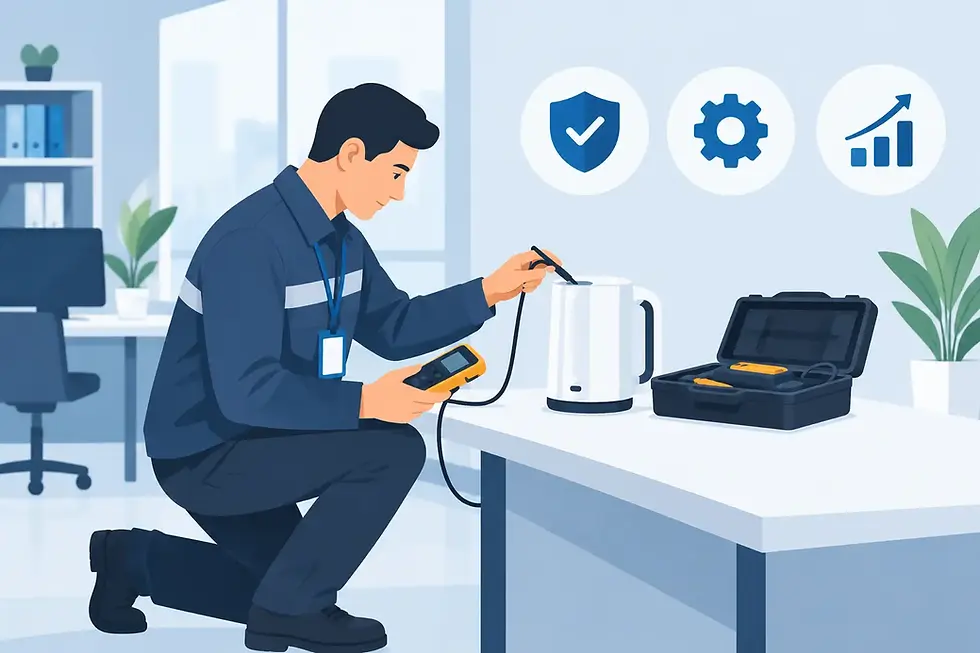
PAT testing does not simply mean plugging equipment into a tester and waiting for a pass result. A competent inspection starts with the obvious signs of damage that staff may otherwise miss: cracked plugs, loose cable grips, worn flexes, damaged casing, incorrect fuses or signs of overheating.
Appropriate electrical tests are then selected for the appliance type. The aim is to identify faults that are not visible, such as issues with earthing or insulation. Not every item receives the same test, and a qualified technician should know which checks are suitable without risking damage to sensitive equipment.
A pass label provides a useful at-a-glance reference, but it is not a guarantee that equipment will remain safe until the next test date. Users should still remove an item from service if they notice damage, heat, burning smells, loose parts or intermittent power.
How often should appliances be tested?
Testing intervals should be based on risk, rather than a blanket timetable. An office may use longer intervals for fixed desktop equipment and shorter intervals for items that are moved regularly. A workshop, kitchen, school or care environment may need more frequent checks because use is heavier or conditions are more demanding.
A sensible programme also includes user checks. Staff do not need technical training to notice a frayed cable or cracked plug, and they should know how to report an issue promptly. Formal visual inspections by a responsible person can sit between professional testing visits where appropriate.
The right interval depends on your premises and equipment. A good PAT testing provider can help you create a proportionate schedule that protects people and gives you useful records, rather than adding unnecessary work.
Do new appliances need testing?
New equipment does not normally require a full PAT test before first use if it has been purchased from a reputable supplier and is visibly undamaged. It should still be checked before being put into service, registered on your equipment list and used in line with the manufacturer’s instructions.
Once it enters daily use, it should be included in your ongoing inspection and testing plan. This is especially useful for workplaces that buy equipment throughout the year, as it prevents items being missed at the next renewal date.
Second-hand equipment is different. Unless you have reliable evidence of its condition and previous checks, it should be inspected and tested before use. The same applies to personal electrical items that employees bring into the workplace, where your policy permits them.
What records should you keep?
The value of PAT testing is not only in finding faults. Clear documentation shows that you have taken reasonable steps to manage electrical safety. This is useful for internal procedures, insurance records, landlord responsibilities and external audits.
Your records should identify the appliance, its location or user, the date of inspection, the result and any action taken following a failure. A detailed, jargon-free report makes this easier to manage than a simple list of pass labels.
If an appliance fails, it should be removed from use until it has been repaired and retested, or replaced. Keeping failed equipment in a cupboard without a clear label can lead to it being used again by mistake. Good labelling and prompt action prevent that problem.
Keeping testing convenient for your organisation
Electrical safety checks should not bring a busy workplace to a standstill. Before a visit, it helps to identify equipment that is difficult to access, arrange for staff to save work on computers and confirm how appliances in meeting rooms, kitchens or shared spaces will be made available.
For larger sites, testing can be organised in stages or outside normal working hours to reduce interruption. A local provider such as Pax Animi PAT Testing can also provide branded labels, full certification and renewal reminders, helping your records stay organised without placing extra administration on your team.
The practical aim is simple: know what equipment you have, check it at intervals that reflect the real risk, and act quickly when something is not right. That leaves your staff free to get on with their work, with safer appliances and clear evidence behind you.

Comments