
PAT Tester Hire Versus Service - Which Is Best?

When a testing date is approaching, PAT tester hire versus service can look like a simple cost decision. It rarely is. The lower daily hire price may be attractive, but the right option depends on who will carry out the work, how many appliances you have, the condition of your records and how much time your team can realistically spare.
For many businesses, schools, landlords and charities, the priority is not simply getting plugs tested. It is having a clear record of what was checked, what needs attention and when the next review is due, without disrupting a working day. That is where the difference between hiring equipment and using a qualified service becomes clearer.
What PAT testing is intended to achieve
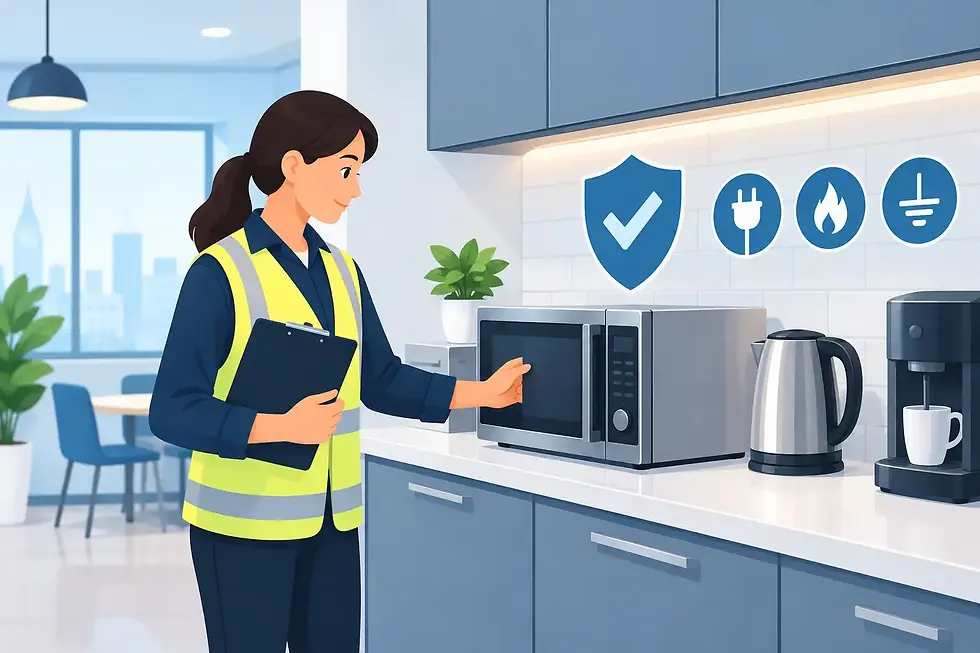
Portable Appliance Testing is part of a sensible electrical safety process. It helps identify damage, wear or faults in portable electrical equipment, leads and plugs before they become a risk. Visual checks matter just as much as the electrical tests, as many faults can be spotted without switching on a tester.
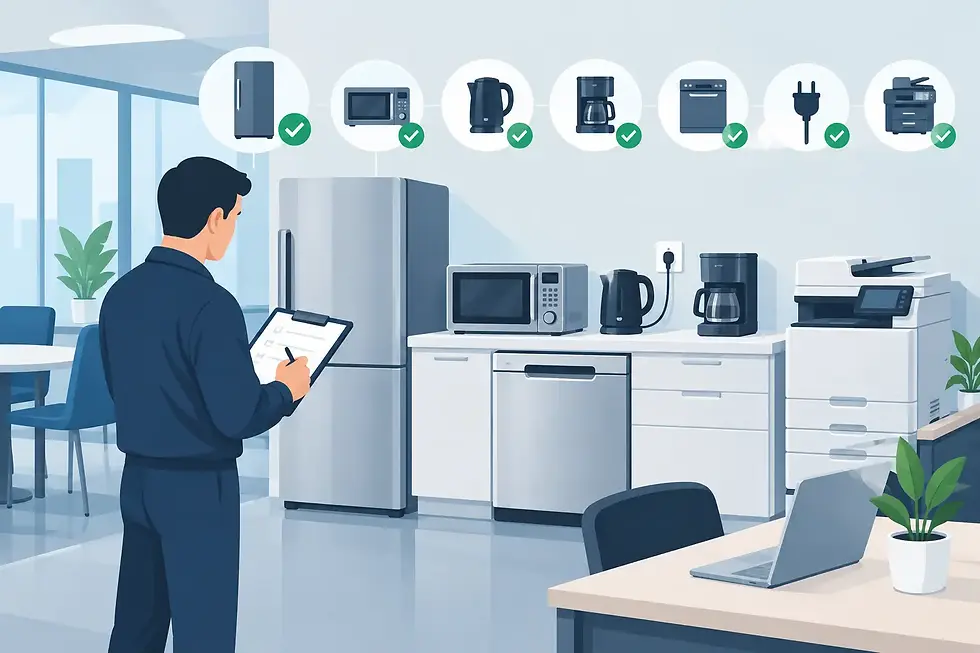
There is no single legal rule that says every appliance must be PAT tested annually. However, employers, landlords and those responsible for premises must keep electrical equipment safe. How often equipment is checked should reflect its type, how it is used and the environment it is used in. A kettle in a quiet office is not exposed to the same risks as power tools in a workshop or equipment used regularly by the public.
Good records make this approach easier to demonstrate. They show that equipment has been considered, inspected and tested where appropriate, and that any failed items were dealt with properly.
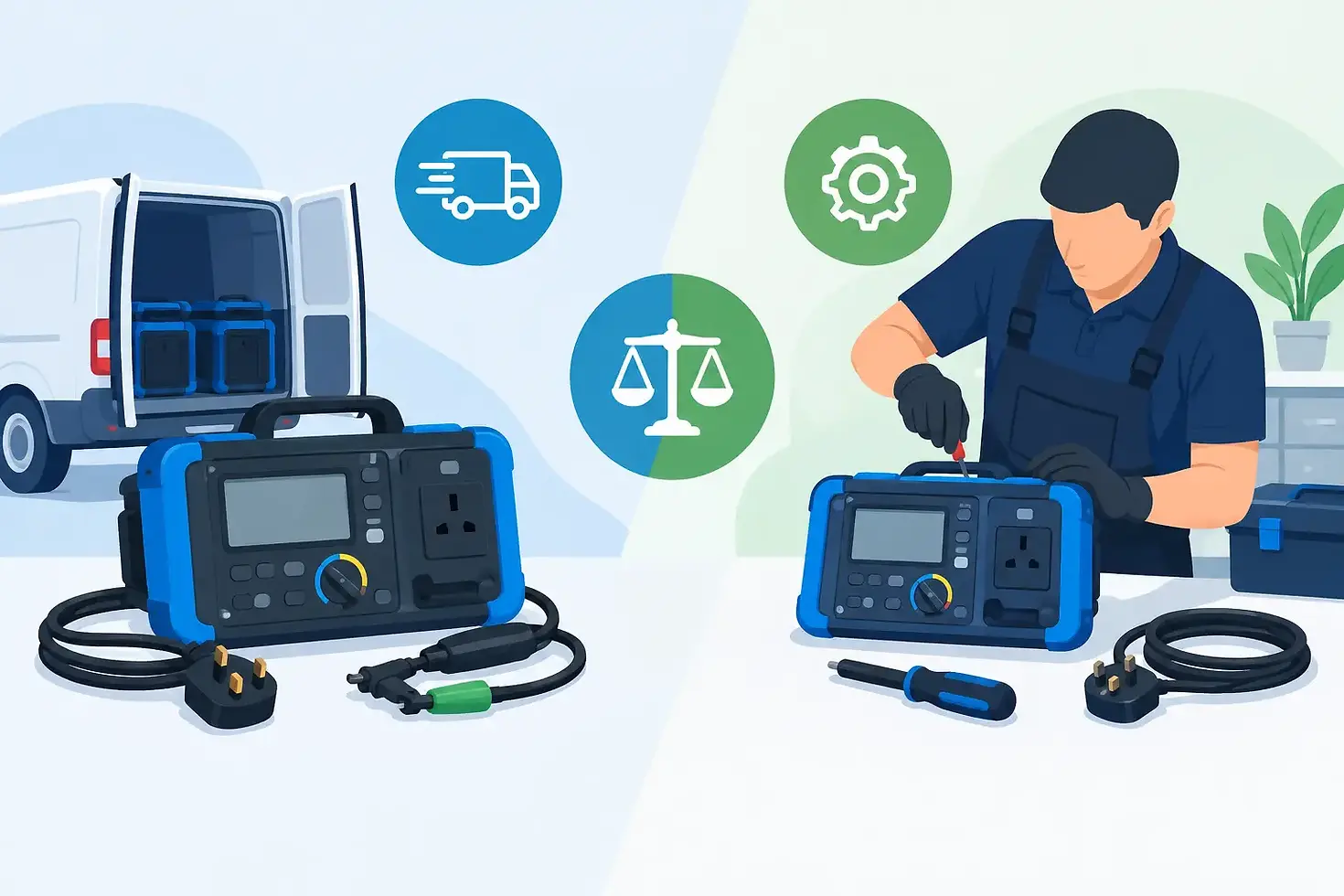
PAT tester hire versus service: the practical difference
Hiring a PAT tester gives you the equipment to perform tests yourself. You or a member of your team will normally be responsible for setting it up, identifying appliances, carrying out visual inspections, interpreting results, labelling items and maintaining the records. Depending on the machine and hire package, you may also need separate leads, adaptors, software or a printer.
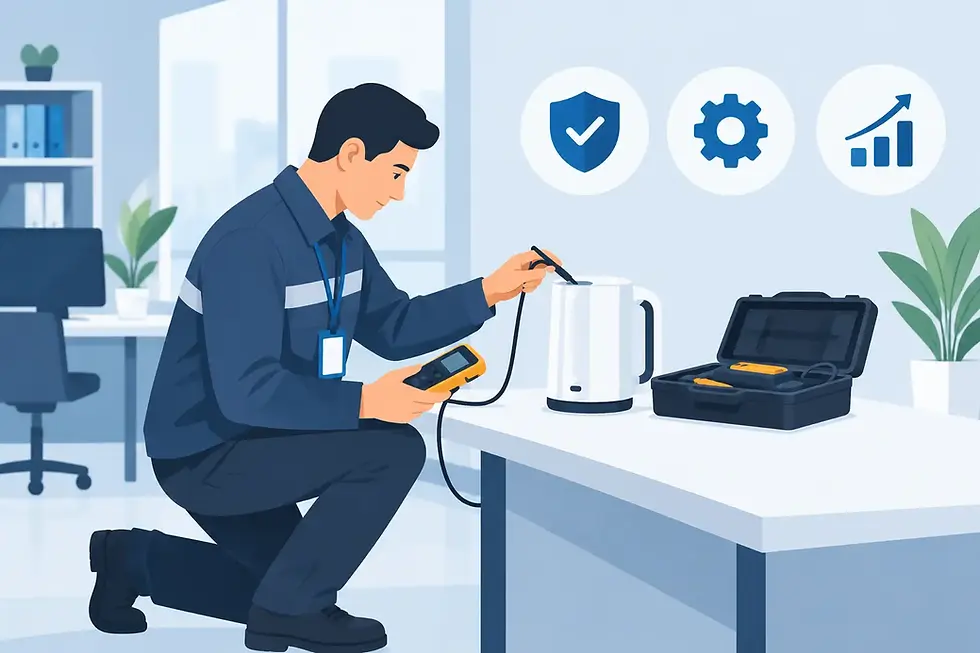
A PAT testing service provides the person as well as the equipment. A qualified technician works through your appliances, applies labels, records pass or fail results and supplies documentation after the visit. If an item fails, you receive a clear explanation of the issue and can decide the appropriate next step, such as removing it from use, replacing a lead or arranging a repair.
Neither option is automatically wrong. PAT tester hire can suit an organisation with an experienced facilities team, a large number of sites or a genuine need to carry out checks regularly in-house. A professional service is usually the more straightforward choice when testing is occasional, staff time is limited or reliable reporting is a priority.
The real cost is more than the hire fee
The daily or weekly price of a hired tester is only one part of the calculation. Before choosing hire, allow for the time needed to collect and return equipment, learn its functions, test every item, label appliances and prepare a usable asset list. If the tester is needed across several departments or locations, coordinating access can take longer than expected.
There is also the cost of getting something wrong. A missed extension lead, an incorrectly recorded result or an appliance left in use after a failed inspection can create unnecessary risk. This is not about making PAT testing sound complicated. It is about recognising that the testing device is only one part of a safe process.
A service quotation is often easier to budget for because it includes the labour, testing equipment, labels and reporting. It also gives managers a defined appointment, a clear outcome and less internal administration. For a small office, clinic, community venue or rented property, this can represent better value than assigning a staff member to the task.
Competence matters more than the machine
Modern PAT testers are designed to be user-friendly, but a clear screen result does not replace competence. The person carrying out the checks needs to understand what to inspect, which test is suitable for the equipment and when a reading suggests that an item should not remain in service.
Some appliances need particular care. IT equipment, extension leads, chargers, portable tools and appliances with different insulation classes may require different test settings or methods. Equipment can also be unsuitable for a standard electrical test without further consideration. Selecting the wrong approach may produce an unreliable result or, in some cases, cause avoidable problems.
With a testing service, this judgement sits with the technician. Your team can point out equipment, provide access and receive the results in plain English. With hire, the responsibility stays in-house. That may be perfectly manageable for trained, confident staff, but it should be a deliberate decision rather than an assumption that anyone can use the tester.
Reporting is not an optional extra
A sticker on a plug is useful for quick identification, but it is not a complete compliance record. If an insurer, auditor, client or internal safety review asks for evidence, you need a report that identifies the equipment, its location or user where relevant, the outcome of testing and any action required.
A professional service should provide a certificate and a clear appliance register. Branded labels can make it easier for staff to see the test status at a glance, while the detailed report gives the person responsible for safety the information they need to manage failures and future checks.
If you hire a tester, make sure you can produce the same quality of records. Ask what reporting system is included, whether results can be downloaded and how you will back up the information. A spreadsheet may be sufficient for a small, well-organised inventory, but only if it is maintained consistently.
Think about disruption to your workplace
The cheapest route can become inconvenient if testing interrupts your busiest hours. In an office, staff may need to pause work while monitors, docking stations and desk equipment are checked. In a school, healthcare setting or customer-facing premises, access and safeguarding need to be planned carefully.
Hiring a tester may spread the work over several days, especially if the person doing it also has their normal role to complete. That can be useful where equipment cannot be made available at once, but it can also leave the job unfinished or records incomplete.
A service provider can usually organise a focused visit, working around your schedule and moving efficiently from area to area. Out-of-hours appointments can be particularly helpful for offices, retail premises and busy practices that want to keep interruption to a minimum. For organisations in Basingstoke, Reading, Fleet and the surrounding area, a local provider can also make repeat visits and renewal planning more convenient.
When hiring a PAT tester makes sense
Hire can be a sensible option when you have a high volume of equipment, experienced people available and a reliable system for asset control. It may also suit organisations that need to test equipment arriving frequently, such as items returned from projects or equipment used at events.
Before committing, be honest about four areas: staff competence, available time, reporting arrangements and responsibility for failed items. If all four are covered, in-house testing can give you flexibility. If one is uncertain, the apparent saving may disappear quickly.
When a PAT testing service is the better choice
A service is often the more practical route when you want the work completed promptly and documented properly without adding pressure to your team. It is particularly useful for smaller organisations, multi-use buildings, landlords managing shared spaces and businesses with no dedicated facilities resource.
The value is not just in the test result. It is in having a qualified person complete the checks, provide understandable records, apply labels and flag concerns clearly. Renewal reminders can also prevent testing dates being forgotten as priorities change through the year.
Pax Animi PAT Testing takes this service-led approach, with qualified testing, straightforward reports and appointment options designed to reduce disruption. A free, no-obligation quotation allows you to compare the full cost against equipment hire before making a decision.
The best choice is the one that leaves you with safe equipment, reliable records and confidence that nothing has been missed. If hire gives you that level of control and competence, it can work well. If you would rather place the testing and paperwork in capable hands, arranging a professional service is often the simpler way to keep electrical safety on track.
Comments