

Appliance Safety for Safer UK Workplaces

A damaged plug behind a desk, a frayed extension lead in a workshop or a kettle with a cracked casing can be easy to overlook. Yet these small faults can create a real risk of electric shock, fire, equipment damage and disruption to your organisation. Effective appliance safety is not about making work more complicated. It is about having sensible checks, clear responsibilities and reliable records that show equipment is being properly maintained.
For businesses, schools, landlords, charities and healthcare practices, a practical approach protects people while making day-to-day compliance easier to manage. The right process should fit around your premises, not bring them to a standstill.
What appliance safety means in the workplace
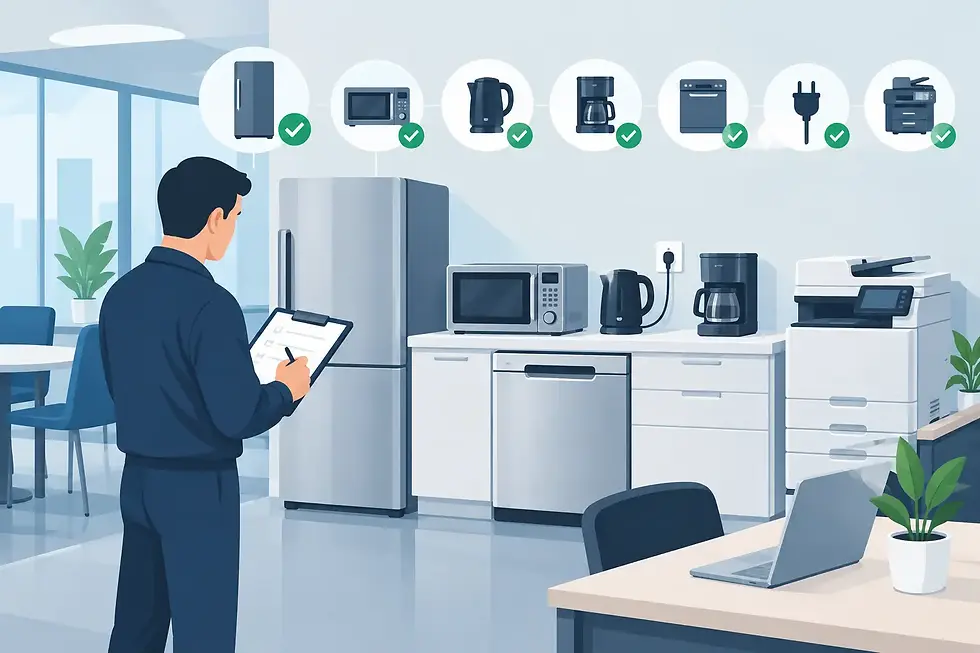
Appliance safety is the routine management of portable electrical equipment to make sure it remains safe to use. Portable appliances include more than laptops and kettles. They can include monitors, chargers, printers, extension leads, power adaptors, hand tools, cleaning equipment, heaters, kitchen appliances and items brought in by staff.
In the UK, employers and duty holders have responsibilities under electrical safety law to maintain electrical systems so far as reasonably practicable to prevent danger. There is no single legal rule stating that every item must receive PAT testing every year. What is required is a suitable maintenance programme based on the equipment, how it is used and the environment it is used in.
That distinction matters. A low-risk office monitor may not need the same attention as a power tool used daily on a construction-related site, or an extension lead used in a busy communal area. A sensible programme focuses effort where the risk is greatest.
The common risks that are easy to miss
Most electrical faults give some warning before they become serious. The challenge is that appliances are often used every day by people who are busy with other tasks. A quick visual check can identify many problems early.
Look out for damaged or loose plugs, cracked casings, exposed wires, taped repairs, overheating, scorch marks and bent pins. Cables trapped under furniture, overloaded adaptors and extension leads linked together also deserve attention. Equipment should be used as intended, in a dry and suitable environment, with the correct charger or power supply.
Staff should feel able to report faults without concern that they are creating extra work. A clear instruction is enough: if an item looks damaged, feels unusually hot, gives a shock or behaves unpredictably, stop using it and report it. The equipment should be taken out of service until it has been checked.
Portable heaters deserve particular care. They can place a heavy load on circuits and become a fire risk if left near combustible materials or covered. They should only be used where permitted by your workplace policy and checked as part of your appliance safety arrangements.
PAT testing is part of the process, not the whole process
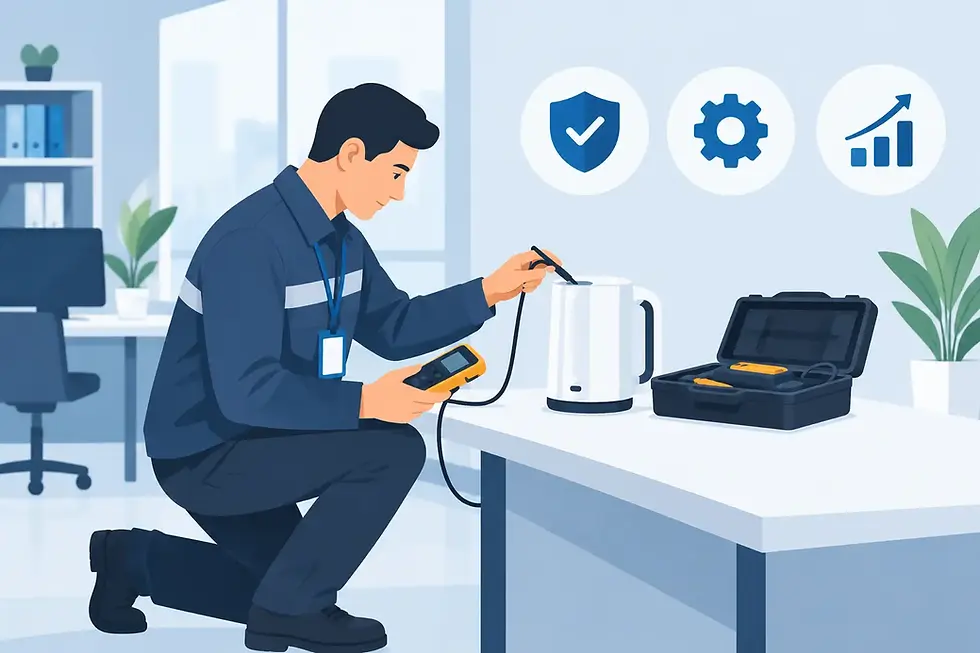
Portable Appliance Testing, commonly called PAT testing, combines visual inspection with appropriate electrical tests. It helps identify faults that cannot be seen, such as issues with earthing, insulation or wiring. A qualified technician can assess appliances efficiently, label them clearly and provide a report showing what has passed, failed or needs attention.
However, PAT testing does not replace everyday care. An appliance can be tested one month and damaged the next through normal use. Regular user checks and formal visual inspections remain valuable, particularly where equipment is moved frequently or used in tougher conditions.
A good maintenance plan usually brings these elements together: user awareness, recorded visual checks, testing at intervals suited to risk, prompt action on defects and orderly documentation. It is the consistency of the process that provides reassurance, rather than a certificate filed away and forgotten.
Choosing sensible testing intervals
Testing frequency depends on several factors. Consider the type of appliance, whether it is handheld or stationary, how often it is moved, the age and condition of the item, and the environment in which it is used.
An office with mostly IT equipment in good condition is generally a lower-risk setting than a workshop, commercial kitchen, school practical room or public venue. Equipment used by many different people, taken off site, or exposed to dust, moisture and physical wear may need more frequent checks.
There is no benefit in applying the same interval to every appliance without considering risk. Equally, leaving equipment unreviewed for years because it appears to work can create avoidable gaps in your safety arrangements. A competent PAT testing provider can help you set a proportionate schedule that is practical for your premises.
Keep clear records without creating more admin
Good records make appliance safety easier to demonstrate during an audit, insurance query or internal review. They also help you identify recurring faults, locate equipment and plan future testing before certificates expire.
Your records should show what was inspected or tested, when the work took place, the result, any action taken and the recommended next review date. Asset details or appliance labels make it easier to match an item to its result, particularly in larger offices, schools or multi-room sites.
Clear reporting matters just as much as the test itself. Technical readings have their place, but the person managing the building also needs a straightforward answer: which appliances can stay in use, which need repair, and which must be removed? Jargon-free reports save time and make it easier to act quickly.
If equipment fails, it should be marked clearly and prevented from being used. Depending on the issue, it may be repaired and retested, replaced, or disposed of safely. Do not rely on a verbal warning alone, especially where several people have access to shared equipment.
Reducing disruption during PAT testing
Many organisations delay testing because they expect it to interrupt staff, lessons, appointments or normal operations. With sensible planning, this need not be the case.
Before testing begins, it helps to identify the rooms, equipment types and any items that cannot be switched off during working hours. Servers, specialist medical equipment, security systems and critical operational machinery may need a separate plan or an out-of-hours appointment. Staff can also be asked to bring chargers and personal work equipment to a central location where appropriate.
For most workplaces, testing can be completed in a structured sequence with minimal interruption. A technician should work carefully around your schedule, keep you informed of any failed items and leave you with the information needed to manage the next steps. Branded labels and renewal reminders can make future compliance even simpler.
When professional support is worth arranging
A small office may be able to manage basic visual checks internally, but professional testing is particularly useful when you have numerous appliances, shared equipment, public-facing areas, higher-risk tools or a need for formal certification. It also provides an independent record that supports your wider health and safety procedures.
For organisations in Basingstoke, Reading, Fleet, Farnborough and surrounding areas, a local PAT testing service can make arranging the work straightforward. Flexible appointments are especially helpful for busy offices, schools, practices and venues that cannot easily pause during the day.
Pax Animi PAT Testing provides qualified testing, clear reports and certification designed to support compliance without unnecessary technical language. The aim is simple: give responsible people a clear picture of their equipment and a manageable plan for keeping it safe.
A few minutes spent reporting a damaged lead or arranging an overdue test can prevent a much bigger problem later. Set a sensible review date, keep your records accessible and make sure everyone knows what to do when an appliance does not look right.
Comments