

How Often Should PAT Testing Be Carried Out?

If you are responsible for workplace equipment, one of the most common questions is simple: how often should PAT testing be carried out? The honest answer is that there is no single fixed rule for every business. Testing frequency depends on the type of appliance, who uses it, where it is used, and how likely it is to become damaged between inspections.
That can sound less helpful than a straight number, but in practice it is good news. It means your PAT testing schedule should match real risk rather than follow a one-size-fits-all timetable. For offices, schools, landlords, workshops and healthcare settings, a sensible plan usually combines regular visual checks with formal testing at intervals that reflect how hard the equipment is used.
How often should PAT testing be carried out in practice?
PAT testing is not set by one universal annual requirement, despite how often that is repeated. The law focuses on maintaining electrical equipment in a safe condition. PAT testing is one way to help you do that, alongside routine checks, record keeping and acting promptly when faults are found.
In practical terms, low-risk equipment in a tidy office may not need the same testing frequency as a kettle in a staff kitchen, a power tool on a building site, or equipment moved daily between rooms. A desktop monitor that stays in one place and is rarely disturbed is less likely to suffer damage than an extension lead that is plugged in, unplugged and dragged around all week.
This is why a good PAT testing programme starts with risk. It asks what the item is, where it is, how often it is handled, and what could go wrong.
What affects PAT testing frequency?
The biggest factor is the environment. Equipment used in clean, dry, low-impact settings generally stays in good condition for longer. Offices are the obvious example. In contrast, harsher environments such as workshops, kitchens, construction areas, schools or public-facing spaces often create more wear and tear.
The appliance type matters too. Some items are more vulnerable than others. Portable and hand-held equipment tends to face more strain because it is moved, plugged in and unplugged regularly. Chargers, extension leads and kettles often show signs of damage sooner than fixed office IT equipment.
User behaviour also plays a part. If lots of different people use the same item, or if equipment is loaned out, moved between sites or stored poorly, the chance of damage increases. A single appliance can be perfectly safe one month and then develop a damaged plug top, loose cable or cracked casing after rough handling.
Repairs and age should not be overlooked either. Older appliances, or items that have had previous faults, may justify more frequent checks. New equipment in light use may need less attention early on, although it should still be monitored.
Typical PAT testing intervals
There is no substitute for a site-specific assessment, but typical intervals can still be useful as a starting point.
For low-risk offices, many appliances can often be tested every 2 to 4 years, with visual inspections carried out in between. Computers, screens and similar equipment that remain in place and are not handled often usually fall into this category.
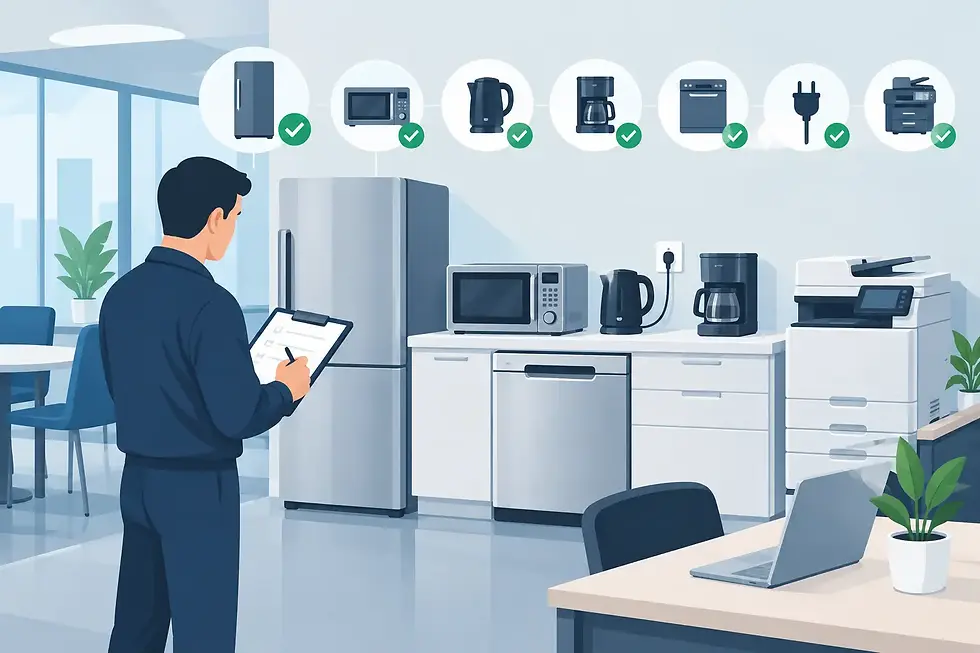
For items that are moved or used more heavily, annual testing is often sensible. This can include kettles, microwave ovens, vacuum cleaners, extension leads and portable heaters. These appliances may not be high-tech, but they are often where damage is first spotted.
In higher-risk settings, testing may need to be more frequent. Hand-held tools, workshop equipment or appliances used in environments where cables can be crushed, pulled or exposed to moisture may need inspection and testing every few months.
So if you are asking how often should PAT testing be carried out, the answer is often somewhere between every few months and every few years, depending on the equipment and the environment.
Visual inspections matter more than many people realise
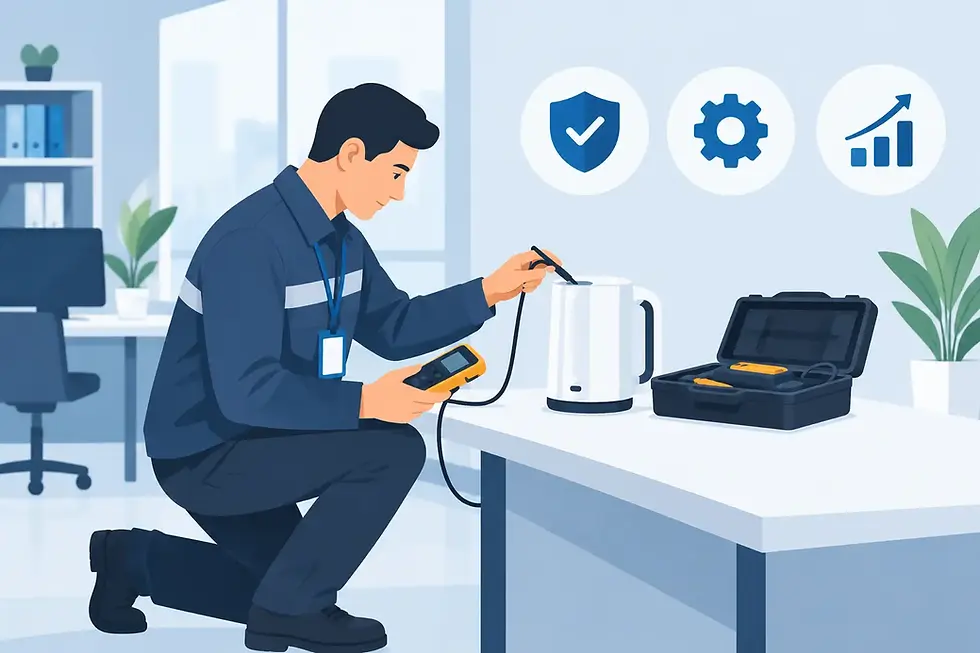
PAT testing is not only about the electrical test itself. In many cases, faults are first picked up by a straightforward visual inspection. A damaged cable sheath, a cracked plug, burn marks, loose connections or signs of overheating can often be spotted without specialist equipment.
That is why regular user checks are so valuable. Staff do not need to be electricians to notice obvious problems. If an appliance looks damaged, smells unusual, has an exposed inner cable, or has a loose plug, it should be taken out of use straight away.
For many businesses, a sensible approach is to combine informal user awareness with periodic formal visual inspections and scheduled PAT testing. This keeps the process proportionate and avoids relying on a single annual visit to catch every issue.
Different workplaces need different schedules
An office with mostly fixed IT equipment will usually need a lighter-touch testing regime than a caretaker's store full of cleaning equipment and extension leads. Schools often have a mix of both, which is why room-by-room planning helps. Classrooms may contain low-risk devices that rarely move, while kitchens, maintenance areas and portable equipment stores need closer attention.
Landlords also need to think about the type of tenancy and what appliances are supplied. In a furnished property, items provided for tenant use should be maintained safely, and regular testing can help support that duty. Shared accommodation and higher-turnover properties may justify shorter intervals because appliances are used by multiple occupants.
Healthcare settings, charities and community buildings often have another challenge: lots of people using the same equipment throughout the day. In those environments, practical scheduling and clear records matter just as much as the testing itself.
Why annual PAT testing is common - but not always necessary
Many organisations choose annual PAT testing because it is easy to manage. It creates a clear routine, keeps records up to date and helps avoid appliances being missed for long periods. From an administration point of view, it is straightforward.
That said, annual testing is not automatically the correct answer for every item. Testing everything every year can be more than you need in some low-risk settings, and it may add unnecessary cost or disruption. On the other hand, a yearly cycle may not be frequent enough for certain high-use or high-risk appliances.
The best approach is usually a balanced one. Keep annual testing where it makes sense, shorten intervals for higher-risk items, and extend them where the risk is genuinely low and the condition history is good.
Records, labels and review dates
A testing schedule only works properly if the records are clear. You should be able to see what was tested, when it was tested, what the result was, and when it should be reviewed again. This is especially useful for audits, insurance queries and internal compliance checks.
Labels on appliances help with day-to-day management, but the paperwork behind them is just as important. A clear report in plain English makes it much easier to act on failures, keep track of retests and show that you are managing electrical safety responsibly.
It is also worth reviewing your schedule rather than setting it once and forgetting it. If a group of appliances repeatedly passes and is rarely moved, the interval may be relaxed. If certain items regularly fail visual inspection, they may need more frequent attention or replacing altogether.
When to bring in a qualified PAT testing provider
If you manage a small number of appliances, the issue is often not just testing frequency but staying organised. Once equipment is spread across offices, kitchens, staff areas, meeting rooms or multiple sites, it becomes much easier for items to be missed.
A qualified PAT testing provider can help you set sensible intervals, identify higher-risk equipment and keep documentation in order without creating more work for your team. That matters even more when you need testing completed with minimal disruption, especially in busy workplaces that cannot afford downtime during core hours.
For businesses around Basingstoke and the wider area, a practical service should make compliance feel straightforward rather than technical. Good PAT testing is not about turning a simple requirement into a complicated one. It is about testing the right equipment at the right time, keeping accurate records and giving you confidence that your appliances are safe to use.
If you are unsure where your own schedule should start, the most useful question is not whether every item needs testing every year. It is whether your current approach reflects the real level of risk in your workplace.
Comments