

What a Business PAT Testing Report Should Show

When an insurer, auditor or senior manager asks for proof that portable electrical equipment has been checked, a business PAT testing report is the document that turns a completed visit into a clear safety record. It should show what was tested, what passed, what failed and what action is needed - without leaving you to decipher technical jargon.
For offices, schools, landlords, workshops, healthcare practices and charities, the report is not simply paperwork to file away. It helps the person responsible for the premises make sensible decisions, keep equipment safe to use and demonstrate that electrical safety is being managed properly.
What is a business PAT testing report?
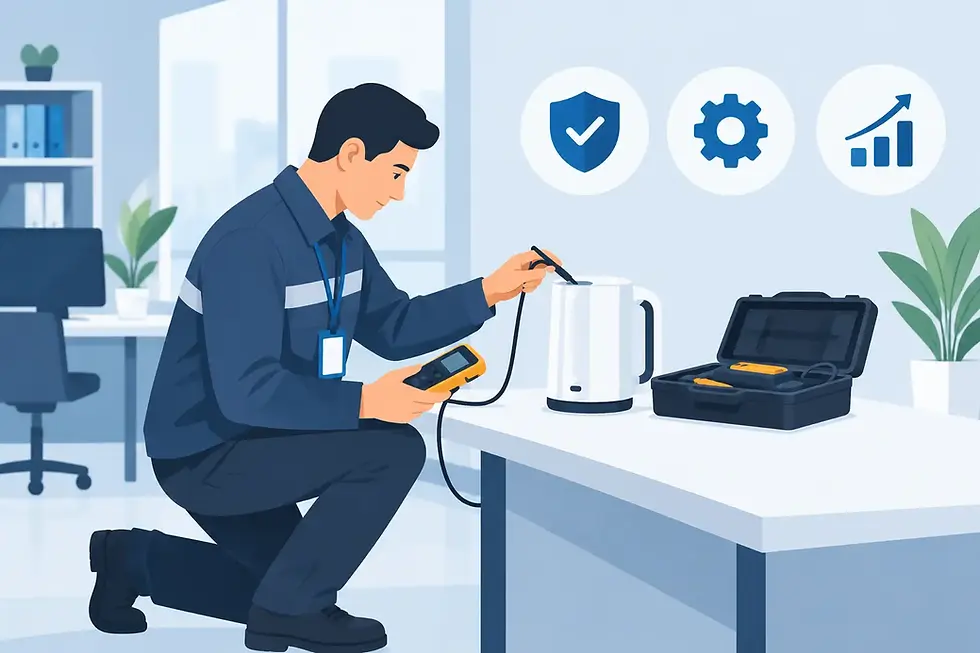
A PAT testing report is the written record produced after portable appliances have been inspected and tested. Portable Appliance Testing usually includes a visual inspection, appropriate electrical tests and appliance labelling. The exact tests depend on the type of appliance, its construction and the environment where it is used.
The report brings those results together in one place. Rather than relying on memory, loose labels or an old spreadsheet, you have an itemised record of your equipment and its status at the time of testing.
This matters because there is no single legal rule stating that every appliance must be PAT tested every year. Employers, landlords and duty holders do, however, have responsibilities to maintain electrical equipment safely. A documented, risk-based testing programme is a practical way to support those responsibilities.
The information your PAT report should include
A useful report should be easy to check quickly while still containing enough detail for an audit, insurance query or internal safety review. Every tested item should be identifiable, usually through an appliance description, asset number or test label reference.
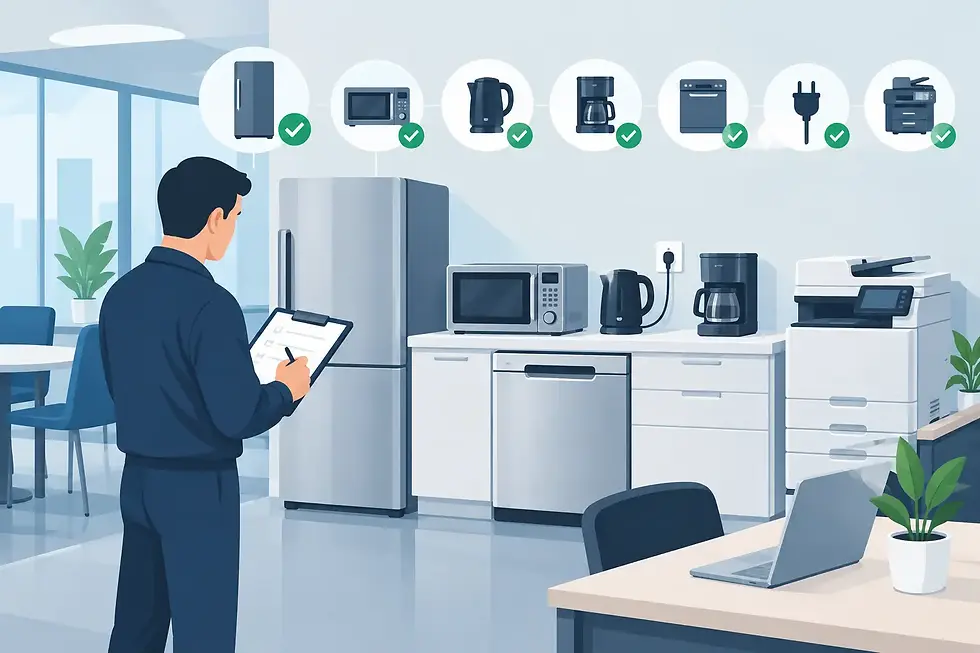
You should expect to see the appliance type, location and result. For example, a report might identify a kettle in the staff kitchen, a monitor at a particular desk or a power tool in a workshop. This makes it much easier to find an item later, particularly where a site has dozens or hundreds of appliances.
The report should also record the test date and the person or company completing the work. Where relevant, it may show the electrical measurements taken, such as earth continuity, insulation resistance or lead polarity. These figures can be useful, but they should not be the only information you receive. A clear pass or fail result and plain-English notes are what most businesses need to act on promptly.
A complete record will normally include:
the customer and site details;
a unique reference for each appliance;
the make, description or appliance class where available;
the room, department or stated location;
pass, fail or visual-inspection result;
the test date and recommended retest date; and
notes explaining faults, restrictions or required action.
Branded pass labels on appliances support the report by making the current status visible on site. They are helpful for staff and visitors, but the report remains the fuller record. Labels can fade, be removed or become hard to read over time; the document provides the detail behind them.
Why failed items need clear explanations
A failed result should never leave you guessing. Some failures are straightforward, such as a damaged plug, exposed cable, cracked casing or unsuitable extension lead. Others relate to an electrical measurement that indicates the appliance should not remain in service until it has been repaired, replaced or assessed.
The report should identify the failed item clearly and state why it failed. It should also make the immediate action obvious: remove it from use, arrange a repair, replace it, or investigate further. This is particularly valuable in busy workplaces, where a failed item can otherwise find its way back into use by mistake.
Not every issue has the same urgency. A visibly damaged lead on a shared office heater calls for swift removal from service. An item that could not be tested because it was unavailable or disconnected needs a different response: it should be located and checked before being relied upon. Good reporting distinguishes between these situations rather than treating every exception as identical.
Reports support compliance, but they do not replace day-to-day checks
A PAT report is strong evidence that your equipment was checked on a particular date. It is not a guarantee that an appliance will stay safe indefinitely. Cables can be damaged after testing, plugs can be changed and equipment can be moved into harsher environments.
That is why routine user checks still matter. Staff do not need technical training to spot obvious concerns, such as frayed leads, scorch marks, loose plugs, cracked covers or equipment that becomes unusually hot. A simple process for reporting these issues can prevent a small fault becoming a larger safety problem.
The right retest interval also depends on how equipment is used. A computer in a quiet office generally faces less wear than power tools, cleaning equipment, hired equipment or appliances used by the public. A qualified tester can help set sensible intervals based on risk, usage and previous results rather than applying the same timetable to every item.
Making the report useful at audit time
The best time to organise PAT records is immediately after testing, not when an audit or insurance request arrives. Keep the report with your wider health and safety documentation and make sure the responsible person can access it if they are away from the office.
It is also worth checking that the number of appliances on the report broadly matches the equipment you expect to have on site. New items, relocated equipment and equipment brought in by staff are easily missed. For multi-room premises, named locations make this check far simpler.
If your organisation has several sites, a clear report for each location helps avoid confusion. It shows where equipment was tested and prevents one building's certificate being mistaken for another's. This is especially useful for landlords, schools, charities and businesses with satellite offices.
Digital reports are often the most convenient option because they can be stored securely, shared internally and retrieved when needed. Paper copies may still suit some organisations, but they should be filed where they can be found easily. The format matters less than having a complete, legible record that is kept current.
Questions to ask your PAT testing provider
Before booking, ask what documentation will be supplied and whether failed items will be explained in plain language. You should also check whether appliance labels are included, whether the provider is insured and how quickly the final report and certificate will be issued.
Convenience matters as much as the paperwork. Testing during a busy working day can be disruptive in an office, practice, school or customer-facing premises. An out-of-hours appointment may be a better fit where equipment needs to remain available, or where you want the work completed with minimal interruption.
For organisations in Basingstoke, Reading, Fleet, Farnborough and nearby areas, a local provider can also make renewals and follow-up testing easier to manage. A reminder before the next due date helps prevent compliance records from becoming an urgent administrative task.
Keep your records practical, current and easy to use
A good report should make your next step clear, whether that means filing a pass record, removing a failed appliance or arranging a retest for equipment that was unavailable. It should reduce administration rather than create more of it.
Pax Animi PAT Testing provides qualified testing, clear reporting and certification designed to give businesses a straightforward record for safety procedures, insurance and audits. With flexible appointments and jargon-free results, the process can fit around your working day rather than disrupting it.
If your current PAT records are incomplete, difficult to understand or overdue for review, dealing with them now gives you more choice and less pressure later. A clear report is one small piece of paperwork that can make everyday electrical safety much easier to manage.
Comments