

How Often Should PAT Testing Be Done?

If you are asking how often should pat testing be done, the honest answer is not simply once a year. Some businesses do need annual testing. Others may need checks more often, while some low-risk items can be tested less frequently. What matters is the type of equipment, how it is used, who uses it, and the environment it is used in.
That is where many businesses get stuck. They want a clear rule, but PAT testing frequency is based on risk rather than a single legal timetable. The good news is that this does not have to be complicated. With the right approach, you can keep equipment safe, records up to date, and disruption to a minimum.
How often should PAT testing be done in the workplace?
There is no law that says every portable appliance must be PAT tested every 12 months. What the law does require is that electrical equipment is maintained in a safe condition. PAT testing is one practical way of showing that you are doing that.
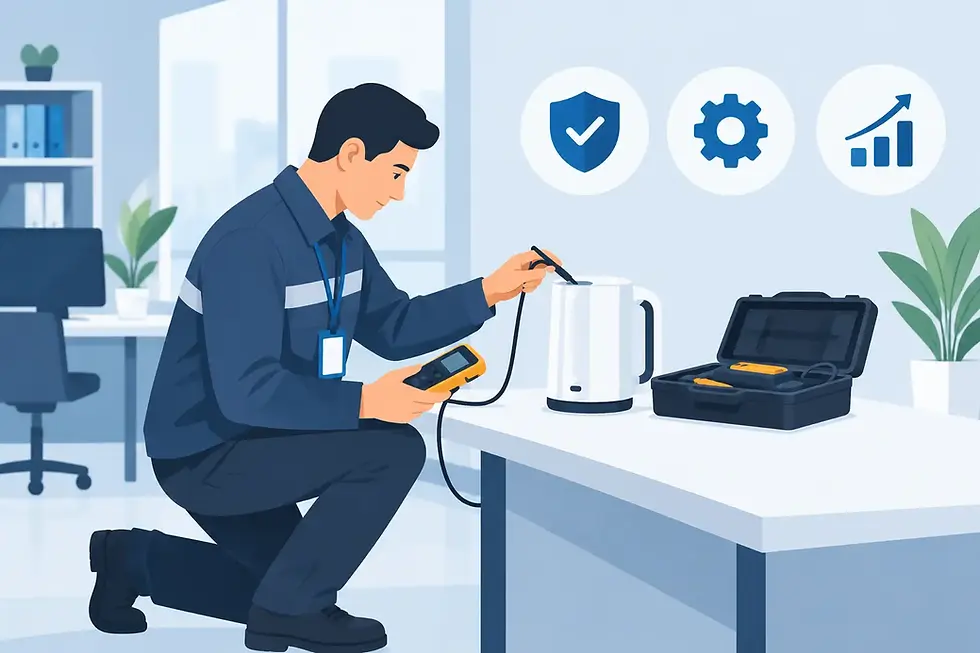
In most workplaces, testing intervals are decided through a simple risk assessment. A kettle in a busy staff kitchen is not exposed to the same wear as a computer monitor that never moves from a desk. Equally, a power tool on a building site faces much harsher conditions than a printer in a small office.
This is why a fixed annual schedule for everything can be either too much or not enough. It may create unnecessary cost for low-risk equipment, or it may leave higher-risk items unchecked for too long.
What affects PAT testing frequency?
The main factors are fairly straightforward. One is the type of appliance. Another is whether it is portable, movable, handheld, or fixed in place. The environment also matters. Equipment used in a clean, dry office will usually present less risk than equipment used in workshops, schools, kitchens, healthcare settings, or public areas.
User behaviour also plays a part. If appliances are handled frequently by different people, moved around often, or used by the public, the likelihood of damage is higher. In contrast, equipment used by trained staff in a controlled environment may need less frequent formal testing.
The age and condition of the appliance can also affect the schedule. Older equipment, or items with a history of faults, may need closer attention. Newer appliances are not automatically risk-free, but they may not need immediate formal PAT testing if there is a sensible inspection process in place.
Typical PAT testing intervals
As a guide, many low-risk office items can often be tested less frequently than once a year, especially if they are backed up by regular visual checks. Desktop computers, monitors and similar IT equipment in a standard office are often lower risk because they are rarely moved and usually used in a dry environment.
On the other hand, items like kettles, extension leads, chargers, cleaning equipment, heaters and portable fans may justify more frequent attention because they are moved, plugged and unplugged regularly, or used in areas where damage is more likely.
Handheld and portable equipment used in workshops, warehouses or outdoor settings usually needs the most frequent testing. The same applies where equipment is exposed to heat, dust, moisture, impact, or heavy daily use.
That means two businesses of similar size may have very different testing needs. A solicitor's office and a repair workshop should not be working to the same schedule just because both have twenty appliances on site.
Visual inspections matter more than many people realise
One of the most effective parts of any electrical safety routine is the basic visual check. In many cases, faults can be spotted without specialist instruments. Damaged plugs, frayed leads, burn marks, loose connections and signs of overheating are all warning signs.
For some equipment, regular visual inspection is just as important as formal PAT testing, and in between test dates it is often the first line of defence. Staff do not need to be electricians to notice that a cable has been trapped, a plug is cracked, or an extension lead looks worn.
This is especially useful in offices, schools, surgeries and other busy workplaces where equipment is used daily. A sensible system for reporting obvious damage can reduce risk and help you decide whether an item needs to be removed from use before the next scheduled test.
Different settings, different answers
Offices and low-risk workplaces
In a typical office, many appliances are low risk. Computers, monitors and desk phones often stay in one place, are used in clean conditions, and are unlikely to suffer rough handling. In these cases, formal PAT testing may be needed less often than people expect, provided visual checks and record keeping are in place.
That said, kitchens and shared areas inside offices often contain the items that cause more concern. Kettles, microwaves and extension leads are used more heavily and often deserve shorter intervals.
Schools, charities and public buildings
These settings usually contain a wider mix of equipment, with more users and more movement. Items may be shared between rooms, handled by staff and visitors, or used by children and volunteers. That can increase wear and make a stronger testing routine sensible.
Landlords and rental properties
For landlords, the exact schedule depends on the type of tenancy and the appliances provided. If you supply electrical items, it is sensible to have them inspected and tested at suitable intervals and to keep clear records. The need is often greater in higher-turnover or furnished properties where appliances see regular use by different occupants.
Workshops, trades and higher-risk environments
This is where more frequent PAT testing is often justified. Portable tools, extension leads and site equipment face a much greater chance of damage, and a more regular schedule is usually the safest option.
Why annual PAT testing became the default
A lot of people assume PAT testing must be annual because that is the schedule they have always been given. In some cases, yearly testing is a sensible and convenient baseline. It is easy to remember, easy to budget for, and helps keep paperwork current.
But convenience is not the same as a legal rule. Annual testing may be appropriate for many businesses, particularly where there is a mixed range of appliances and no appetite for a more tailored schedule. It is often a practical choice rather than a mandatory one.
For some organisations, that is exactly the right balance. For others, a risk-based plan is a better fit and may avoid unnecessary testing while still maintaining good standards.
Staying compliant without overcomplicating it
The aim is not to create paperwork for its own sake. It is to show that you are taking reasonable steps to keep electrical equipment safe. That means having a clear record of what equipment you have, when it was checked, what the results were, and what action was taken if faults were found.
This is where a qualified PAT testing service can save time. Good reporting should be easy to understand, not loaded with technical language. You should be able to see what passed, what failed, what needs attention, and when you are likely to need the next round of testing.
For busy workplaces, timing matters as well. Out-of-hours appointments, clear appliance labelling and renewal reminders can make compliance much easier to manage, especially if you want to avoid interrupting staff, tenants, pupils or customers.
So, how often should PAT testing be done?
The practical answer is this: as often as your level of risk requires. For some items that may mean every year. For others, it may mean more frequent checks or testing. For low-risk equipment in stable environments, it may mean longer intervals supported by regular visual inspections.
If you are unsure, the safest route is to have your equipment reviewed properly rather than relying on guesswork or copying another business. A sensible testing schedule should reflect your actual workplace, not a generic rule.
For organisations in and around Basingstoke, Reading, Fleet and Farnborough, that usually means looking at what equipment is on site, how often it is used, and how much disruption you can realistically allow for maintenance. Once that is clear, the testing plan becomes much simpler.
A good PAT testing schedule should feel manageable, not burdensome. If it keeps your people safe, your records current and your day running smoothly, it is probably the right one.

Comments