
How to Reduce PAT Testing Disruption at Work

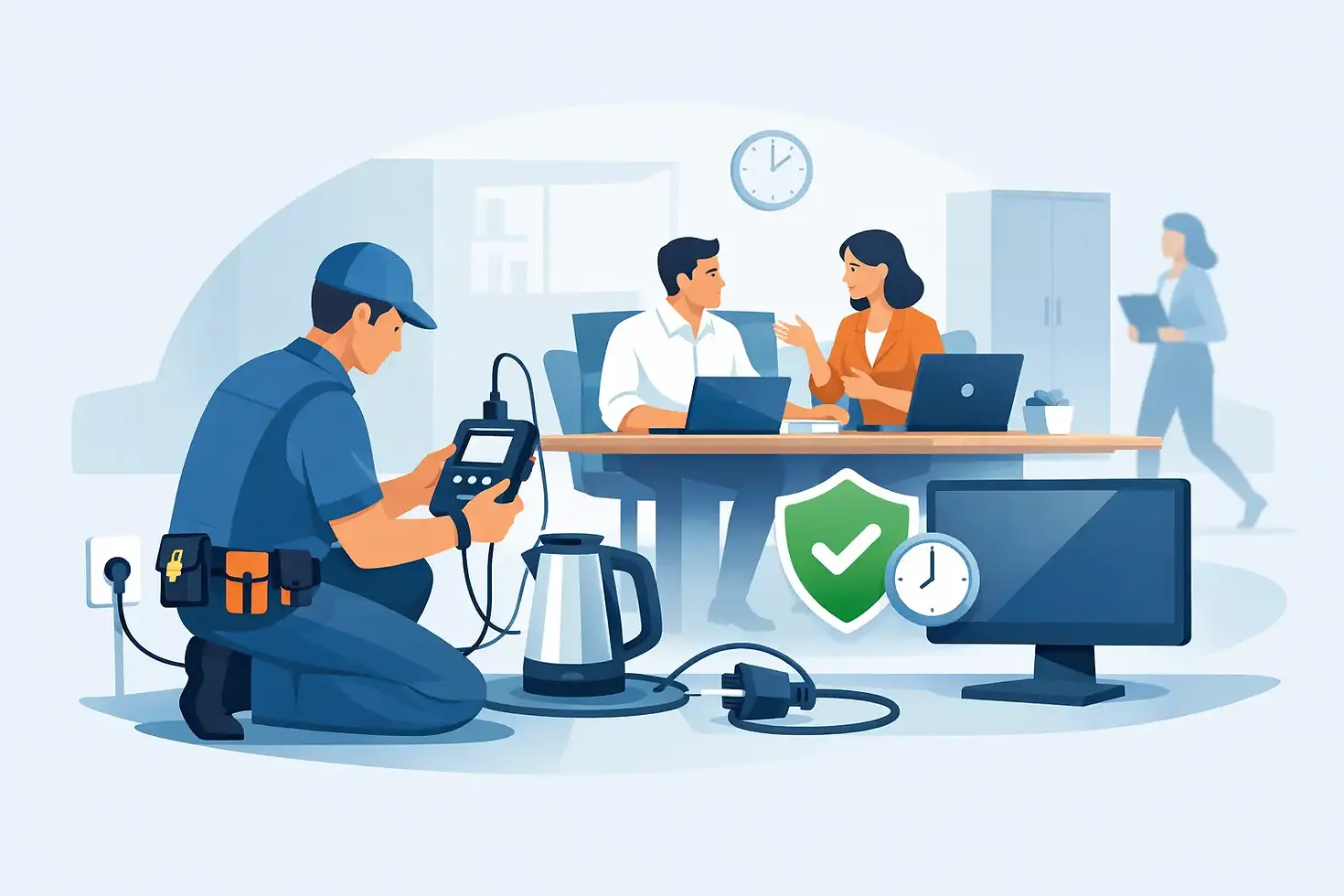
A PAT testing visit should not mean a day of lost work, closed rooms or frustrated staff hunting for chargers. Knowing how to reduce PAT testing disruption starts with treating it as a planned maintenance task, rather than an unexpected interruption. With the right preparation and a flexible testing provider, most workplaces can keep operating normally while their portable equipment is checked.
The aim is simple: make equipment available when it can be tested, keep people informed, and receive clear records afterwards. That protects your staff, supports your insurance and compliance records, and avoids turning electrical safety into an administrative headache.
Plan PAT Testing Around Your Working Day
The biggest source of disruption is often timing. A busy reception, classroom, treatment room or workshop is not always the right place to start at 10am on a weekday. Before booking, consider when your premises are naturally quieter and which areas can be accessed without affecting customers, pupils, patients or staff.
For some businesses, early morning, evening or weekend appointments are the most practical option. Others may prefer testing to take place during normal hours, one department at a time. There is no single best approach. A small office may be happy to have all equipment checked in one visit, while a school or healthcare practice may need a more carefully staged arrangement.
Tell your PAT tester about opening hours, peak periods, access restrictions and any rooms that cannot be disturbed. A qualified, customer-focused provider can then plan the visit around your operation rather than expecting your operation to fit around theirs.
Choose the right testing window
Out-of-hours testing can be especially useful where equipment is in constant use or where visitors are on site throughout the day. It can also reduce the need for staff to stop work simply to make a laptop, kettle or extension lead available.
That said, out-of-hours appointments are not essential for every site. Testing during working hours can be efficient when equipment is grouped, staff know what to expect and there is a nominated contact available. The practical choice depends on the type of premises, the number of appliances and how easily they can be reached.
Prepare Equipment Before the Visit
A little preparation makes a substantial difference. The tester should not have to search beneath every desk, wait for cupboards to be unlocked or identify which lead belongs to which appliance. Preparing in advance means more of the appointment is spent testing, and less is spent locating equipment.
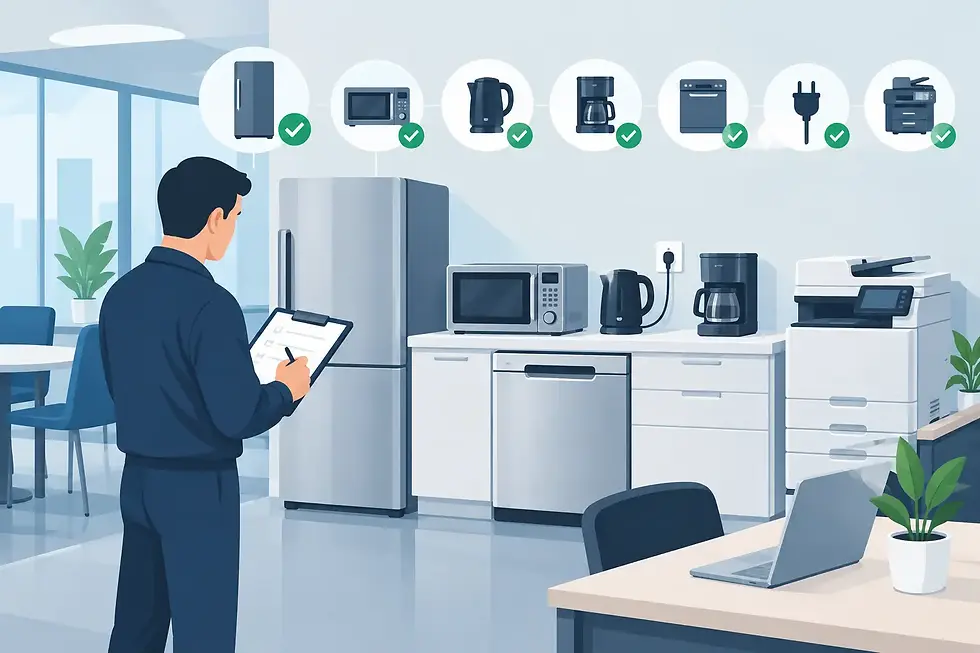
Ask staff to make portable appliances accessible on the day. This may include laptops and chargers, monitors, desk fans, printers, extension leads, mobile phone chargers, kettles, microwaves, cleaning equipment and other movable electrical items. In workshops, kitchens and shared spaces, it is useful to check that equipment is not buried behind stock or stored in locked areas.
A short message beforehand is usually enough. Let people know the date, approximate timing, what they need to leave accessible, and whether they should save work or switch off equipment briefly. Clear communication prevents uncertainty and reduces last-minute queries.
For larger sites, appoint one person in each area to help identify equipment and provide access. They do not need electrical knowledge. They simply need to know the space and be able to point out items that are used regularly, stored away or temporarily off site.
Keep a Simple Equipment Record
You do not need an overly complicated asset system to make PAT testing efficient. A basic list of equipment, its usual location and the responsible department can save time, particularly for organisations with several rooms or multiple sites.
This is most helpful for items that move around. Loan laptops, projectors, vacuum cleaners, power tools and extension leads are easy to miss if they are not normally kept in one place. If an item is away for repair, at an employee's home or being used at another site, make a note of it. It can then be tested later rather than being treated as an unexplained omission.
Previous PAT testing records are useful too. They allow the tester to understand what was checked last time and help you keep a clear history for internal procedures, insurers or an audit. Good reporting should be easy to read, with appliance details, test results and any actions needed set out in plain English.
Avoid testing items that are not portable appliances
Not every electrical item in a building is part of a routine PAT testing programme. Fixed wiring, hard-wired equipment and building electrics require different inspection arrangements. Confusion over what needs testing can create unnecessary work and delay the visit.
If you are unsure whether an item should be included, ask before the appointment. A sensible provider will explain the difference clearly and help you agree a suitable scope of work. This avoids surprises on the day and means your quotation is based on the equipment you genuinely need checked.
Test in Zones, Not All at Once
For offices, schools, charities and larger premises, testing by area is often the easiest way to keep services running. Rather than unplugging every appliance across the building at the same time, arrange the work in manageable zones such as reception, meeting rooms, classrooms, staff areas or individual floors.
This approach gives staff a clear expectation of when their equipment will be needed. It also makes it easier to deal with equipment that cannot be switched off immediately. A receptionist may need their computer until cover is available; a workshop may need a particular tool to finish a job. Zoning allows those practical needs to be accommodated without holding up the whole visit.
The trade-off is that a staged programme can take longer than testing a fully vacant building. However, for active workplaces, the reduced impact on daily operations is often worth it. The best arrangement balances testing efficiency with the way your organisation actually works.
Deal With Failed Items Quickly and Clearly
Most appliances pass when they are in good condition and used appropriately. Where an item does fail, the priority is to make the result clear and deal with it safely. A failed appliance should be removed from use until it has been repaired, replaced or otherwise assessed as safe.
This does not have to cause confusion. Clear labels make the status of each item visible, while a jargon-free report gives the responsible person the information needed to act. If a mobile phone charger, extension lead or kettle is inexpensive to replace, replacement may be quicker than arranging a repair. For specialist or costly equipment, repair may be the sensible route.
It is worth having a small contingency plan for essential equipment. Spare extension leads, chargers or a replacement kettle can prevent minor failures from becoming an operational problem. For critical equipment, identify in advance who can authorise repairs or replacements so decisions are not delayed.
Make Future PAT Testing Easier
The smoothest PAT testing visits are usually the ones that have been repeated with a consistent process. Once you know which areas are busy, who holds keys and where mobile equipment tends to end up, the next appointment becomes much easier to organise.
Keep your certificate and report somewhere accessible, note the suggested renewal date, and set a reminder before it becomes urgent. A provider that offers renewal reminders can take some of that pressure off your team. Branded appliance labels also help staff see what has been tested and when, reducing uncertainty between visits.
If your business is in Basingstoke, Reading, Fleet, Farnborough or the surrounding area, a local service that offers flexible appointments can be particularly useful when plans change or access needs to be arranged around a busy site.
A Calm, Practical Approach Works Best
PAT testing does not need to interrupt the working day more than necessary. The key is to agree a sensible schedule, make appliances accessible, communicate with staff and choose reporting that makes follow-up straightforward.
When testing is planned around your workplace rather than imposed on it, electrical safety becomes a routine part of looking after your premises - not a disruption your team dreads.
Comments