

PAT Testing vs Electrical Inspection

If you are trying to work out pat testing vs electrical inspection, the quickest way to think about it is this: PAT testing checks portable appliances, while an electrical inspection looks at the fixed electrical installation in a building. They are related, but they are not interchangeable, and one does not replace the other.
That distinction matters because many businesses assume they are covered after booking one service, only to find that an insurer, landlord, auditor or health and safety review expects something different. For office managers, landlords, schools and business owners, the real issue is not technical detail. It is knowing what needs to be checked, when, and by whom.
PAT testing vs electrical inspection - what is the difference?
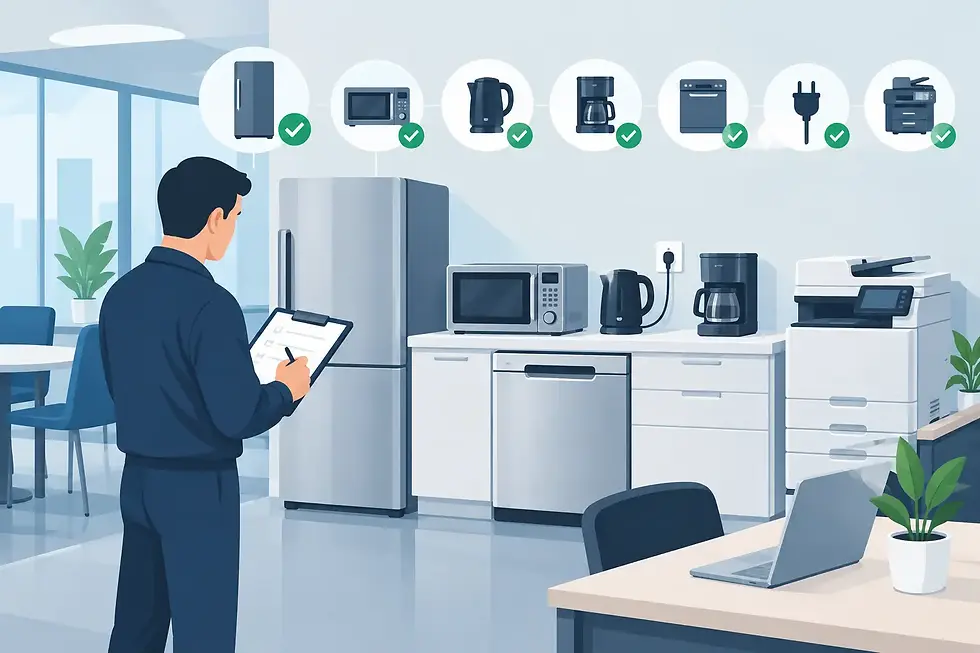
PAT testing focuses on electrical items that can be moved, plugged in, unplugged or relocated during normal use. That includes kettles, monitors, extension leads, desktop computers, chargers, printers, power tools and cleaning equipment. The aim is to confirm that these appliances are safe to continue using.
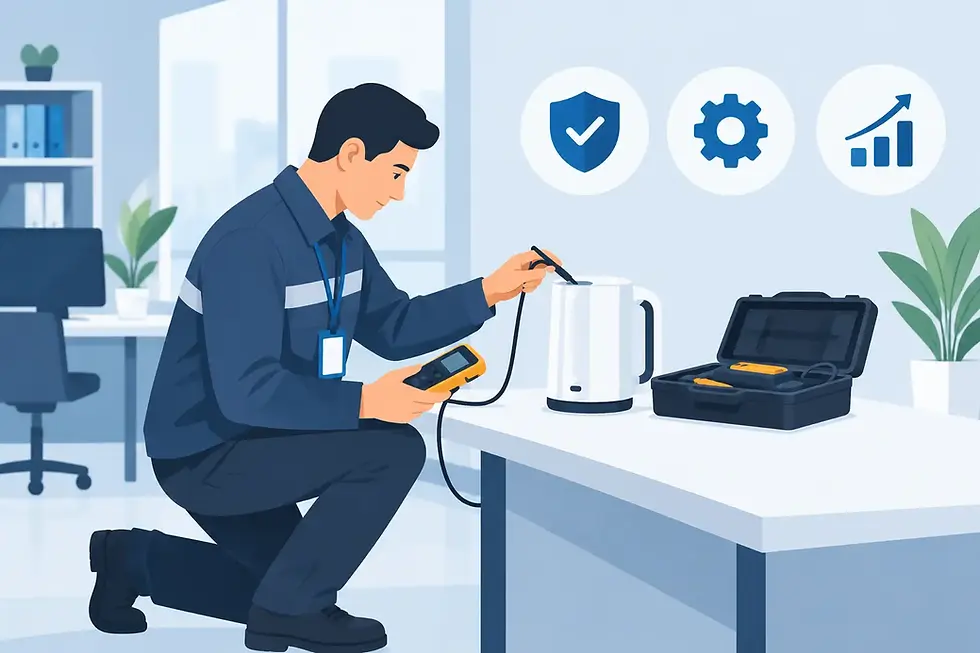
A PAT test usually combines a visual check with electrical testing. The visual side often picks up the most obvious issues - damaged plugs, loose cables, cracked casings, signs of overheating or unsuitable repairs. The electrical tests then help confirm whether the appliance is performing safely.
An electrical inspection is different. This looks at the fixed wiring and permanent parts of the electrical system in the building. It covers things such as consumer units, circuits, sockets, light fittings, earthing and the overall condition of the installation. In many cases, this is recorded through an Electrical Installation Condition Report, often called an EICR.
So if a laptop charger is damaged, that sits in PAT testing territory. If there is a problem with the ring main serving the office sockets, that is an electrical inspection issue.
Why businesses often confuse the two
The confusion is understandable because both services are about electrical safety, both involve inspection and testing, and both may be mentioned in policies, lease documents or risk assessments. On top of that, people often use general phrases like “electrical safety check” without separating appliances from the building wiring.
The problem with that wording is that it can hide gaps. A workplace may have up-to-date PAT records for every portable appliance but still have an overdue fixed wiring inspection. Equally, a building may have a current EICR while portable equipment in day-to-day use has never been checked.
Neither service is more important in every setting. It depends on the risks in that environment and the type of equipment being used.
What PAT testing actually covers
PAT testing is best understood as a practical way to manage the safety of portable electrical equipment. In a typical workplace, that means any appliance staff, visitors or contractors might plug in and use.
For a low-risk office, this may include screens, docking stations, phone chargers and kitchen appliances. In a workshop, school or healthcare setting, there may be a much wider range of higher-risk items, including extension reels, hand dryers, power tools, sterilising equipment or portable heaters.
Not every appliance needs the same approach or the same testing frequency. A kettle in constant daily use in a shared kitchen may warrant more regular attention than a monitor that rarely moves. A construction tool used on site carries a different level of risk from a desk lamp in a reception area.
That is why sensible PAT testing is based on the equipment type, the environment, the class of appliance and how it is used - not just a blanket annual exercise with no thought behind it.
What an electrical inspection covers
An electrical inspection looks at the parts of the system most people do not think about until something goes wrong. It is concerned with the fixed installation that powers the building.
This includes the wiring behind walls, distribution boards, protective devices, socket circuits, lighting circuits and whether the installation is suitable and safe for continued use. The inspection identifies deterioration, damage, non-compliance, overloading risks and faults that may not be obvious from normal day-to-day use.
For landlords and businesses, this type of inspection is often tied more directly to legal duties, tenancy requirements and formal property management processes. It tends to happen less often than PAT testing, but that does not make it optional.
If PAT testing helps manage the safety of equipment people handle, electrical inspection helps confirm that the infrastructure supplying power is itself safe.
Do you need both?
In many workplaces, yes.
If your organisation uses portable appliances and operates from premises with a fixed electrical installation, the sensible answer is usually that both need attention. The exact legal and practical requirements depend on your setting, but from a risk management point of view, they cover different parts of the same safety picture.
A small serviced office with very few appliances may have a lighter PAT testing requirement than a busy school or workshop. A short-term tenant may also have different responsibilities from a building owner. But very few organisations can safely assume that one service makes the other unnecessary.
This is where plain-English advice matters. Most clients do not need a lecture on regulations. They need someone to say, clearly, “These items should be PAT tested, and this building also needs a fixed wiring inspection on its own schedule.”
Which service is a legal requirement?
This is where people often want a yes or no answer, but the reality is more practical than that.
There is a duty to maintain electrical systems and equipment so they do not present danger. That duty does not always prescribe one exact testing routine for every business. Instead, you are expected to take reasonable steps based on risk, usage and environment.
PAT testing is not a law by name in the way some people imagine, but testing portable appliances is a widely accepted method of meeting safety responsibilities. It also creates a clear record that checks have been carried out.
Electrical inspection of the fixed installation is more likely to be explicitly required under property, tenancy, insurance or statutory compliance arrangements. Landlords in particular may have defined inspection duties, and many commercial premises need current inspection records to satisfy insurers or internal governance standards.
So the better question is not “Which one is legally required?” but “What checks do we need to demonstrate that our electrical equipment and installation are being kept safe?”
PAT testing vs electrical inspection for different settings
For offices, PAT testing often centres on workstation equipment, kitchen appliances and extension leads. Electrical inspection becomes important for the wider socket and lighting circuits, especially in older buildings or where layouts have changed over time.
For schools and charities, there is usually a broader mix of users, equipment and environments. Items are moved more often, shared more frequently and sometimes handled less carefully. That can make regular PAT testing especially useful alongside routine fixed installation checks.
For landlords and letting agents, the dividing line is often simple. Portable appliances supplied as part of the tenancy may need PAT attention, while the fixed installation needs its own formal inspection cycle.
For workshops, clinics and similar working environments, the risk profile is higher. Equipment may be used intensively, moved regularly or exposed to harsher conditions. In those cases, both forms of inspection are important, and the testing frequency may need to be tighter.
How to avoid gaps in compliance
The easiest way to avoid confusion is to separate appliances from installation in your records and planning. If you lump everything under “electrical checks”, it becomes far too easy to miss renewal dates or assume one certificate covers all risks.
Good PAT testing should give you clear reporting, asset identification and an understandable record of what passed, what failed and what action is needed. A proper electrical inspection should do the same for the building installation, with observations explained clearly enough for non-electricians to act on them.
That clarity is especially useful for busy organisations that do not have time to decode technical paperwork. A straightforward report helps with audits, insurance queries, internal safety procedures and handovers between staff.
For businesses in places like Basingstoke, Reading, Fleet or Farnborough, convenience matters as much as the technical side. Out-of-hours appointments, minimal disruption and clear certification are often the difference between staying on top of compliance and letting it drift.
The practical answer for most businesses
If you are comparing pat testing vs electrical inspection because you need to book one service now, start by asking a simple question: are you worried about portable equipment, the building wiring, or both?
If the concern is laptops, kettles, extension leads, cleaners' equipment or tools, you are looking at PAT testing. If the concern is the condition of circuits, sockets, fuse boards or the installation itself, you need an electrical inspection. If you are unsure, there is a fair chance you need both on separate schedules.
A good provider should make that distinction easy to understand, not harder. At Pax Animi PAT Testing, that means clear advice, jargon-free reporting and a service that fits around the working day rather than interrupting it.
The best approach is rarely the most complicated one. Keep your portable appliances tested, keep your fixed installation inspected, and make sure your records are easy to find when someone asks for them.
Comments