

PAT Testing for Schools: What Matters Most

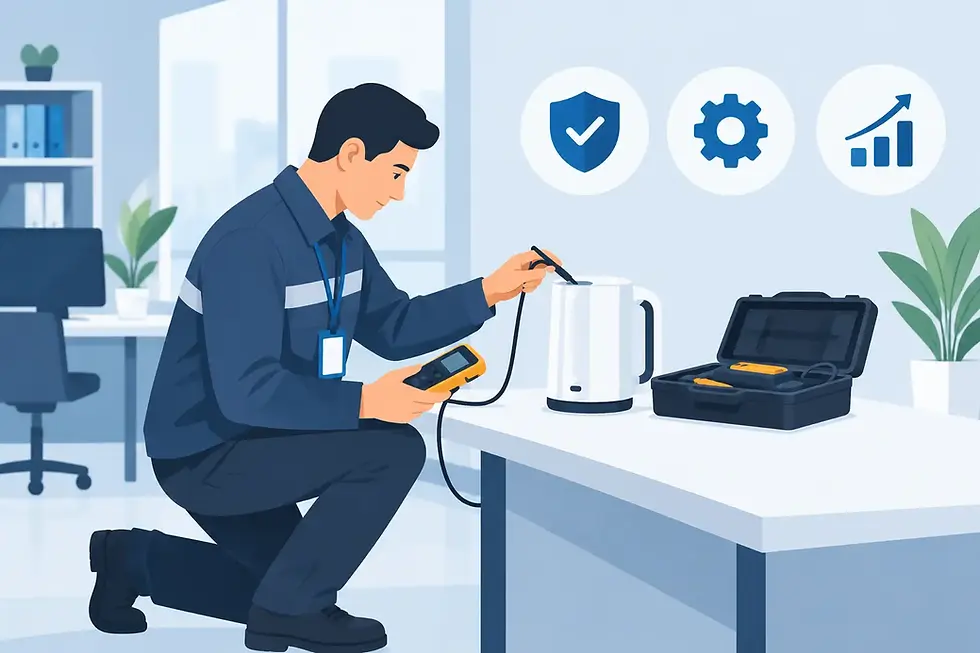
A failed kettle in the staff room is inconvenient. A damaged classroom projector, science lab extension lead or charger trolley is a wider risk - not just to staff, but to pupils, visitors and the day-to-day running of the school. That is why PAT testing for schools is less about ticking a box and more about keeping equipment safe, records up to date and disruption to a minimum.
Schools tend to have a high number of portable electrical appliances spread across different rooms, buildings and users. Unlike a small office, equipment is often moved, shared and handled frequently. Laptops go between classrooms, cleaning teams use their own appliances, music departments rely on specialist kit, and admin areas can accumulate printers, fans, heaters and chargers over time. That variety is exactly why a clear, organised testing process matters.
Why PAT testing for schools needs a practical approach
In a school setting, safety checks have to work around the school day. Lessons, clubs, exams, parents' evenings and site access all affect when testing can realistically happen. A provider may be technically capable, but if the process creates disruption, leaves unclear records or requires constant chasing from the school office, it becomes one more administrative burden.
A practical approach means looking at the school as a working environment, not just a list of appliances. Equipment should be tested efficiently, labelled clearly and recorded in plain English so the site team, school business manager or office staff can quickly see what has passed, what needs attention and what should be removed from use.
That is often where schools benefit from a specialist service. The testing itself is only one part of the job. Just as important are the reporting, certification and the way the work is scheduled.
What schools are usually responsible for
Schools have a duty to maintain electrical equipment in a safe condition. PAT testing forms part of that wider responsibility, alongside routine visual checks, sensible use policies and keeping records. It is not a one-size-fits-all rule where every item must be tested at exactly the same interval. The right frequency depends on the type of appliance, how often it is used and the environment it is used in.
For example, a desktop monitor in a low-risk admin office may not need the same attention as a vacuum cleaner used daily by cleaning staff, or a hot water urn in a busy staff kitchen. Likewise, a piece of equipment used in a design and technology area may face more wear than something kept in a locked meeting room.
This is where some confusion creeps in. Schools are often told they need PAT testing, but not always given useful advice on what that means in practice. The sensible answer is risk-based, properly documented and easy to manage. The aim is not to test everything blindly as often as possible. It is to make sure appliances are safe and that the school can show it has taken reasonable steps to manage risk.
Which school equipment is commonly included
Most schools have more portable electrical items than they first expect. IT equipment is usually the biggest category, including desktop computers, monitors, laptop chargers, printers, interactive screens and extension leads. Then there are staff room appliances such as kettles, microwaves and fridges, plus cleaning equipment, fans, portable heaters, laminators and audio-visual equipment.
Departments often add another layer. Science labs, music rooms, art rooms and DT workshops may all contain appliances that need to be checked as part of a structured programme. Boarding facilities, nurseries and sports areas can also increase the volume and variety of equipment.
One point that often needs clarifying is ownership. Some schools allow staff to bring in personal appliances, such as mobile phone chargers, desk fans or coffee machines. Those items can still create risk on site. A sensible school policy, backed by regular testing and clear records, helps avoid grey areas.
How to keep disruption low
The biggest concern for many schools is practical rather than technical. They need the work done without affecting teaching, safeguarding routines or site access. That usually means planning matters as much as the testing itself.
Out-of-hours appointments are often the easiest option, especially for larger sites or schools with busy daytime schedules. Holidays, inset days and quieter periods can also work well. For smaller schools, there may be situations where testing can be completed during the day in a phased way, room by room, with minimal interruption. It depends on the size of the site, how equipment is spread out and whether key staff are available to provide access.
A good testing process should feel organised from the start. Appliances are identified, checked, labelled and logged methodically, and any failures are highlighted clearly. The school should not be left trying to decode technical notes or work out which item in which room has an issue.
For busy site teams and administrators, that clarity makes a real difference. It turns PAT testing from a disruption into a manageable maintenance task.
Reporting and certification matter as much as the test
For schools, having the right paperwork is not an optional extra. Records support internal health and safety procedures, insurance requirements and audit readiness. If an appliance fails, the school needs to know what failed and what action is needed. If everything is in order, they need certification that is clear, accessible and easy to file.
This is one of the main reasons schools choose a professional provider rather than trying to piece the process together informally. Full reporting gives confidence that the work has been completed properly and that there is a reliable record behind it.
Just as importantly, reports should be understandable. School business managers, bursars, office managers and caretaking teams are usually balancing multiple responsibilities. They need straightforward information, not jargon. A plain-language report with clear pass and fail status is far more useful than a document that raises more questions than it answers.
Choosing a provider for PAT testing for schools
Schools are rightly cautious about who they bring on site. Cost matters, but so do reliability, professionalism and the ability to work around safeguarding and operational requirements. The cheapest quote is not always the best value if it comes with poor communication, patchy records or unnecessary disruption.
A suitable provider should be qualified, fully insured and able to explain the process clearly. They should also understand that schools need more than a test result. They need a service that is punctual, well organised and easy to deal with from first enquiry through to final paperwork.
It is also worth asking how the provider handles labelling, reporting and future reminders. A school with hundreds of appliances across multiple buildings benefits from a service that keeps records consistent and makes renewals easier to plan. That small amount of organisation saves time later.
For schools in areas such as Basingstoke, Reading, Fleet and Farnborough, using a local specialist can also help with flexibility. When timing is tight, or a site wants work completed outside standard hours, responsive local service is often far more helpful than a remote national booking system.
Common misunderstandings schools run into
One of the most common misunderstandings is that PAT testing alone covers all electrical safety duties. It does not. It is one part of a wider approach that includes user awareness, visual checks and sensible asset management.
Another is assuming all appliances need to be treated the same. They do not. Risk level, usage and environment all matter. Testing intervals should reflect that. Over-testing can waste money, while under-testing can leave gaps.
There is also sometimes a belief that if an appliance works, it must be safe. Unfortunately, that is not always true. Damage to plugs, cables or internal components may not be obvious to the person using the item day to day. Testing helps pick up problems before they become incidents.
Making school compliance easier to manage
The schools that handle PAT testing well tend to do one thing consistently - they make it part of a routine, not a last-minute scramble. That means knowing what equipment is on site, having a clear record of what has been tested, and working with a provider who keeps the process simple.
At Pax Animi PAT Testing, that practical side of the service matters just as much as the technical work. Clear reporting, flexible appointments and a straightforward approach help schools get the job done properly without creating extra pressure for staff.
When PAT testing is organised well, it supports the people responsible for the site as much as the equipment itself. It gives schools a clear picture of what is safe to use, what needs attention and what has been recorded properly. And for an environment as busy as a school, that kind of clarity is worth having before it becomes urgent.

Comments