

How to Book Out of Hours PAT Testing Easily

A busy office, school, clinic or workshop is rarely a good place to carry out testing during normal hours. Staff need their computers, customers are coming through the door, and equipment may be in constant use. Knowing how to book out of hours PAT testing means you can keep your workplace running while still keeping your electrical safety records up to date.
An evening, early-morning or weekend appointment can be a practical option when downtime is not acceptable. The key is to give your PAT testing provider enough information to plan the visit properly, from the number of appliances to site access and the reporting you need afterwards.
Decide what out-of-hours means for your site
Out-of-hours testing does not have to mean a late-night visit. For some businesses, an early start before staff arrive is enough. For others, the best time may be after closing, during a weekend, a school holiday or a planned shutdown.
Think about when portable appliances are least likely to be needed. In an office, that could be weekday evenings. A café or retail unit may prefer early mornings, while a healthcare practice might need testing arranged around appointment times. Landlords may find that a pre-arranged slot between tenancies is simplest.
It is worth choosing a time that gives the technician clear access to the equipment. A short appointment outside trading hours can still become inefficient if appliances are locked in cupboards, staff desks cannot be reached, or equipment is being used for cleaning and closing tasks.
Gather the details before requesting a quote
The quickest way to book is to provide a clear outline of your premises and equipment. You do not need an exact appliance count before making contact, but a sensible estimate helps the provider allow enough time and give an accurate quotation.
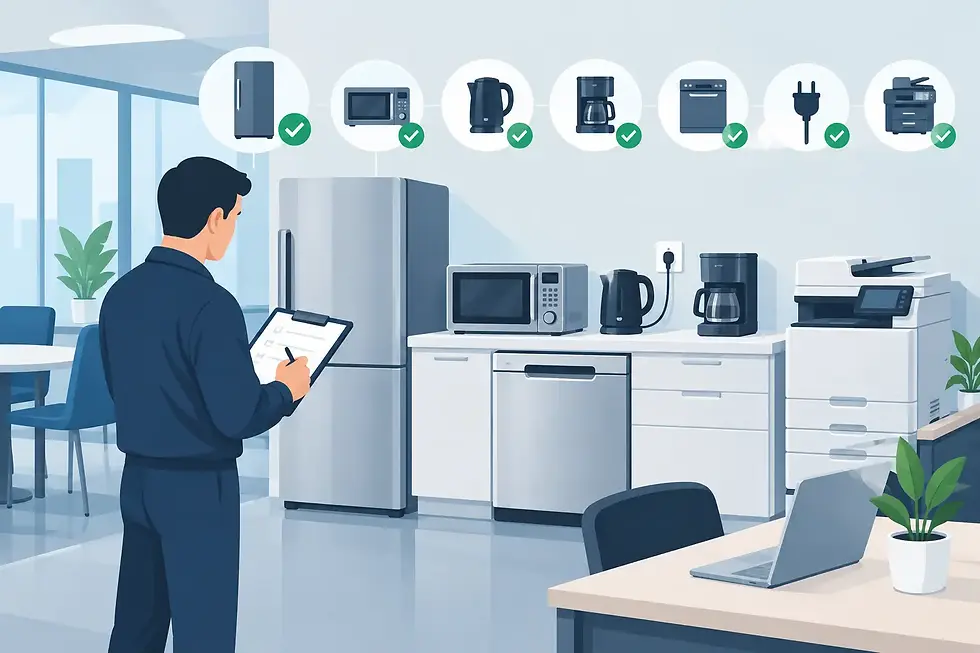
Explain the type of site, the number of rooms or floors involved, and whether equipment is spread across several areas. Include common portable items such as computers, monitors, printers, chargers, kettles, extension leads, fans, heaters, power tools and cleaning equipment. Do not forget appliances in kitchens, stores, meeting rooms, staff areas and maintenance cupboards.
Also mention anything that may need extra care or planning. This could include equipment used by patients, machinery that cannot be switched off without authorisation, appliances at height, or items located in secure areas. A qualified PAT tester can advise on the most suitable approach, but they need to know about these circumstances in advance.
If your previous test records are available, keep them to hand. They can help identify appliances already on your register and show whether there are recurring issues. If you do not have previous records, that is not a problem. A new register can be created as part of a properly organised testing visit.
Ask for an appointment that fits your operation
When requesting out-of-hours PAT testing, be specific about the days and times that work for you. Say whether you need an evening, early morning or weekend visit, and explain any deadlines such as an upcoming insurance review, internal audit, tenancy change or school reopening.
A good provider will confirm whether the appointment length is realistic for the number of appliances and the access available. There is a trade-off here: testing a large site in a very limited window may require more planning or more than one visit. Allowing a little flexibility can make the process easier and help avoid rushing.
For businesses in Basingstoke, Reading, Fleet, Farnborough and the surrounding area, choosing a local provider can make early or late appointments more practical. It also helps when you need a follow-up visit or have a question about your certificate after testing is complete.
Confirm access, security and a site contact
Out-of-hours appointments depend on good access arrangements. Before the visit, agree how the technician will enter the building, where they can park and whether they need to sign in, wear identification or follow any site-specific procedures.
Nominate a responsible contact who can be reached during the appointment. They may not need to stay for the full visit, particularly at a straightforward office site, but they should be able to answer questions or deal with unexpected access issues. If an alarm needs to be unset, keys collected or a secure room opened, make this part of the plan rather than leaving it to chance.
For larger premises, a simple site map or a note of priority areas can save time. This is particularly useful where there are several departments, buildings or storage spaces. It helps ensure no equipment is missed and allows the testing to follow a sensible route through the premises.
Prepare appliances without creating extra work
You do not need to move every appliance into one room. In fact, testing equipment where it is normally used can make labels and records more useful. However, a little preparation will make an out-of-hours visit quicker.
Make sure portable appliances can be reached safely and are not buried behind furniture, paperwork or stock. Ask staff to unplug personal chargers and other items they want included, where appropriate. Keep extension leads and adaptors visible, as these are easily overlooked but still need to be assessed.
If an item must remain powered or cannot be unplugged, flag this before the appointment. Some equipment may need testing at another time, while certain fixed or specialist items may fall outside standard PAT testing. Clear advice is better than treating every electrical item as though it needs the same process.
It can also help to let staff know what will happen. A short message explaining that appliances will be labelled and that any failed items must not be used avoids confusion the next morning. If staff bring equipment from home, decide whether it is included in your workplace testing arrangements and communicate that policy clearly.
Check what documentation you will receive
PAT testing is not just about attaching a pass or fail label. Your business needs records that are understandable and useful when someone asks for them. Before you book, confirm that the service includes a full appliance register, test results and a certificate or report suitable for your compliance and insurance records.
Reports should make it clear which items passed, which failed and where they are located. Jargon-free reporting matters because office managers, landlords and business owners should not need electrical training to understand the results. Branded labels can also make it easier for staff to identify tested equipment and see the next test due date.
Ask how you will receive the documents and whether renewal reminders are available. Keeping records in one accessible place makes future testing far less time-consuming, especially if the person responsible for facilities changes.
Know what happens if an appliance fails
A failed appliance is not a reason to panic, but it does need to be managed promptly. The item should be clearly identified and removed from use until it has been repaired, replaced or otherwise made safe. Your report should record the failure so you have an audit trail of what was found.
Not every failure has the same impact. A damaged extension lead may be easy to replace, whereas a failed piece of specialist equipment may require advice from the manufacturer, a competent repairer or your internal maintenance team. Booking outside normal hours does not prevent this follow-up, so consider who will review the report when staff return.
How to book out of hours PAT testing with confidence
Once you have your estimated appliance numbers, preferred time and access details, ask for a no-obligation quotation. Check that it covers the scope of work, the appointment timing, testing records and certification. Competitive pricing matters, but so does knowing that the technician is qualified, insured and able to explain the findings clearly.
Pax Animi PAT Testing can arrange convenient appointments around your working hours, helping businesses reduce disruption without compromising on proper documentation. The right booking is one that fits your site, gives the tester safe access and leaves you with clear records you can rely on.
A few minutes spent planning the appointment can protect an entire working day. Choose a time when your equipment is accessible, make one person responsible for access, and ensure the final report has a clear home in your compliance records.
Comments