

How to Prepare for PAT Testing in Your Workplace

A PAT testing visit should not mean a day of chasing chargers, moving desks or trying to identify equipment nobody remembers buying. Knowing how to prepare for PAT testing helps the appointment run efficiently, keeps disruption low and gives your tester the information needed to produce clear, useful records.
For most workplaces, the preparation is straightforward. The aim is not to carry out technical checks yourself. It is to make portable electrical equipment accessible, identify anything unusual and give staff enough notice to work around the visit. A little planning can make a significant difference, particularly in busy offices, schools, clinics, workshops and shared buildings.
How to Prepare for PAT Testing Before the Visit
Start by agreeing a suitable time with your PAT tester. If your workplace relies heavily on computers, reception equipment or specialist tools throughout the day, an early morning, evening or other out-of-hours appointment may be the least disruptive option. This is often preferable to leaving equipment in service while staff wait for it to be tested.
Let employees, tenants or relevant users know when the testing is taking place. Explain that some equipment will need to be switched off and unplugged briefly. A short notice is usually enough, but it prevents avoidable frustration and helps people save work, charge devices or make alternative arrangements beforehand.
It also helps to nominate one person as the main contact on the day. They do not need electrical knowledge. They simply need to know the layout of the premises, where equipment is kept and who can answer questions about items that are difficult to identify. For larger sites, an office manager, facilities manager or caretaker can help the tester move through each area without delay.
Decide what equipment is in scope
PAT testing generally applies to portable electrical appliances and their leads. This can include computers, monitors, printers, extension leads, kitchen appliances, desk fans, phone chargers, power tools and cleaning equipment. It may also include items that are movable but rarely moved, such as fridges, vending machines or large display screens, depending on the testing plan.
A brief walk-around before the appointment is worthwhile. You do not need a perfect inventory, but you should flag equipment stored in cupboards, meeting rooms, stock areas, plant rooms, staff kitchens and vehicles. Forgotten items are one of the most common reasons a testing programme becomes incomplete.
Pay particular attention to equipment brought in by staff, hired equipment and appliances used by contractors. Your organisation's policy will determine whether these items are included, but it is best to clarify this before the visit rather than assume they are covered automatically.
Make Equipment Easy to Access
The tester needs safe access to the appliance, its plug and, in many cases, the socket supplying it. Where practical, clear a small working space around desks, cupboards and extension leads. Equipment does not need to be moved into one room unless that is genuinely more convenient for your site. Testing items in their normal location is often more accurate and causes less confusion over where they belong.
Unplugging equipment in advance can save time in some environments, but it is not always necessary. If staff need to shut down computers properly or equipment has a specific switch-off process, it is better to organise this with the people who use it. Never disconnect equipment where doing so could affect safety, security, data or essential operations without checking first.
In healthcare settings, workshops and other specialist premises, identify any equipment that needs a particular person present. Some items may need to be isolated safely, moved by trained staff or tested at a time when they are not needed. A good PAT testing service will work around these practical requirements rather than take a one-size-fits-all approach.
Untangle the obvious problems
You do not need to inspect appliances as an electrician would. However, sorting obvious cable clutter makes the visit quicker and safer. If several leads run behind a desk, try to establish which plug belongs to which appliance. Where that is not possible, let the tester know before they start.
Do not attempt repairs, tape over damaged cables or replace plugs unless you are competent and authorised to do so. If you have noticed an item with a cracked plug, exposed wire, scorch mark or loose cable, take it out of use and label it clearly. Tell the tester about it on arrival. A visible defect is useful information, and removing the item from use helps protect staff in the meantime.
Gather the Information That Makes Records Useful
PAT testing is not just about attaching a pass label. The report and certificate are the evidence you may need for internal procedures, insurers, landlords, audits or health and safety records. Accurate details at the start make those documents more useful later.
Provide the site address, the areas to be tested and any equipment reference system you already use. If appliances belong to different departments, cost centres or tenants, mention this in advance. The report can then be organised in a way that makes sense to the people responsible for the equipment.
It is also helpful to have any previous PAT testing report available. This allows the tester to compare asset numbers, identify new items and spot equipment that was previously recorded as failed, repaired or removed. If no previous records exist, that is not a problem. The first visit can establish a clear baseline for future testing.
For multi-site organisations, agree whether each location needs separate certification and who should receive the completed paperwork. This avoids the familiar problem of a certificate being sent to someone who no longer manages the premises.
Check the Condition of Equipment Between Testing Dates
Formal PAT testing is one part of electrical safety, not a replacement for day-to-day care. Staff should be encouraged to report damaged or unusual equipment whenever they notice it, rather than wait for the next appointment.
Before the visit, it is sensible to remove items that are clearly no longer in use. Old kettles in store cupboards, redundant monitors and broken chargers can create unnecessary work and clutter up your asset list. If an appliance has been disposed of, make a note so it can be removed from the records.
It is worth remembering that not every failure means an appliance is beyond repair. A failed lead, fuse or plug can sometimes be corrected by a competent person, after which the item may need retesting before it returns to use. The right action depends on the fault, the value of the equipment and your own safety procedures. Clear, jargon-free reporting makes these decisions much easier.
Plan Around Business-Critical Equipment
Some equipment cannot simply be switched off at a convenient moment. Server-related equipment, security systems, refrigeration, clinical devices, alarms and production tools may need a separate arrangement. Tell your tester about these items when booking, not when they are reached during the visit.
There may be a different testing method, a planned shutdown window or a reason to exclude an item from routine portable appliance testing. The key is to document the decision rather than leave a gap in the record with no explanation.
For a small office, this may mean testing reception equipment before opening. For a school, it may mean arranging the work during a holiday or after pupils have left. For a workshop, it may mean grouping tools by area so testing does not interrupt a job already underway. The most efficient approach depends on how your premises operate.
What Happens on the Day?
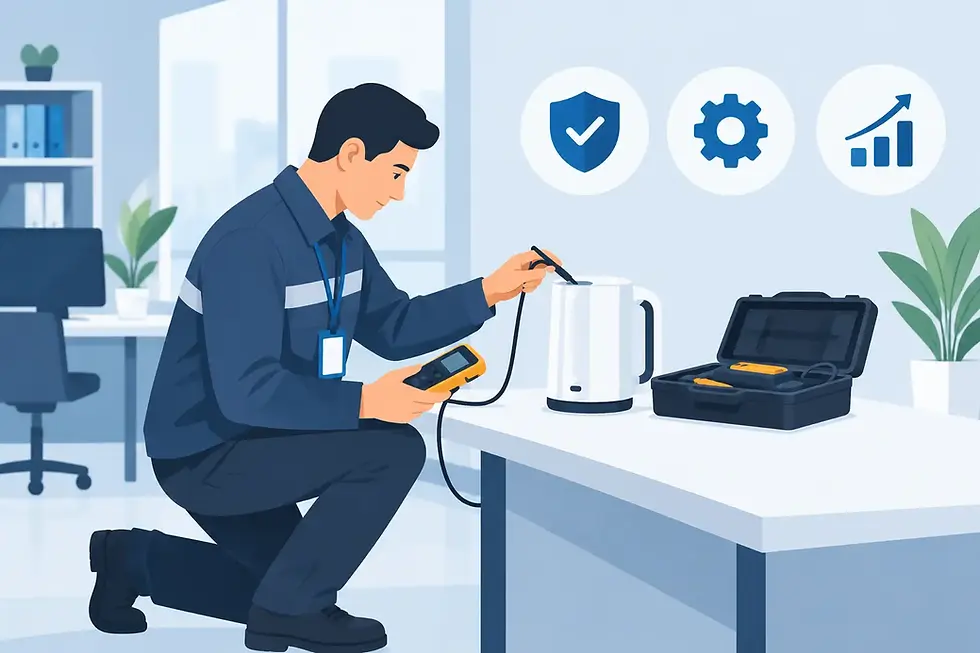
A qualified PAT tester will normally begin by confirming the areas and equipment included, then carry out visual checks and appropriate electrical tests. Each item is recorded and labelled, with any failures clearly identified. You may be asked about unfamiliar equipment or restricted areas as the work progresses.
The best preparation is simply being available to answer those questions and ensuring the tester can work safely. If an item fails, ask what the result means in plain English and whether it should be removed, repaired or replaced. You should not be left to interpret technical readings on your own.
After the visit, keep the certificate and report with your wider health and safety records. Make a note of any failed items and ensure they are dealt with promptly. Renewal reminders and a consistent reporting format can take much of the administration out of future visits.
A well-prepared PAT testing appointment is not about making the premises look perfect. It is about giving your tester safe access, clear information and enough cooperation to complete the work properly. For organisations across Basingstoke, Reading, Fleet and surrounding areas, that means less interruption on the day and much clearer evidence that electrical safety is being managed responsibly.

Comments