

Electrical Risk Assessment for Your Workplace

A phone charger with a damaged lead, an overloaded extension block behind a desk, or a kettle used daily in a staff room can all create avoidable risk. An electrical risk assessment gives you a practical way to spot those issues, decide what needs attention and show that your organisation is taking electrical safety seriously.
For most businesses, the aim is not to produce a large technical document that sits in a folder. It is to understand how electricity is used on site, put sensible controls in place and keep records that are easy to find when an insurer, auditor or member of staff asks for them.
What is an electrical risk assessment?
An electrical risk assessment is a structured check of the electrical hazards in your workplace, who could be harmed and what you are doing to reduce the chance of injury, fire or equipment damage. It should cover both fixed electrical installations, such as sockets and distribution boards, and the portable appliances employees, visitors or contractors use.
The level of detail should suit the premises and the work carried out. A small office using computers, monitors and kitchen appliances will need a different assessment from a workshop with power tools, extension leads and equipment exposed to dust, moisture or heavy use. The principle is the same: identify realistic hazards and take proportionate action.
This is part of an employer's wider duty to manage health and safety. It is not about removing every possible risk. It is about making sure risks are understood, controlled and reviewed when circumstances change.
Start with how electricity is used
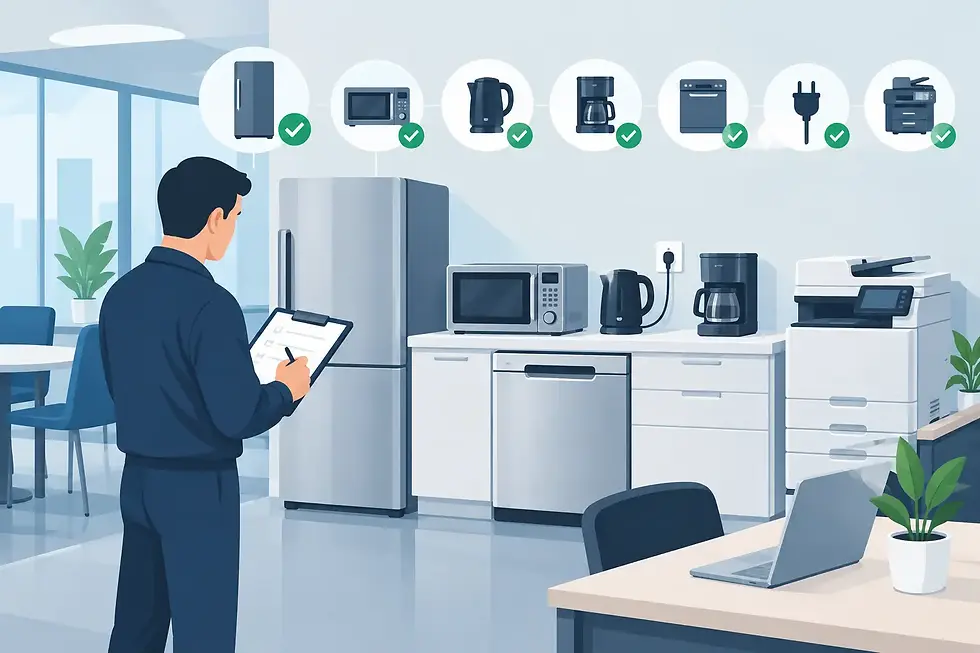
A useful assessment begins on the ground, not at a desk. Walk through the premises and consider the equipment people actually use each day. Include areas that can be overlooked, such as cleaners' cupboards, meeting rooms, storage spaces, staff kitchens, reception desks and equipment taken off site.
Look at the condition of appliances and leads, but also at how they are being used. A perfectly sound extension lead can become a problem if it is run across a walkway, overloaded with high-demand equipment or left where it can be damaged by doors, furniture or cleaning equipment.
Ask straightforward questions. Are staff bringing in personal chargers or heaters? Is equipment used by the public, pupils, patients or clients? Do employees regularly move appliances between rooms? Is machinery used outdoors or in a damp environment? Each answer affects the level of risk and the controls that make sense.
Identify the hazards
Electrical hazards are not limited to obvious damage. A cracked plug, exposed wire, loose socket or scorching around an extension lead needs prompt action, but less visible issues matter too. These can include unsuitable equipment for the environment, poor cable management, makeshift repairs, overloaded adaptors and equipment that has not been maintained.
Pay particular attention to appliances that generate heat or receive heavy use. Kettles, microwaves, heaters, vacuum cleaners, power tools and chargers may need more frequent attention than a desktop monitor that rarely moves. Equipment used in a school, charity shop, healthcare setting or busy workshop can face more knocks and wear than the same item in a quiet office.
Consider who could be affected
Employees are not the only people to consider. Visitors, contractors, tenants, customers and members of the public may be exposed to electrical hazards, particularly in shared buildings or public-facing premises.
Think about who may not recognise a problem or be able to avoid it easily. A trailing cable may be an inconvenience to an experienced office worker but a trip risk for a visitor. A faulty appliance in a communal kitchen could affect anyone who uses the space. This helps you decide which issues require immediate action and which can be managed through routine maintenance.
Put practical controls in place
Controls should be realistic enough to be followed. Removing damaged equipment from use, replacing unsafe leads, avoiding overloaded extension blocks and keeping cables away from walkways are simple steps with a genuine safety benefit.
In some cases, the right answer is to provide fixed sockets where extension leads have become a permanent workaround. In others, clear rules for personal electrical items, visual checks by staff and planned testing are enough. There is no single testing interval or checklist that suits every workplace. Frequency should reflect the type of equipment, how often it is used, the environment and its history of faults.
If an appliance is damaged or fails a safety check, label it clearly, remove it from use and arrange repair or replacement. Leaving it unplugged on a shelf is not always enough, as it can easily find its way back into use.
Where PAT testing fits into the assessment
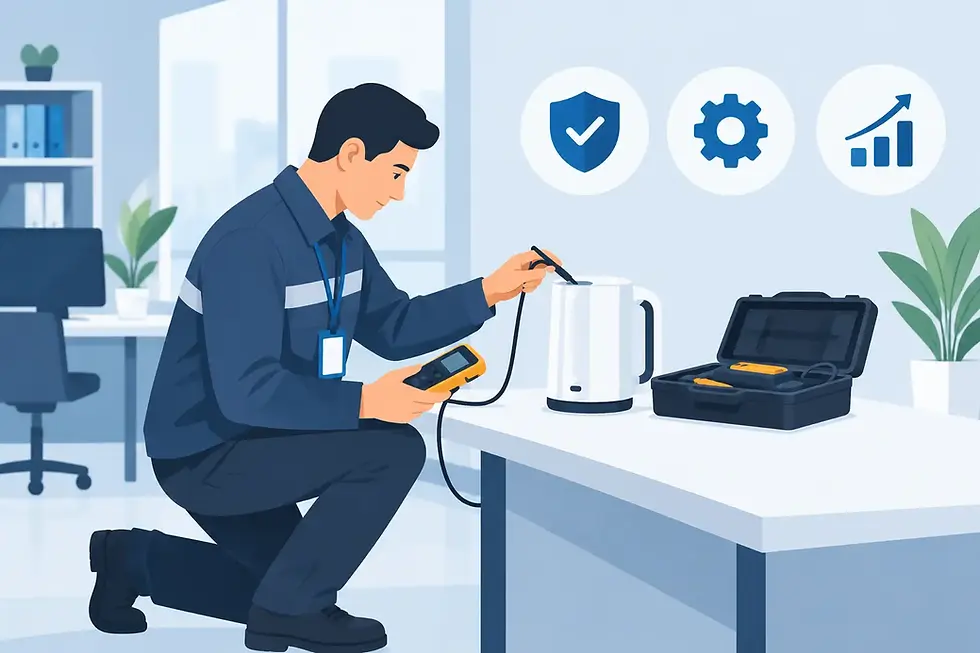
Portable Appliance Testing, commonly called PAT testing, is an important control within an electrical risk assessment. It provides a recorded inspection and, where appropriate, electrical testing of portable equipment such as computers, printers, chargers, kitchen appliances, extension leads and tools.
PAT testing does not replace a risk assessment, and a risk assessment does not replace appropriate testing. The assessment helps you decide what equipment needs checking, how often and under what conditions. PAT testing then gives you a clear record of the items inspected, the outcome and any failures that need action.
A qualified PAT testing service can make this straightforward by providing appliance labels, a full test report and certification. That documentation is useful for internal records, insurance queries and audit preparation. It also makes it easier to plan retesting rather than trying to reconstruct what happened months later.
For organisations with limited downtime, testing can often be arranged around normal operations. Out-of-hours appointments may be particularly helpful for offices, schools, clinics, shops and other sites where equipment needs to remain available during the day.
Record decisions, not just faults
A good assessment should record the main hazards found, the people at risk, the controls already in place and any improvements required. Keep it clear enough that another responsible person could understand the situation without needing a technical background.
You do not need to record every plug socket individually in a low-risk office unless there is a reason to do so. However, you should be able to show why your approach is suitable. For example, a record might note that portable equipment is visually checked, included in a planned PAT testing programme and replaced or repaired when faults are found.
Keep related documents together where possible. This may include PAT test reports, certificates, failed appliance records, repair paperwork, staff guidance and details of any electrical installation work. Clear records reduce the administrative burden when a contract is renewed, a site is inspected or responsibility changes hands.
Review when something changes
An electrical risk assessment is not a one-off exercise. Review it after an incident or near miss, following electrical work, when new equipment is introduced, when premises are altered or when the way staff work changes.
A move to hot-desking, for instance, can increase the number of chargers and extension leads in use. New machinery may need a more suitable power supply. A change in tenant arrangements can affect who is responsible for communal equipment. Regular review catches these changes before they become accepted as normal.
For many low-risk workplaces, an annual review alongside planned appliance testing is a sensible routine. Higher-risk settings may need more frequent checks. What matters is that the schedule reflects the real risks rather than following a date that has no connection to how equipment is used.
Common issues worth checking now
Some of the most common electrical safety problems are easy to miss because they develop gradually. A short walk around the workplace can reveal whether extension leads are being daisy-chained, cables are trapped under furniture, appliances have damaged casings or unsuitable personal items are being used.
Also check that staff know what to do if they spot a fault. They should not attempt informal repairs or continue using an appliance because it still appears to work. A simple reporting process, combined with clear labels and prompt action, prevents small faults becoming larger problems.
For businesses in Basingstoke, Reading, Fleet, Farnborough and nearby areas, a local testing provider can help turn this into a manageable routine. Pax Animi PAT Testing provides qualified testing with jargon-free reports, clear appliance labelling and documentation designed to support day-to-day compliance.
A well-managed electrical safety process does more than satisfy paperwork. It gives staff confidence that the equipment they rely on has been considered properly, and gives the person responsible for the premises a clear, practical record of what has been done and what needs attention next.
Comments