

Can Extension Leads Be PAT Tested at Work?

An extension lead is often one of the hardest-working items in a workplace. It may run a monitor, printer, cleaner, power tool or catering appliance every day, yet its cable and plug can be easy to overlook. So, can extension leads be PAT tested? Yes. In most workplaces, plug-in extension leads are portable electrical equipment and should form part of a sensible electrical safety maintenance plan.
The key point is that PAT testing is not simply a sticker on the plug. A competent inspection checks whether the lead is suitable, undamaged and electrically safe to continue using. For businesses, landlords and organisations, this creates a clear record that equipment has been assessed and any faults have been dealt with promptly.
Can extension leads be PAT tested as portable equipment?
A standard extension lead that plugs into a wall socket can be PAT tested. This includes multi-socket extension leads, individually switched extensions, cable reels and many surge-protected extension blocks. They are commonly treated as Class I equipment because they rely on an earth connection for protection, although the exact test approach depends on the product's design.
An extension lead that is permanently wired into a building is different. That is part of the fixed electrical installation rather than portable equipment, so it falls outside normal PAT testing and may need inspection under the building's fixed-wire testing arrangements.
It is also worth separating an extension lead from an adaptor. A simple adaptor can be inspected and tested where appropriate, but it should never be used to overload a socket or as a long-term substitute for providing enough fixed sockets in a work area. The same principle applies to extension leads: being testable does not make an unsuitable setup safe.
What does PAT testing an extension lead involve?
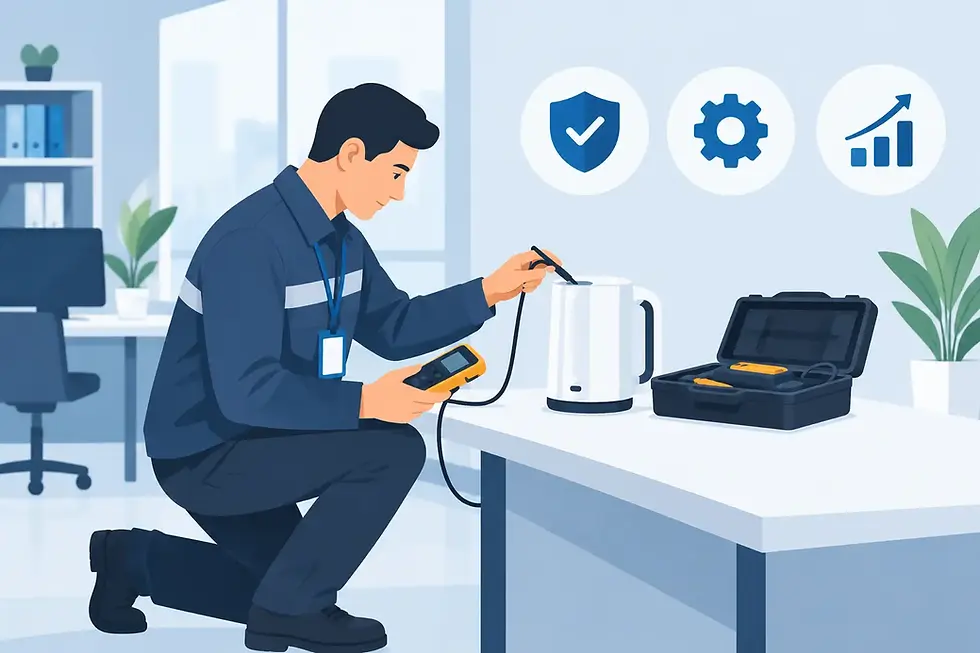
A proper test begins with a close visual inspection. Many extension lead faults are visible before an electrical tester is even connected. The technician will look for damaged plugs, cracked sockets, loose cable grips, exposed conductors, heat damage, bent pins and signs that the lead has been overloaded or trapped.
They will also check that the fuse is correctly rated for the cable and intended use. A lead supplying low-power office equipment may not need the same fuse rating as one used with higher-load equipment. Fitting an unnecessarily high-rated fuse can reduce protection if a fault occurs.
The electrical tests then depend on the lead type. For a typical earthed extension lead, this normally includes an earth continuity test to confirm the earth path is sound, plus insulation testing to check that the cable's conductors are properly insulated from each other and from earth. Polarity may also be checked, confirming that the live and neutral connections are correctly arranged.
For an extension lead with an RCD, the RCD itself should be tested too. This is particularly relevant on building sites, in workshops, outdoors and anywhere equipment may be exposed to tougher conditions. An RCD can provide additional protection, but it must operate correctly and should not be relied on as a replacement for a sound lead, good working practices or suitable equipment.
Cable reels need particular care. A reel may pass an electrical test but still be unsafe in use if the cable is left coiled while supplying a high load. Heat can build up in the wound cable. Staff should follow the manufacturer's guidance and fully unwind the reel when required, especially for heaters, power tools and other high-demand appliances.
Why extension leads need regular checks
Leads tend to be moved, walked over, pulled from sockets and used in places where furniture, doors or equipment can damage the cable. In a busy office, the risk may be relatively low when leads remain under desks and are not disturbed. In a school hall, healthcare setting, workshop or commercial property where cleaning teams and temporary equipment are in regular use, the chance of damage can be higher.
A visual check between formal testing visits makes a real difference. Staff do not need electrical training to spot obvious warning signs. If a lead has a split sheath, loose socket, scorch mark, damaged plug or becomes unusually warm, it should be unplugged and removed from use straight away. It should not be taped up and returned to service.
PAT testing supports this day-to-day approach by identifying defects that may not be obvious, recording the result and giving the responsible person a clear audit trail. It is one part of meeting the duty to maintain electrical equipment in a safe condition. There is no single legal rule stating that every item must be PAT tested annually, but employers and duty holders must use a proportionate maintenance system based on risk.
How often should extension leads be tested?
There is no universal retest period for every extension lead. The right interval depends on where it is used, who uses it, how often it is moved and the type of work it supports.
For example, an extension lead kept in a low-risk office and used only for fixed desk equipment may need less frequent formal testing than one used daily in a workshop, community venue or construction-related environment. Equipment available to the public, used by multiple people or taken between sites can also justify more regular checks.
A practical risk assessment considers the equipment's condition and usage rather than applying the same date to everything. Visual inspections may be more frequent than combined inspection and testing. Keeping records of both formal tests and any faults found helps show that your organisation has a considered approach, rather than relying on labels alone.
What happens if an extension lead fails?
A failed extension lead should be clearly marked and taken out of use. The fault may be something straightforward, such as an incorrect fuse or damaged plug that can be safely replaced by a competent person. Other faults, including internal cable damage, failed insulation or broken sockets, may mean replacement is the safer and more cost-effective option.
The decision should take account of the lead's age, quality and intended use. A cheap domestic extension lead is not necessarily appropriate for continual commercial use, particularly in demanding environments. Replacing it with a suitable, correctly rated product can avoid repeat faults and reduce disruption later.
Once the issue is resolved, the item should be retested before being returned to service. The test record should identify the lead clearly, including its location or asset number where this is useful. This makes it much easier to manage equipment across several rooms, departments or properties.
Making PAT testing straightforward for your workplace
The easiest way to manage extension leads is to include them in a wider appliance register. Ask staff to gather loose leads, cable reels, adaptors and RCD extensions before the visit, as these are the items most likely to be missed when they are stored in cupboards or moved between rooms.
Testing can usually be organised to minimise interruption, including outside normal working hours where needed. Clear pass and fail labels, a straightforward report and a certificate give managers the information they need without pages of unnecessary technical language. They also make future renewal planning much simpler.
For organisations in Basingstoke and the surrounding area, Pax Animi PAT Testing can assess extension leads alongside the rest of your portable equipment and provide clear records for your safety file. A short, well-planned visit can turn a collection of easily overlooked leads into one less compliance concern for your team.

Comments