

PAT Testing for Healthcare Practices Explained

A phone charger at reception, a kettle in the staff room and a mains-powered examination light can all look harmless until a damaged lead, loose plug or electrical fault puts staff or patients at risk. PAT testing for healthcare practices provides a practical way to identify these problems early, keep records in order and show that electrical safety is being managed sensibly.
For a busy surgery, dental practice, physiotherapy clinic or private treatment centre, the aim is not to test equipment for the sake of a label. It is to protect people, reduce avoidable disruption and make compliance straightforward when an insurer, landlord or auditor asks for evidence.
Why healthcare practices need a clear testing plan
Healthcare settings contain a mix of electrical equipment used by clinicians, administration teams and patients. Some items are moved daily, some stay in one room for years, and some are brought in by staff. Their level of risk is not the same.
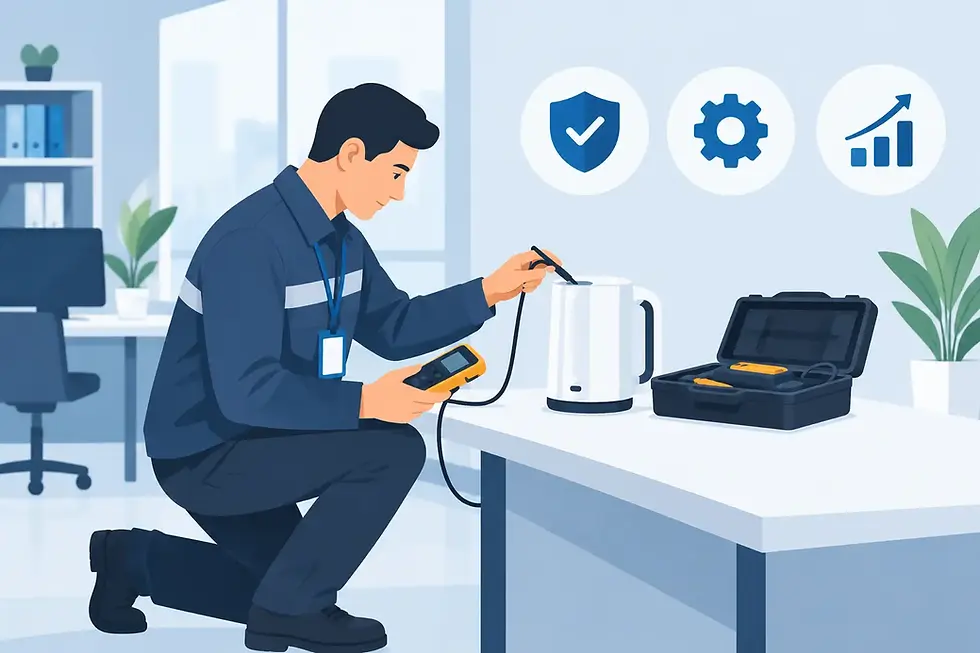
Portable Appliance Testing, commonly called PAT testing, combines visual checks with electrical tests where appropriate. A trained tester examines the plug, cable, casing and general condition of an appliance, then carries out suitable tests to identify faults that cannot be seen from the outside. Each item is labelled and recorded, giving the practice a clear record of what has passed, what needs attention and when it was tested.
There is no single law that says every appliance must have a PAT label every year. However, employers and duty holders must maintain electrical systems so that they are safe. The Electricity at Work Regulations 1989 place a duty on those responsible for workplace electrical safety, while health and safety law requires risks to be properly managed. Regular inspection and testing is one sensible part of meeting those duties.
For healthcare practices, the stakes can be higher than in a standard office. Patients may be vulnerable, treatment rooms are public-facing, and an equipment failure can interrupt appointments at short notice. A documented testing programme helps demonstrate that the practice has taken reasonable precautions.
What counts as portable electrical equipment?
A portable appliance is generally an item connected to the mains by a plug and lead, or one that can be moved while connected. In a healthcare practice, this may include clinical equipment, office appliances and everyday staff facilities.
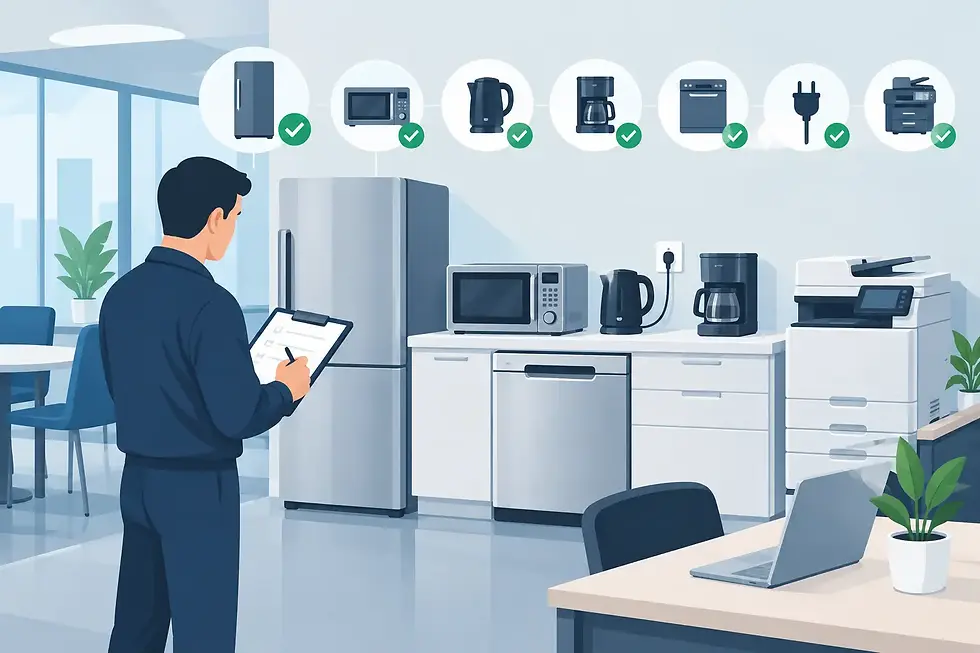
Common examples include examination lamps, treatment couches with electrical controls, portable suction units, sterilisation-related equipment where applicable, chargers, laptops, monitors, printers, extension leads, kettles, microwaves, fans and vacuum cleaners. Reception and back-office equipment should not be overlooked simply because it is not used in a treatment room.
Some fixed electrical equipment may need inspection too, but it is not always covered by the same PAT process. Hard-wired equipment, fixed wiring and specialist medical devices can require a different maintenance approach or specialist servicing. This is why a proper asset review at the start is useful. It prevents items being missed and avoids applying the wrong test to sensitive equipment.
Clinical equipment needs the right approach
Not every item used in patient care should be treated like a standard office appliance. Medical electrical equipment can have specific manufacturer instructions, calibration requirements and safety standards. Testing must be appropriate to the appliance and should never compromise its operation, warranty or clinical use.
A qualified PAT tester can identify routine plug-in equipment suitable for portable appliance testing and flag items that need specialist inspection or manufacturer-led servicing. If an appliance is essential to treatment, plan testing around appointments so it is not removed from use at the wrong time.
How often should a healthcare practice arrange PAT testing?
The right frequency depends on the appliance, how it is used, its condition and the environment it operates in. A low-risk desktop monitor in a private office will not normally need the same attention as a frequently moved extension lead in a busy treatment area.
A risk-based schedule is more useful than choosing an arbitrary annual date for everything. Factors to consider include whether equipment is regularly moved, whether leads are likely to be strained or damaged, whether patients can access it, and whether it is used in areas where cleaning, moisture or heavy footfall increase wear.
Visual checks between formal tests are equally valuable. Staff can spot cracked plugs, frayed cables, loose sockets, scorch marks or appliances that become unusually hot. Giving staff a simple process for reporting faults means suspect equipment can be taken out of use quickly rather than waiting for the next planned visit.
For many practices, annual PAT testing is a sensible and easy-to-manage routine. It may be appropriate to test some higher-use items more often and some lower-risk equipment less frequently. The best plan is one that reflects the practice's actual risks and is reviewed when equipment or working arrangements change.
Keeping disruption to a minimum
A full testing visit does not need to disrupt a day of appointments. Preparation makes the difference. Before the visit, a practice can identify equipment by room, advise staff what needs to remain available and nominate someone who can provide access to locked cupboards, stores and plant areas.
Out-of-hours or quieter-period testing is often the best option for patient-facing sites. Early mornings, evenings or times between clinics can allow equipment to be tested with minimal interruption. This is particularly helpful where reception systems, treatment rooms or staff kitchen facilities are in constant use.
A competent tester should work methodically, label each appliance clearly and keep the process organised. There will occasionally be a failed item, and that is where clear communication matters. The practice needs to know what the problem is, whether the appliance should be removed from service immediately and what practical next step is required.
Records that stand up to questions
The label on an appliance is useful, but it is only part of the record. A good PAT testing report should identify each item, its location, test result, date of testing and recommended retest date. It should also record any failures clearly.
These records help when reviewing internal safety procedures, responding to insurance queries or preparing for an audit. They also make future visits quicker because the tester can compare the current appliance list with previous records and identify new, moved or missing equipment.
Jargon-free reporting is particularly valuable for practice managers. You should not need electrical qualifications to understand whether an item is safe to use or what action is needed. A clear certificate and asset report give the responsible person a practical record rather than a folder of unexplained technical data.
What to do when an appliance fails
A failed appliance is not necessarily a major problem, but it should be dealt with promptly. The item should be removed from use or clearly marked so that nobody plugs it back in. The next step may be as simple as replacing a damaged lead or plug, although some faults will mean repair by a suitable person or replacement is the safer choice.
Do not rely on a passing label from a previous year if the equipment has since been damaged. Any appliance that is dropped, exposed to liquid, becomes hot, smells of burning or shows visible wear should be checked immediately.
Choosing a PAT testing provider for your practice
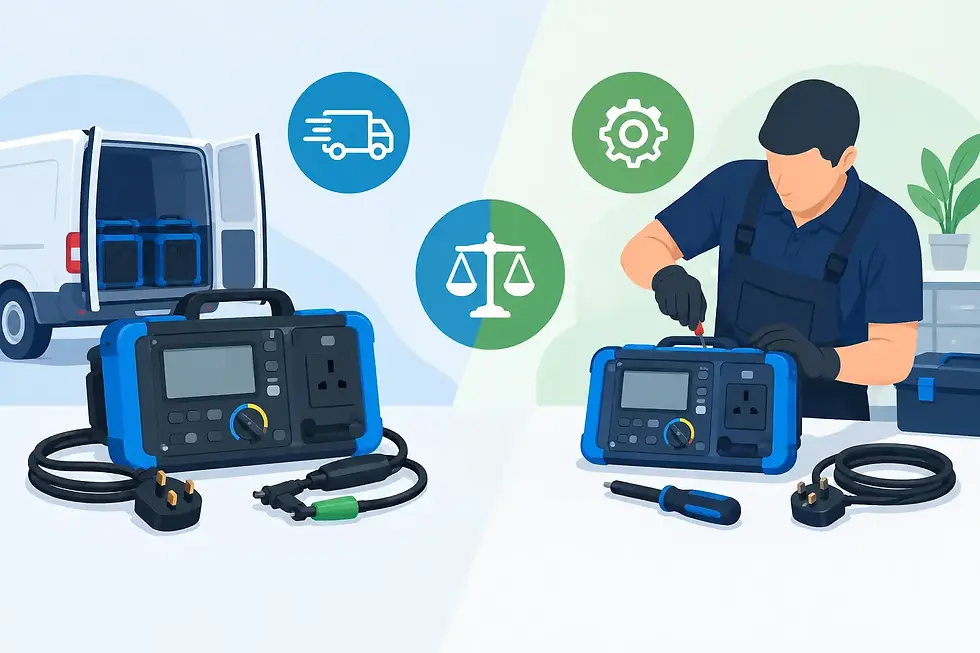
Healthcare practices need more than a quick pass through the building. Look for a provider that can work around patient care, explain results plainly and supply complete documentation. Confirm that the tester is qualified, insured and experienced in working in professional premises.
It is also worth asking how the provider handles specialist or sensitive equipment, whether branded labels can be used, and how renewal reminders are managed. These details reduce the administration that tends to fall to an already busy practice manager.
For practices in Basingstoke, Reading, Fleet, Farnborough and surrounding areas, Pax Animi PAT Testing offers flexible appointments, clear reporting and a straightforward service designed to fit around normal operations. A free quotation based on the likely number and type of appliances helps a practice budget without guesswork.
A well-run testing programme is one less thing to chase when the practice is busy. Keep an up-to-date equipment list, encourage staff to report visible damage and arrange testing at a time that protects your appointment schedule. That small amount of planning supports safer working conditions for everyone who walks through the door.
Comments