
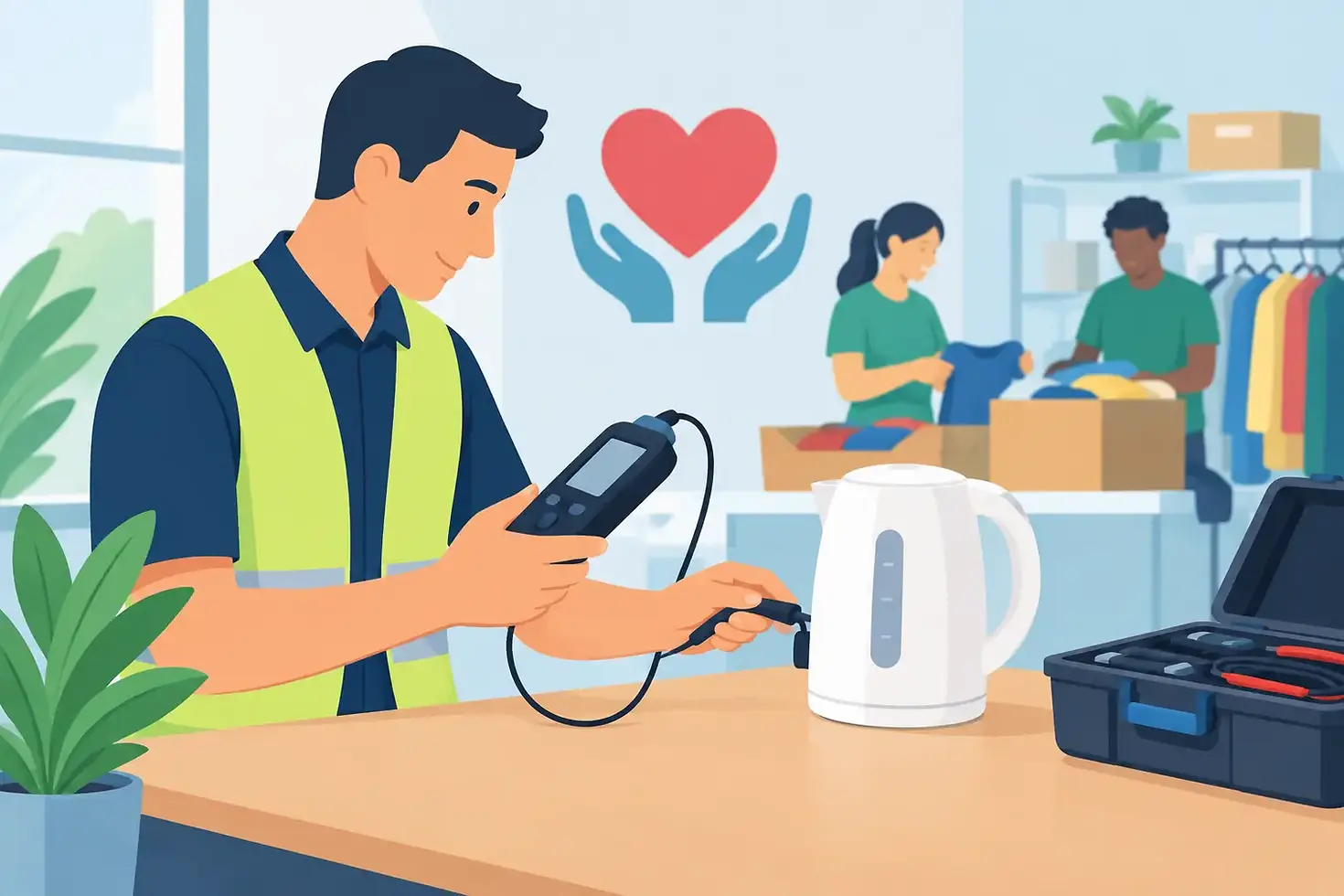
PAT Testing for Charities Made Straightforward

A charity’s electrical equipment often has a busy and varied life. Laptops move between staff and volunteers, donated kettles arrive without paperwork, extension leads support fundraising events, and equipment may be used across shops, offices and community venues. PAT testing for charities provides a practical way to check that portable electrical items are safe to use and that the charity has clear evidence of its safety arrangements.
The aim is not to create unnecessary administration or take useful equipment out of service for longer than needed. It is to identify faults before they cause harm, keep sensible records, and give trustees, managers and staff confidence that electrical safety is being managed properly.
Why charities need a sensible testing plan
There is no single law stating that every portable appliance must receive a PAT test every year. However, charities still have duties to keep electrical equipment safe under the Electricity at Work Regulations. How those duties are met should be based on risk, rather than a one-size-fits-all timetable.
For a small office with modern, double-insulated equipment and careful users, the risk may be relatively low. A busy charity shop, workshop, community kitchen or outreach service can be different. Equipment may be older, heavily used, moved regularly, or handled by many people. Extension leads, chargers, heaters and donated appliances can all need closer attention.
A proper approach usually combines regular visual checks by users with periodic formal inspection and testing by a competent person. This is more useful than simply applying a date label and hoping every item has been assessed in the same way.
PAT testing for charities protects more than equipment
A damaged lead or faulty plug may appear minor, but electrical faults can lead to shocks, burns and fire. Charities are often responsible for people who may not be familiar with the equipment or the premises, including volunteers, service users and visitors. That makes a clear electrical safety process particularly valuable.
Testing also supports the wider responsibilities of trustees and managers. If an incident occurs, being able to show that appliances were identified, assessed and recorded demonstrates that reasonable precautions were taken. Insurers, landlords, funders or venue providers may also ask for evidence of electrical safety checks, especially where the charity operates public-facing premises or events.
Good testing is not simply about pass and fail labels. It gives the charity an opportunity to spot recurring problems, such as worn extension leads in a shop or unsuitable donated equipment in a kitchen, before they become a bigger issue.
Which items should be included?
Portable Appliance Testing applies to electrical equipment that is plugged into a socket or connected by a lead. A site survey can help establish what is present, particularly where equipment has built up over time or is shared between teams.
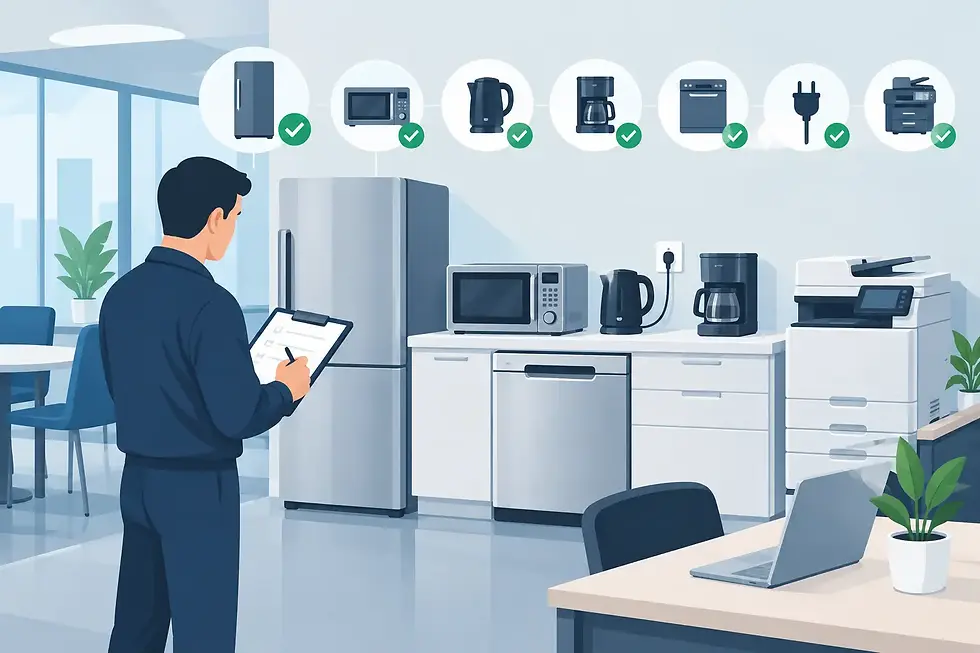
Typical charity equipment includes computers, monitors, printers, phone chargers, kettles, microwaves, fans, heaters, vacuum cleaners, extension leads, desk lamps, power supplies and cleaning equipment. In shops and event spaces, it may also include tills, card machines, display lighting, audio equipment and portable catering appliances.
Items that are hard-wired into the building, such as fixed wiring or a permanently connected hand dryer, fall outside ordinary PAT testing. They may still need inspection or maintenance under other electrical safety arrangements. A competent tester should explain the difference clearly, so there is no confusion about what has and has not been covered.
Donated equipment deserves particular care. A donated appliance may be in good condition, but its history is often unknown. It should be checked before being put into service, rather than being assumed safe because it looks clean or nearly new.
How often should a charity arrange testing?
The right interval depends on the equipment, where it is used and how likely it is to be damaged. Equipment used in a quiet office will not face the same risks as a vacuum cleaner used daily across several premises, or extension leads used at regular events.
A sensible schedule considers factors such as age, movement, frequency of use, who uses the item, and whether it operates in a demanding environment. Equipment used outdoors, in kitchens, workshops or busy retail areas may need more frequent checks than low-use office items.
It also makes sense to test at key points outside the usual cycle. New and donated equipment should be checked before use where appropriate. Any item that has been dropped, damaged, repaired, exposed to water or reported as faulty should be removed from use and assessed. A failed item should not return to service until it has been repaired and retested, or safely disposed of.
Rather than selecting a testing frequency from a generic online table, ask for a recommendation based on your premises and equipment. This gives the charity a proportionate plan that is easier to maintain and defend.
What a well-run visit should look like
For a charity, convenience matters. Testing should fit around opening hours, service delivery and volunteer availability. Out-of-hours appointments can be especially helpful for charity shops, community spaces and offices that cannot easily stop work during the day.
Before the visit, it helps to identify each location, nominate a contact and let staff know what will happen. Appliances should be accessible where possible, and personal or essential equipment can be scheduled at a convenient time. There is rarely a need for the whole organisation to stop operating.
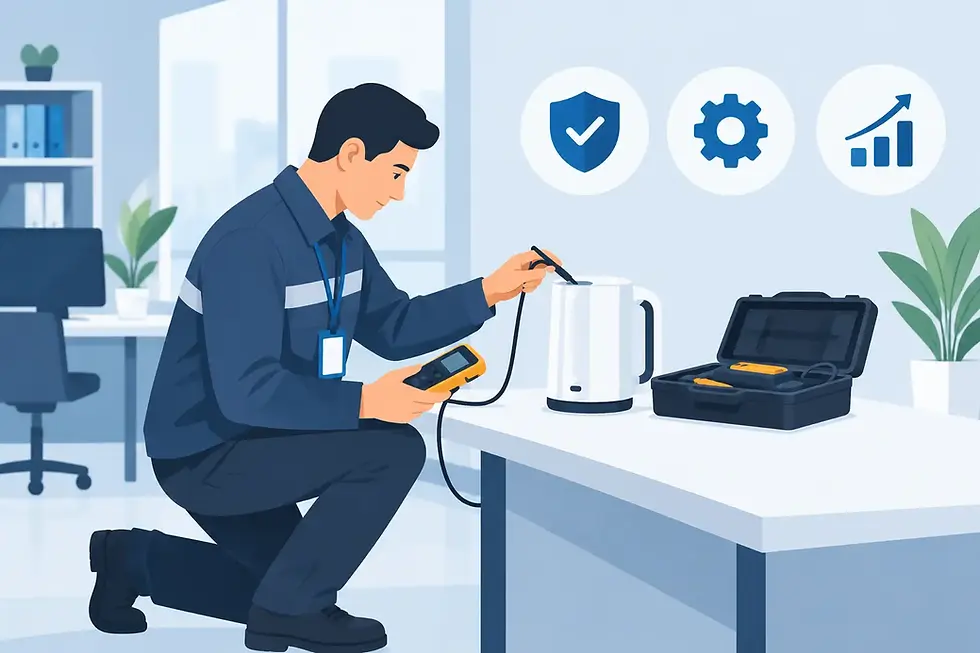
During testing, each appliance is visually inspected and tested with suitable equipment where required. Passed items receive an identification label, while failed items are clearly marked and explained to the responsible person. The technician should raise urgent faults promptly, not leave them buried in a report at the end of the day.
Afterwards, the charity should receive clear documentation rather than a confusing spreadsheet full of unexplained codes. A useful report identifies the appliance, its location, test result, any observations and the recommended retest date. A certificate and asset register provide a practical record for internal files, insurance queries and audits.
Keeping records without creating extra work
A simple asset record is often enough when it is kept up to date. It should show what was tested, where it belongs, its result and when it is due for review. Branded labels make it easier for staff and volunteers to see which equipment has been checked, although the label is only part of the record.
For charities operating from several locations, consistency is particularly helpful. Use the same naming system for rooms and equipment types, and make sure a responsible person knows what to do with new purchases and donations. Renewal reminders can then be planned around quieter periods, funding cycles or annual premises reviews.
Encourage staff and volunteers to report damaged plugs, loose cables, heat, unusual noises or intermittent operation straight away. Formal testing does not replace day-to-day care. Most visible faults are found between scheduled visits, when someone notices that an item is no longer safe to use.
Choosing a PAT testing provider
Price matters for every charity, but the cheapest quotation is not always the best value if it produces incomplete records or disrupts the day. Look for a qualified, insured provider who can explain the process in plain English and provide proper reporting after the work is complete.
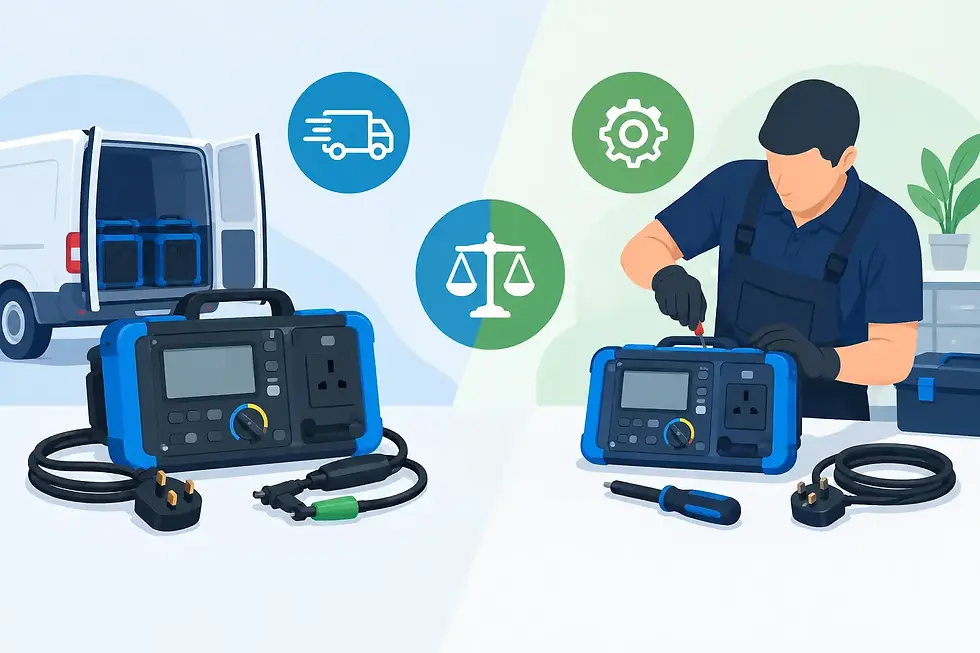
It is worth asking whether the provider can work around your operating hours, test across more than one site, label appliances clearly and advise on failed items. A clear quotation should explain what is included and avoid unexpected charges. For organisations in Basingstoke and the surrounding area, a local provider can also make follow-up visits and future testing easier to arrange.
Pax Animi PAT Testing takes a straightforward, practical approach: qualified testing, clear certification and jargon-free reports designed to make records easier to manage.
Electrical safety need not become another difficult charity administration task. With a proportionate schedule, clear records and a testing service that works around the people you support, it becomes a quiet but valuable part of running a safe organisation.
Comments