

Jargon Free PAT Reports: What You Need to Know

A PAT test is only useful if you can understand what happened afterwards. Jargon-free PAT reports give business owners, office managers and facilities teams a clear record of which appliances were checked, which passed, which need attention and what to do next. That means less time interpreting technical codes and more confidence that your electrical equipment records are in order.
For a busy workplace, the report should make safety administration easier, not create another job for someone to chase. Clear wording matters whether you are preparing for an insurance query, an internal review, a school inspection or a landlord’s records check.
What are jargon-free PAT reports?
A jargon-free report explains Portable Appliance Testing results in plain English while still providing the technical detail needed for a proper compliance record. It should identify each item tested, show its result and make clear whether any action is needed.
Some testing reports rely heavily on abbreviations, test codes and readings with little explanation. Those readings have their place, particularly where a competent person needs to review them, but they should not be the only information you receive. A clear report translates the result into practical terms.
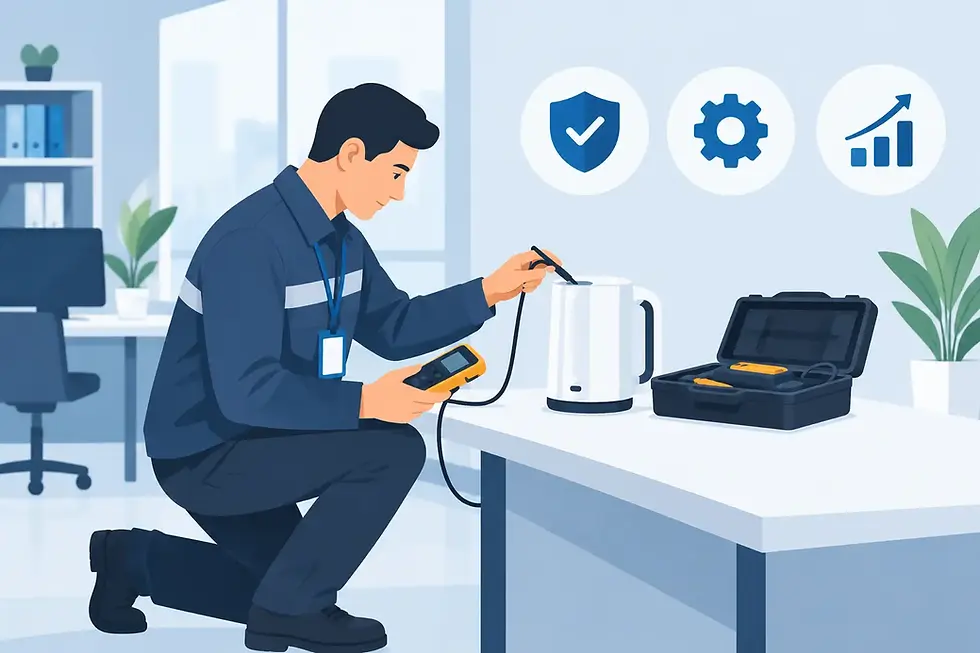
For example, instead of simply recording a failed code, the report should tell you that a kettle has failed a visual inspection because its flex is damaged, that it has been removed from use, and that it should be repaired or replaced before being used again. There should be no uncertainty over the next step.
Why clear PAT reporting matters
PAT testing is part of a wider duty to maintain electrical equipment safely. The exact approach depends on the equipment, how it is used and the environment it is used in. A rarely moved desk lamp in a low-risk office does not present the same level of risk as power tools in a workshop, extension leads in a busy community hall or equipment used in a healthcare setting.
That is why a simple pass or fail figure is not always enough. The person responsible for the premises needs records that help them make sensible decisions. Clear reports can show what has been tested, where it is located, when it was tested and whether there is an item requiring immediate action.
They are also useful when responsibilities change. If an office manager, site lead or trustee moves on, an organised report allows the next person to understand the current position without searching through old emails or trying to decode labels around the building.
Useful records for audits and insurance
There is no single legal rule stating that every portable appliance must receive PAT testing every year. However, employers, landlords and duty holders must take reasonable steps to keep electrical equipment safe. A documented inspection and testing programme is often an effective way to demonstrate that those steps are being taken.
A well-presented report supports that process. It gives you evidence of testing, identifies exceptions and helps show that failed equipment was dealt with. For insurance records and audits, the strongest paperwork is not the most complicated paperwork. It is the paperwork that is complete, dated and easy to follow.
What a clear PAT report should include
A useful report should begin with the basics: your organisation or site name, the testing date and the details of the competent technician or provider. It should then provide an asset list that lets you recognise each appliance without guesswork.
In practice, this normally means a description of the item, its location, a unique asset number, its test result and the next recommended test date. If an appliance fails, the reason should be stated in clear language. Where relevant, the report may also include the test readings and inspection details behind that outcome.
The certificate and the detailed report are related but not identical. A certificate confirms that testing has been completed at a particular site or for a particular client. The detailed asset report is where you can find individual appliances and their results. Keeping both together gives you a stronger, more useful record.
The appliance label should match the report. Branded labels with an asset number and pass or fail status make it easier for staff to identify tested equipment, while the report provides the fuller record behind the label.
Understanding pass, fail and advisory results
A pass result means the appliance met the inspection and test requirements applied at the time of testing. It does not mean the item can be used indefinitely without checks. Cables can be damaged after testing, plugs can become loose and an appliance may become unsuitable if its use changes. Staff should still report damage, overheating, unusual smells or other concerns straight away.
A fail result should be direct and unambiguous. The item should not be used until it has been repaired, retested or replaced. A professional tester will normally label failed equipment clearly and explain the issue to the responsible person before leaving site.
An advisory is different. It may highlight a condition that does not currently cause a failure but deserves monitoring, such as equipment placed in an area where its lead is likely to be damaged. Advisories are helpful when they are specific. Vague notes create worry without helping anyone act.
Clear reports reduce disruption
The practical value of good reporting is often felt after the technician has left. If equipment has failed, your team should be able to see immediately what needs replacing and where it is located. If everything has passed, you should be able to file the certificate and report without further administration.
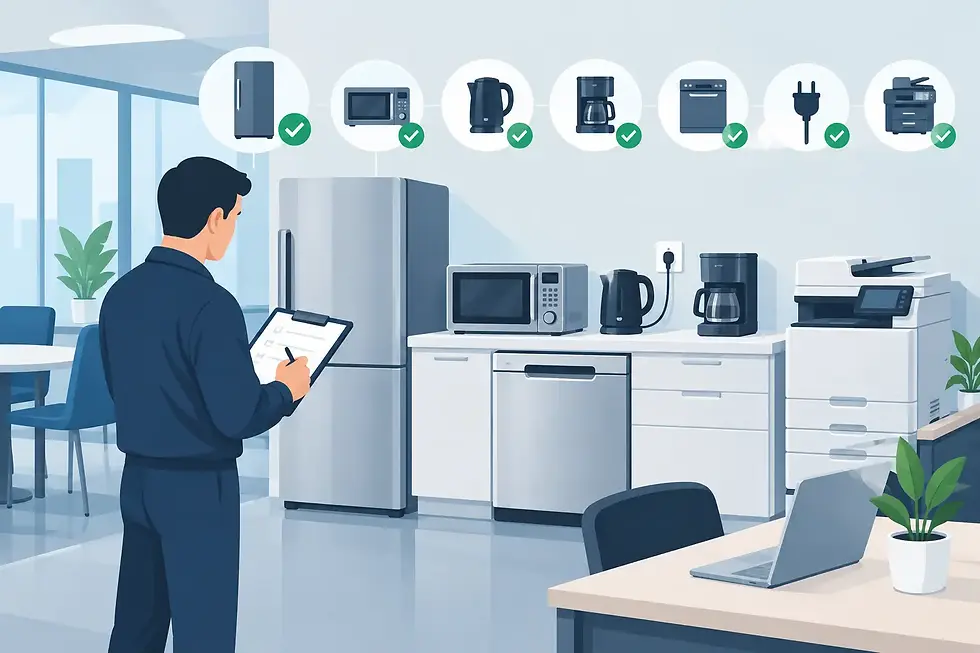
This is particularly useful for organisations with several rooms, shared workspaces or a mixture of office, kitchen and specialist equipment. Clear location details prevent time being wasted trying to identify which “extension lead” or “monitor” is referred to in the report.
For businesses around Basingstoke, Reading, Fleet and Farnborough, flexible out-of-hours testing can further reduce disruption. Testing can be arranged around staff, customers, classes or normal operating hours, then followed by reporting that does not require technical interpretation.
Questions worth asking your PAT provider
Before booking, ask how results will be supplied and whether the report includes a full asset register, certificate and clear failed-item information. It is also sensible to ask how failed appliances are labelled, whether locations are recorded, and how renewal reminders are managed.
Price matters, but the cheapest visit is not always the best value if the paperwork leaves you unable to find items or explain results later. Equally, not every site needs an overly complex report with pages of unexplained figures. The right level of detail depends on your organisation, equipment and record-keeping needs.
At Pax Animi PAT Testing, the aim is to provide qualified testing with clear, usable reporting, so clients can keep their records current without adding unnecessary technical complexity.
Keep reports useful between test dates
Store your certificate and asset report somewhere the responsible person can access them easily. If equipment is moved to another site, disposed of or replaced, update your internal records so the next testing visit starts with an accurate list. It is also worth making staff aware that a pass label does not replace day-to-day care.
Most importantly, treat a PAT report as a working safety record rather than paperwork to file and forget. When the results are written in plain English, it becomes much easier to act promptly, keep equipment under control and show that electrical safety is being managed responsibly.
Comments