

Workplace Appliance Safety Documentation Guide

A failed kettle is easy to replace. A missing record showing how workplace equipment was checked is harder to explain after an incident, an insurance query or a safety audit. This workplace appliance safety documentation guide sets out the records that help businesses demonstrate a sensible, organised approach to electrical safety without creating unnecessary paperwork.
For most organisations, the aim is not to build a filing cabinet full of certificates. It is to know what equipment is in use, what condition it is in, what action has been taken, and when it should be reviewed again. Clear documentation turns PAT testing from a one-off task into a practical part of managing your premises.
Why appliance safety records matter
Portable Appliance Testing is one element of an employer's wider duty to maintain electrical equipment safely. A test label can show that an item passed on a particular date, but the supporting report provides the fuller picture. It identifies the appliance, records the checks carried out and shows any faults or remedial action.
This is useful when a staff member asks whether a particular extension lead is safe, when equipment is moved between rooms, or when an insurer asks for evidence of maintenance. It also helps facilities and office managers avoid retesting the same items unnecessarily while missing others altogether.
Good records are particularly valuable in shared or public-facing settings. Schools, healthcare practices, charities, rented offices and workshops often have equipment brought in by staff, contractors or visitors. Without a clear register, those items can easily fall outside normal safety checks.
What your workplace appliance safety documentation should include
The right level of detail depends on the size of the site, the type of equipment and how it is used. A small office may need a straightforward report and certificate. A busy workshop, school or multi-site organisation will usually benefit from a more detailed asset register. In either case, the documentation should answer a few clear questions.
An appliance inventory
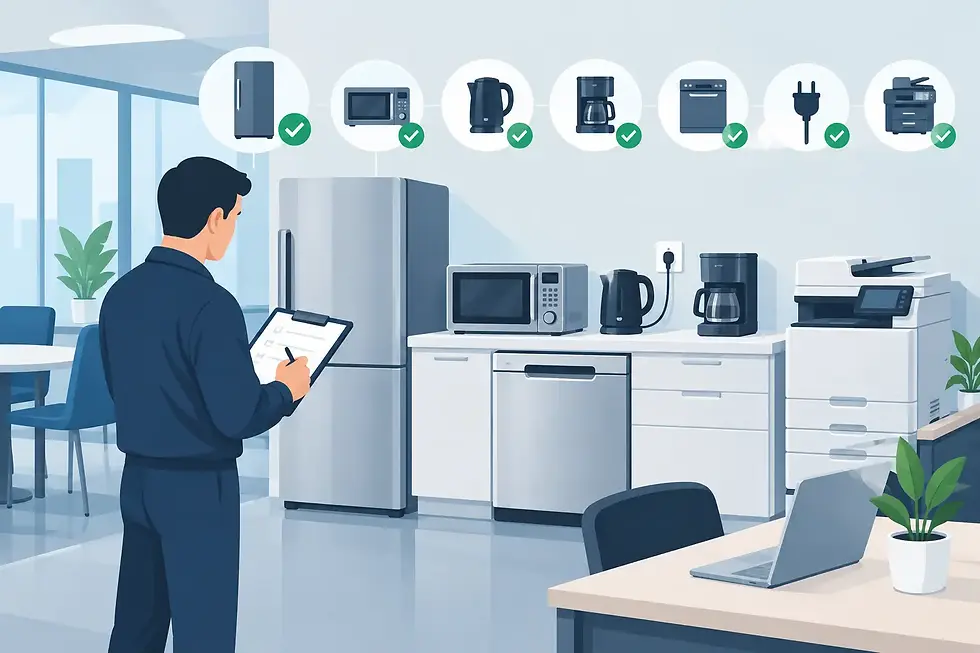
Start with a record of portable and movable electrical equipment that belongs to the organisation. This can include computers, monitors, chargers, printers, kettles, microwaves, fans, extension leads, power adaptors and cleaning equipment. In higher-risk environments, portable tools and specialist equipment need particular attention.
Each entry should have enough information to identify the item without doubt. That usually means its description, make or model where available, location, and a unique asset or test number. Branded appliance labels make this process much easier, especially where several similar items are in use.
Do not assume every item with a plug is automatically included in the same way. Fixed equipment may require a different inspection and maintenance route. Equipment owned by employees or brought in by contractors should also be covered by a clear local policy, rather than left to guesswork.
The PAT test report and certificate
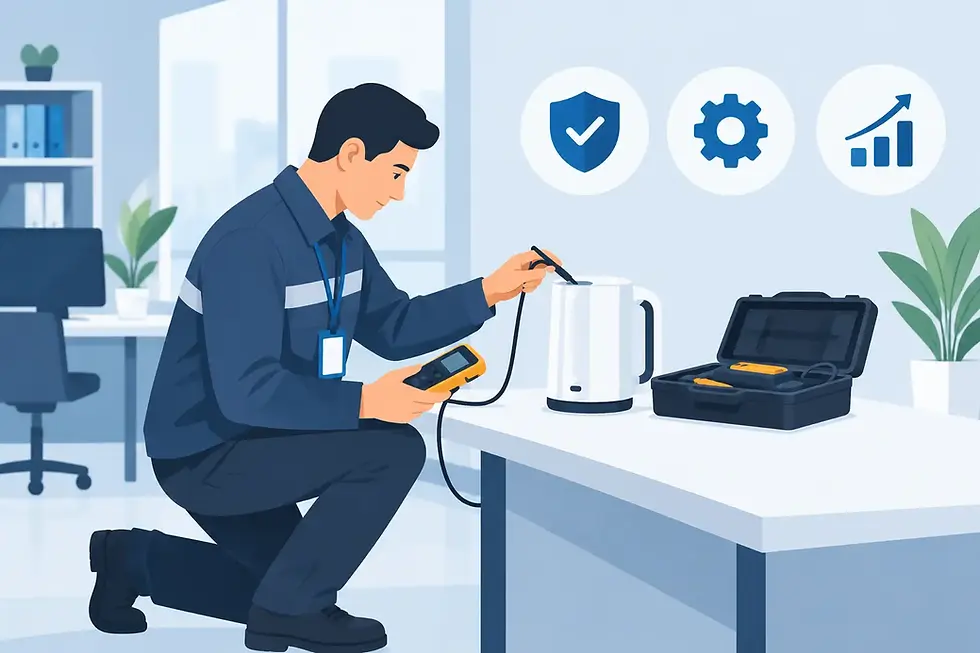
A professional PAT testing report is the core document for portable appliances. It should show which items were tested, their results, the date of testing, the technician or company carrying out the work, and the next review date or recommended retest period.
A certificate supports the report by confirming that testing has been completed. Keep both. A certificate on its own may confirm a visit took place, but it is the itemised report that lets you find the result for a specific appliance and see whether anything failed.
Reports should be written in plain language wherever possible. You should be able to see at a glance which appliances passed, which failed, and which need attention. Technical readings can be useful, but they should not obscure the practical action required.
Failed-item and remedial-action records
A failed appliance should be removed from use promptly, clearly marked and recorded. The record should state what was wrong, what happened next, and whether the item was repaired, retested, replaced or disposed of.
This matters because a fail result is not the end of the process. If a damaged extension lead remains in a cupboard and later returns to use, the original report offers little protection. A simple log showing that the item was quarantined and dealt with demonstrates proper follow-through.
Where an appliance is repaired, retain the repair details and the retest result. This gives you a clean trail from fault to safe return to service.
Visual inspection and user-check records
Not every safety check needs a formal electrical test. Regular visual checks are often the quickest way to spot damage such as cracked plugs, frayed cables, loose connections, scorch marks or overloaded extension leads.
For lower-risk office equipment, a short inspection record may be enough between formal testing visits. In a workshop or other demanding environment, more frequent checks may be appropriate. The key is to make the checks realistic: a detailed weekly form that nobody completes is less useful than a short, consistent process that staff understand.
Staff should know to report damaged equipment rather than attempting temporary fixes. A record of basic awareness guidance or induction information can be useful, particularly for organisations with frequent staff turnover.
How long should you keep PAT testing records?
There is no single retention period that suits every business. As a sensible working approach, retain current reports and certificates for all equipment still in service, along with the previous testing cycle where practical. Keep failed-item records and evidence of remedial work long enough to show how issues were managed.
Your insurance requirements, internal health and safety policy, client contracts and the nature of your premises may justify keeping records for longer. If you operate in a regulated setting or manage several sites, it is worth agreeing a retention period with the person responsible for compliance.
Digital storage is usually the simplest option. Save reports in a secure, clearly named folder using the site and test date, and make sure more than one authorised person can access them. A printed certificate pinned to a noticeboard is useful for visibility, but it should not be the only copy.
Set testing intervals using risk, not habit
Many businesses ask how often appliances must be PAT tested. There is no universal annual rule for every item. The appropriate frequency depends on the equipment, its environment, how often it is moved, who uses it and the likelihood of damage.
For example, a desktop monitor in a quiet office generally faces less wear than a power tool used daily on site. A kettle in a staff kitchen may need a different review schedule from a rarely moved printer. New equipment still needs an initial visual check and should be added to the register, even if formal testing is not immediately necessary.
A qualified tester can recommend sensible intervals based on risk and provide renewal reminders, so inspections do not become an urgent scramble before an audit or policy deadline. The best schedule is one your organisation can maintain consistently.
Make the paperwork easy to use
Documentation only helps when it is easy to find and act on. Give one person overall responsibility for the register, but avoid making the process dependent on one inbox or one laptop. Agree where reports are stored, who updates the failed-item log, and how managers are told about urgent issues.
If your premises are busy during normal hours, out-of-hours testing can reduce disruption while keeping records current. Ask for a report format that works for your team, whether that means an itemised spreadsheet-style record, clearly labelled appliances or a straightforward certificate for your compliance file.
Before a testing visit, gather loose appliances from drawers, meeting rooms and storage areas, and let staff know what will be checked. This improves coverage and prevents equipment being missed simply because it was out of sight.
For businesses in Basingstoke and the surrounding area, Pax Animi PAT Testing provides qualified testing with clear, jargon-free reports and certification. That means you have documentation that is useful day to day, not just paperwork to file away.
A well-kept appliance record gives the person responsible for your premises a simple answer when questions arise: the equipment was identified, checked, any faults were dealt with, and the next review is already planned.
Comments