

How to Organise Appliance Testing Records

When an insurer, auditor or colleague asks for a PAT testing certificate, the last thing you need is to search through old emails, filing cabinets and shared folders. Knowing how to organise appliance testing records gives you a clear view of what has been checked, what failed, what has been replaced and when action is due next.
For most businesses, this does not need to be complicated. A well-kept appliance testing record is simply a practical safety tool: it helps you demonstrate that equipment is being managed responsibly and prevents small jobs from becoming avoidable risks.
Start with one complete appliance register
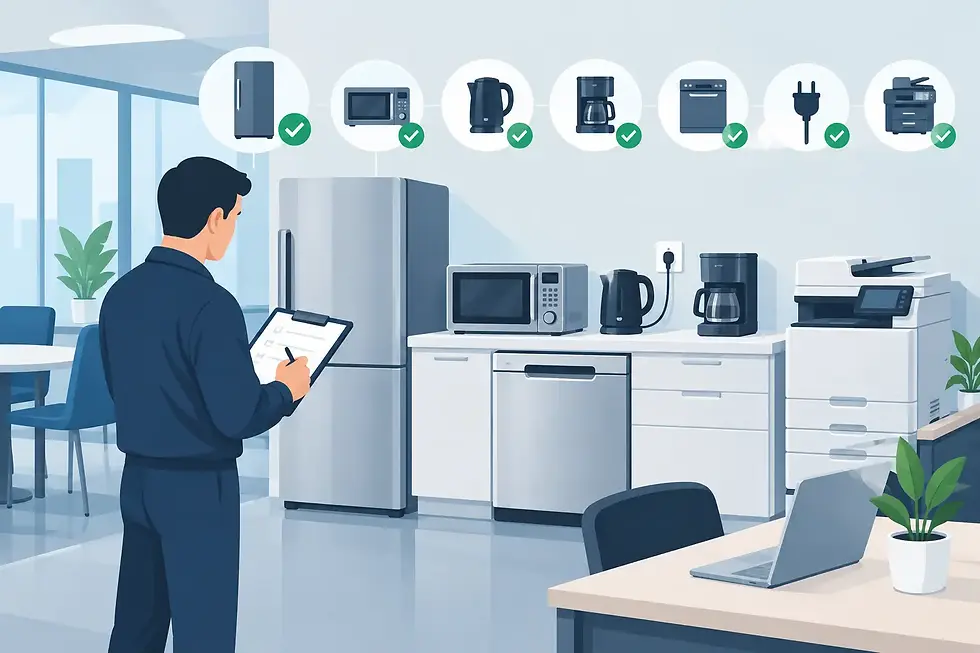
Your appliance register is the foundation of your records. It is a single list of portable electrical equipment used at your premises, whether it belongs to the business, an employee, a tenant or a contractor.
Include everyday items that are easy to overlook, such as monitors, extension leads, chargers, kettles, fans, printers, microwave ovens, power tools and cleaning equipment. In a workshop, school, care setting or rental property, there may be a larger number of appliances and a greater need to identify who is responsible for them.
For each item, record its description, make or model where useful, serial number if available, location, asset number and owner. The location matters more than many people realise. “Office printer” is less useful than “First-floor finance office, beside workstation 14” when someone needs to find the item later.
A spreadsheet can work well for a small site, provided one person is responsible for keeping it current. Larger organisations may prefer an asset management system, especially where equipment moves regularly between rooms, buildings or staff. The best format is the one your team will actually maintain.
Give every tested item a clear identity
A PAT test label should make it easy to match an appliance to its record. Labels normally show a pass or fail result, the test date, a retest date or interval, and an appliance identification number. That number should also appear on the appliance register and the test report.
Avoid relying only on an item’s description. Two identical black laptop chargers can be impossible to distinguish once they are unplugged and moved. A unique reference number removes the guesswork.
If equipment cannot be labelled directly, such as certain leads, multiway adaptors or items where a label will not adhere safely, record this clearly. The appliance can still be identified by its asset number, serial number, location and description. What matters is that the physical item and the report can be reliably connected.
Keep failed appliances separate from the rest
A failed item needs more than a note in a report. It should be removed from use, clearly marked and either repaired by a competent person, replaced or disposed of. Record the action taken and the date.
This is particularly useful if a failure is queried later. Your records should show not only that the defect was found, but that it was dealt with. If an appliance is repaired and retested, retain both the original fail record and the subsequent pass result. This gives a clear history rather than making a problem appear to have vanished.
Store reports, certificates and remedial actions together
After testing, keep the full test report and certificate in one central place. This could be a secure digital compliance folder with controlled access, backed up through your usual business systems. A paper file can be helpful as a secondary copy, but paper alone is harder to search, share and protect from loss.
Use a consistent folder structure. For example, group records by site and testing year, then keep the certificate, detailed appliance report and any follow-up repair information together. Use sensible file names, such as “Reading Office PAT Report 2026” rather than “New report final version 2”.
It is also worth keeping a short record of the testing provider, test date and person responsible for arranging the visit. A good PAT testing report should be clear enough for a non-technical manager to understand. If it contains unexplained codes or unclear results, ask for them to be explained in plain English before filing it away.
Do not confuse a certificate with the full appliance list. The certificate confirms that testing was carried out, while the detailed report shows each item tested and its individual result. Both are useful, particularly when investigating a failed item or preparing for an audit.
Make retesting part of your normal diary process
There is no single legal rule stating that every portable appliance must be PAT tested annually. The right inspection and testing interval depends on the equipment, its environment, how often it is used and the level of risk.
For example, a low-use desktop computer in an office is not exposed to the same wear as an extension lead on a busy building site or a power tool in a workshop. Visual checks may be appropriate between formal tests, while higher-risk equipment may need more frequent attention.
Your records should therefore include the next review date or retest date recommended for each item or group of items. Put the next testing period in a shared calendar well before it is due. A reminder three months ahead gives you time to arrange a convenient appointment, identify new equipment and avoid disruption during busy periods.
Where possible, tie this into existing safety routines. An office manager may review the register during an annual facilities check. A landlord might check it before a new tenancy. A school or charity may schedule it outside term time or during quieter periods. The process is easier when it follows work your organisation already does.
Record new, moved and removed appliances
Testing records quickly lose their value if they only reflect the equipment that existed on the day the technician visited. New purchases, office moves, donated appliances and replacements all need to be added to the register.
Set a simple rule for staff: new electrical equipment should be recorded before it is put into general use. Depending on the item and your risk assessment, it may need a visual inspection or testing before use, particularly if it is second-hand, repaired, hired or brought in from elsewhere.
Likewise, remove disposed or permanently withdrawn equipment from the active register, but do not delete its history. Mark it as removed, with the date and reason. This avoids confusion during future testing while preserving a useful audit trail.
For organisations with hybrid staff, equipment taken home deserves consideration too. A company laptop and charger may be used away from the main workplace for most of the year. Whether it is included in your formal testing programme depends on your risk assessment and internal procedures, but it should not simply disappear from the record because it is off site.
Decide who owns the record-keeping
The most organised system fails when nobody is clearly responsible for it. Name a person or role to maintain the register, arrange testing, file reports and follow up failures. In a small business this may be the owner or office manager; in a larger site it may sit with facilities, estates or health and safety.
That person does not need to test appliances themselves. Their job is to make sure the information is complete and actions are closed off. Give them access to the reports, a straightforward way to update the register and authority to remove unsafe items from service.
Staff also have a part to play. Encourage them to report damaged plugs, frayed cables, loose sockets, overheating and equipment that has been dropped or exposed to water. Formal testing is one element of electrical safety, not a substitute for day-to-day care and visual checks.
Use your records when questions arise
Well-organised records save time when an issue occurs. If an employee reports a damaged lead, you can check whether it has been tested, where it is normally used and whether similar items need attention. If an insurer asks for evidence of electrical safety controls, you have a certificate, appliance schedule and corrective actions ready to provide.
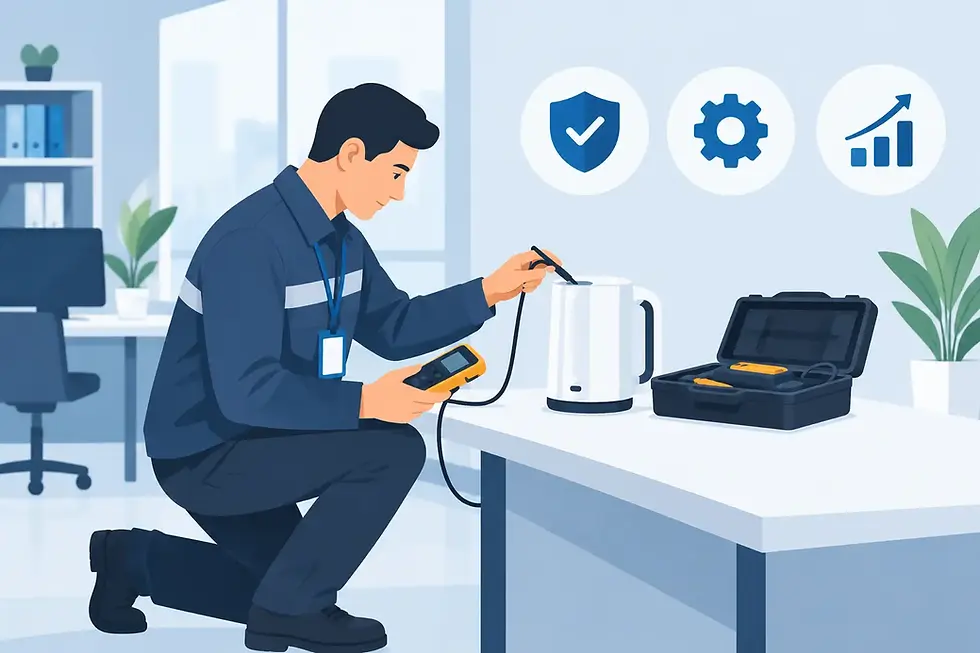
They also make future testing quicker. A qualified technician can work from an accurate appliance list, identify missing or new equipment and produce reports that match your site. That means less time spent walking around trying to establish what belongs where.
For businesses around Basingstoke, Reading, Fleet and Farnborough, a local PAT testing provider can also help make this administrative side easier by supplying clear reports, branded labels and renewal reminders. The aim is not to create more paperwork. It is to keep the paperwork useful.
A tidy record is reassurance you can use. Keep it current, make responsibilities clear and treat failures as actions to complete rather than documents to file. When the next test date, audit or insurance query arrives, you will be ready without the last-minute scramble.
Comments