
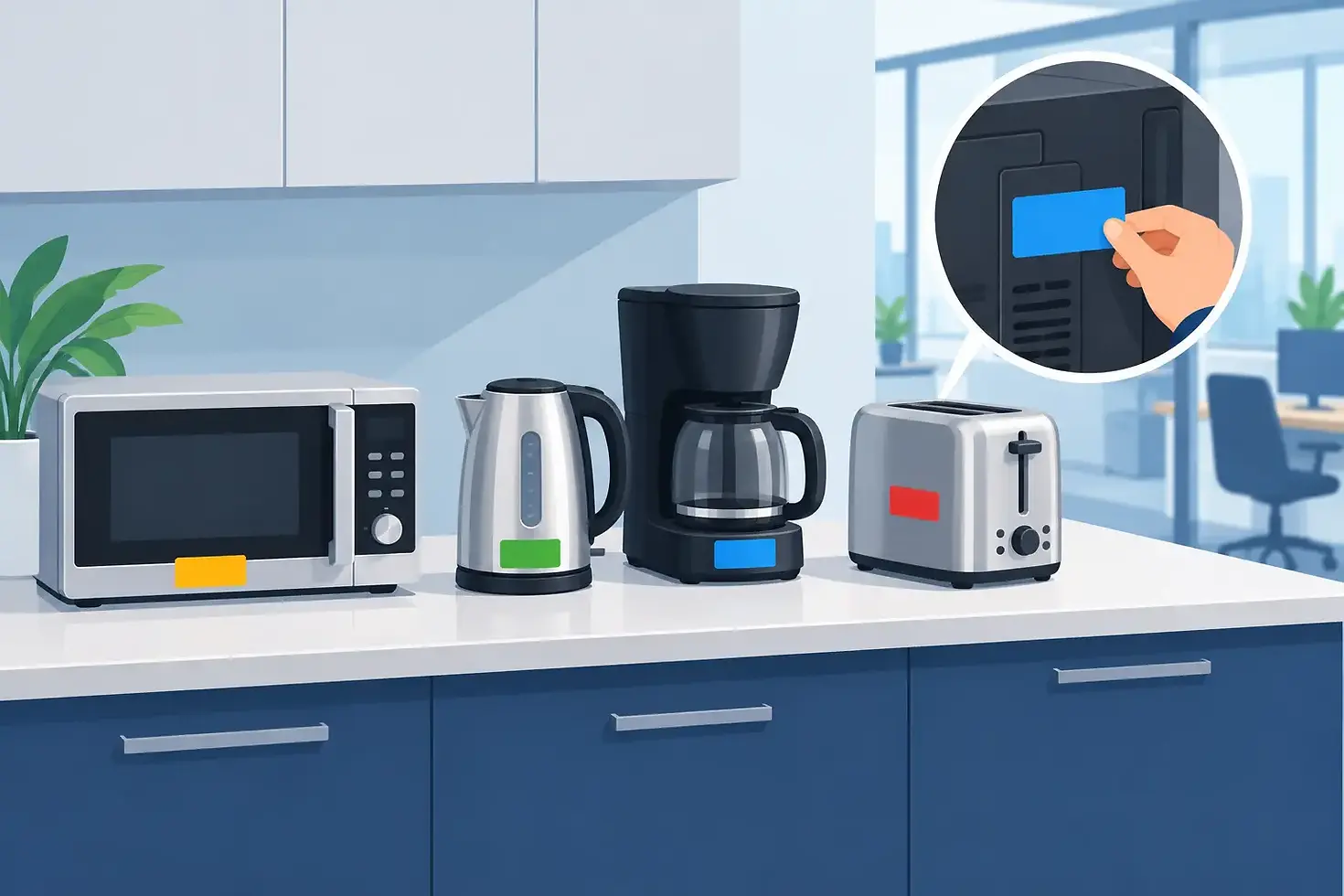
Best Practice for Appliance Labelling at Work

A small label on a kettle, extension lead or computer monitor can prevent a surprisingly large amount of uncertainty. When staff can see whether an appliance has been checked, identify equipment quickly and know what to do with a failed item, electrical safety becomes easier to manage. The best practice for appliance labelling is not simply to apply a sticker after PAT testing. It is to use clear, durable labels alongside accurate records and sensible procedures.
For busy workplaces, this removes guesswork without creating extra administration. It also gives managers, landlords and facilities teams a clearer view of the equipment they are responsible for.
What appliance labels should achieve
An appliance test label should make the status of an item clear at a glance. A member of staff should be able to tell whether the equipment has passed inspection and testing, when it was checked, and when it is due to be reviewed again. If an item has failed, the label should make it clear that it must not be used.
Labels are useful, but they are not a substitute for the wider testing record. A sticker can fall off, become damaged or be replaced when an appliance is repaired. The test report or asset register remains the reliable record of what was tested, its result, any observations and its unique identification number.
This distinction matters during an audit, after an incident, or when an item cannot be located. A well-managed labelling system lets you trace the appliance back to the report rather than relying on a faded sticker alone.
Best practice for appliance labelling after PAT testing
The right label depends on the appliance and its environment, but the principle is simple: it should be legible, securely attached and relevant to the item it identifies. It should not cover safety warnings, ventilation slots, manufacturer information, controls or electrical ratings.
For most portable appliances, a clear pass label will include the appliance or asset ID, the test date and the recommended next test date. It may also show the tester's details or company name. The asset ID is particularly helpful where there are several similar items, such as monitors, chargers, drills or desk fans.
A pass label means the appliance met the checks carried out on the day of testing. It does not mean that it can be used regardless of later damage. Staff should still report loose plugs, split cables, burn marks, unusual heat or intermittent operation as soon as they notice them.
Make failed equipment impossible to miss
Failed items need a different approach. They should carry a clear, highly visible fail or danger label stating that the appliance must not be used. More importantly, remove the item from service straight away. A warning label is not enough if the item remains plugged in at a shared workstation or is left in a communal kitchen.
Where practical, unplug the appliance, isolate it and arrange repair or replacement. The failure should also be recorded, including the reason for failure and what happened next. This creates a sensible audit trail and helps prevent failed equipment finding its way back into use.
Use labels that suit the environment
Paper labels may be perfectly suitable in a clean office, but workshops, kitchens, schools and healthcare settings can require tougher materials and more careful positioning. Heat, cleaning products, dust, moisture and regular handling can quickly make a standard label unreadable.
In these settings, durable labels or tags may be more appropriate. For equipment that cannot be labelled directly, such as a small adaptor, a multi-part charger or an item where a label would affect safe use, the asset register must be especially clear. Some organisations use a labelled cable tag, an equipment case or a location-based record instead. The best option depends on whether the method remains unambiguous and practical for the people using the equipment.
Keep asset numbers consistent
A unique appliance number is the link between the physical item and the test report. Without it, records become difficult to rely on. “Black extension lead in meeting room” may be understandable today, but it is not a dependable long-term identifier when equipment is moved, replaced or duplicated.
Use one asset number per item and keep that number consistent from one testing visit to the next. If an appliance is repaired, its record should show the repair and any retest carried out before it returns to service. If it is disposed of, mark it as removed from the register rather than leaving a missing item with no explanation.
For larger sites, it helps to record the appliance type, make, model, location and user area as well as the asset number. That does not need to be complicated. The aim is to make each item easy to find, not to create paperwork for its own sake.
Choose sensible retest dates
One of the most common misconceptions is that every appliance must be PAT tested annually. There is no single annual legal requirement that applies to every workplace item. The appropriate inspection and testing frequency should be based on risk.
A laptop charger used carefully by one office-based employee is exposed to different risks from a power tool used daily in a workshop or an extension lead used at events. The type of equipment, how often it is moved, who uses it, the working environment and its previous condition all affect how often it should be checked.
Your label can show the next recommended test date, but it should reflect this risk-based approach. Setting every item to the same date may be convenient, yet it can mean unnecessary testing in low-risk areas and insufficient attention where equipment receives heavy use. A qualified PAT testing provider can help set practical intervals that suit your premises and equipment.
Build labelling into everyday checks
A good labelling system works best when staff understand its purpose. They do not need technical training to play their part. A short instruction is usually enough: only use equipment that appears safe, do not use an item marked as failed, and report visible damage promptly.
Routine visual checks between formal testing visits are valuable. Cables trapped under furniture, overloaded adaptors, cracked plug tops and damaged extension leads are often visible before a test date is due. Labels help identify the item, while staff observations help catch changes in condition.
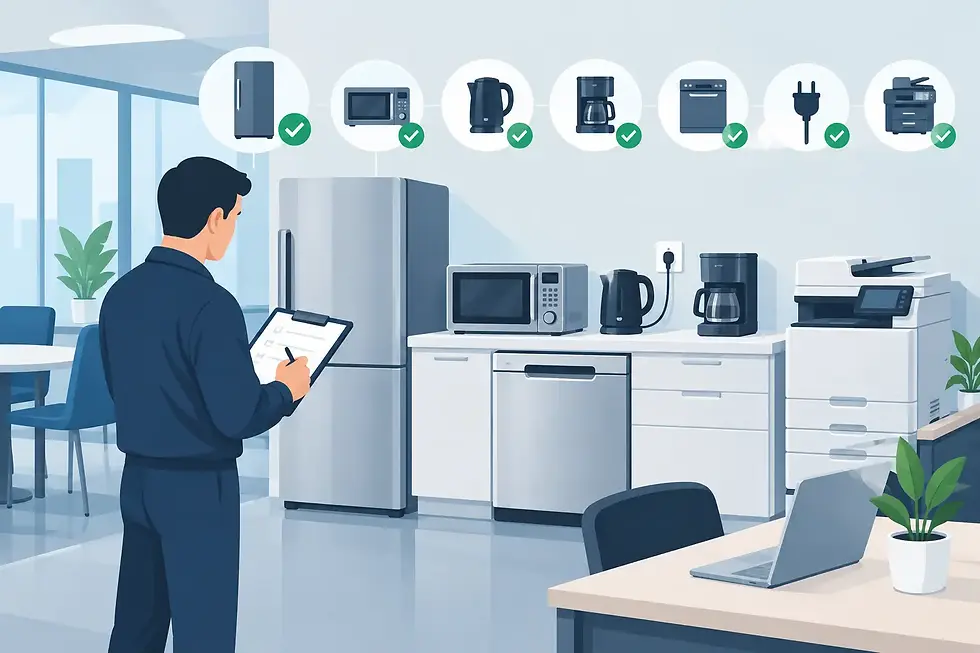
It is also worth having a simple process for new equipment. Before it is issued or placed into use, add it to the asset register and apply an identifier where appropriate. This avoids the familiar problem of equipment appearing at the next testing visit with no known history or location.
Avoid labels becoming a false reassurance
The clearest label in the world cannot make an unsafe appliance safe. It only records the result at a particular point in time. Equipment can be damaged the following day, especially items that travel between rooms, vehicles or sites.
Avoid using labels to imply that staff should ignore obvious faults until the next scheduled test. If a cable is damaged, a plug is loose, an appliance gives off a burning smell or a user receives an electric shock, stop using it immediately and arrange for it to be checked.
Likewise, do not cover an old label with a new one without checking that the asset number is correct. Multiple overlapping stickers create confusion and can make reports harder to follow. Remove or clearly supersede outdated labels where this can be done without damaging the appliance.
What to expect from a professional testing visit
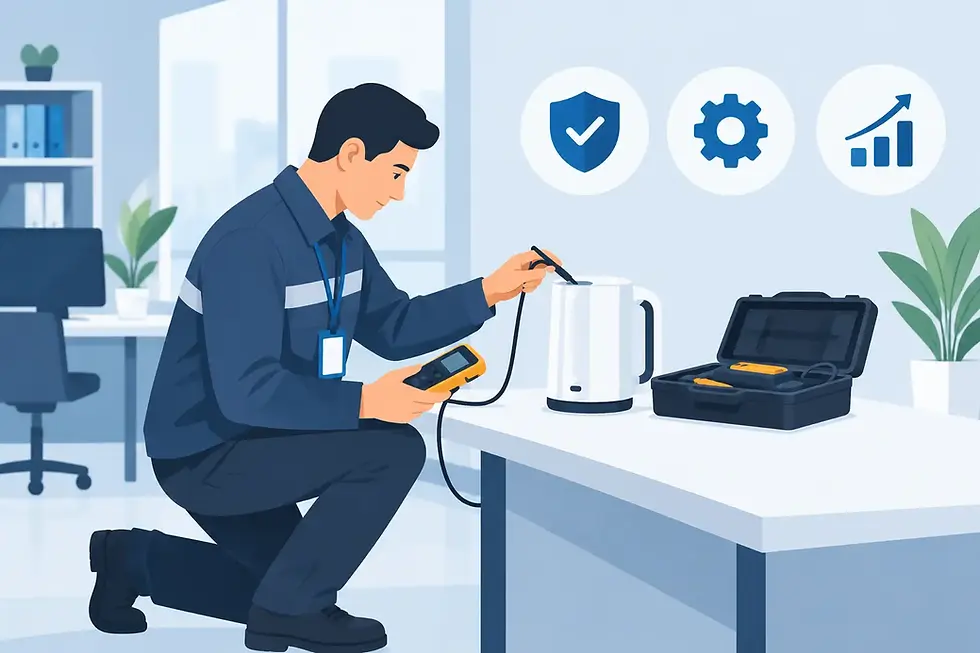
A professional PAT testing service should provide more than a collection of stickers. You should receive clear results that identify each appliance, its pass or fail status, the checks completed and any action required. Certificates and reports should be easy to keep for insurance records, internal procedures and future audits.
For organisations with limited downtime, practical delivery matters too. Testing can often be planned around your working day, with out-of-hours appointments where needed. At Pax Animi PAT Testing, clear branded appliance labels and jargon-free reporting help make it straightforward to see what has been tested and what needs attention.
A label is most useful when it answers a simple question quickly: can this item be used, and can we prove how it was checked? Keep the label clear, keep the record accurate, and act promptly when equipment no longer looks safe.
Comments