
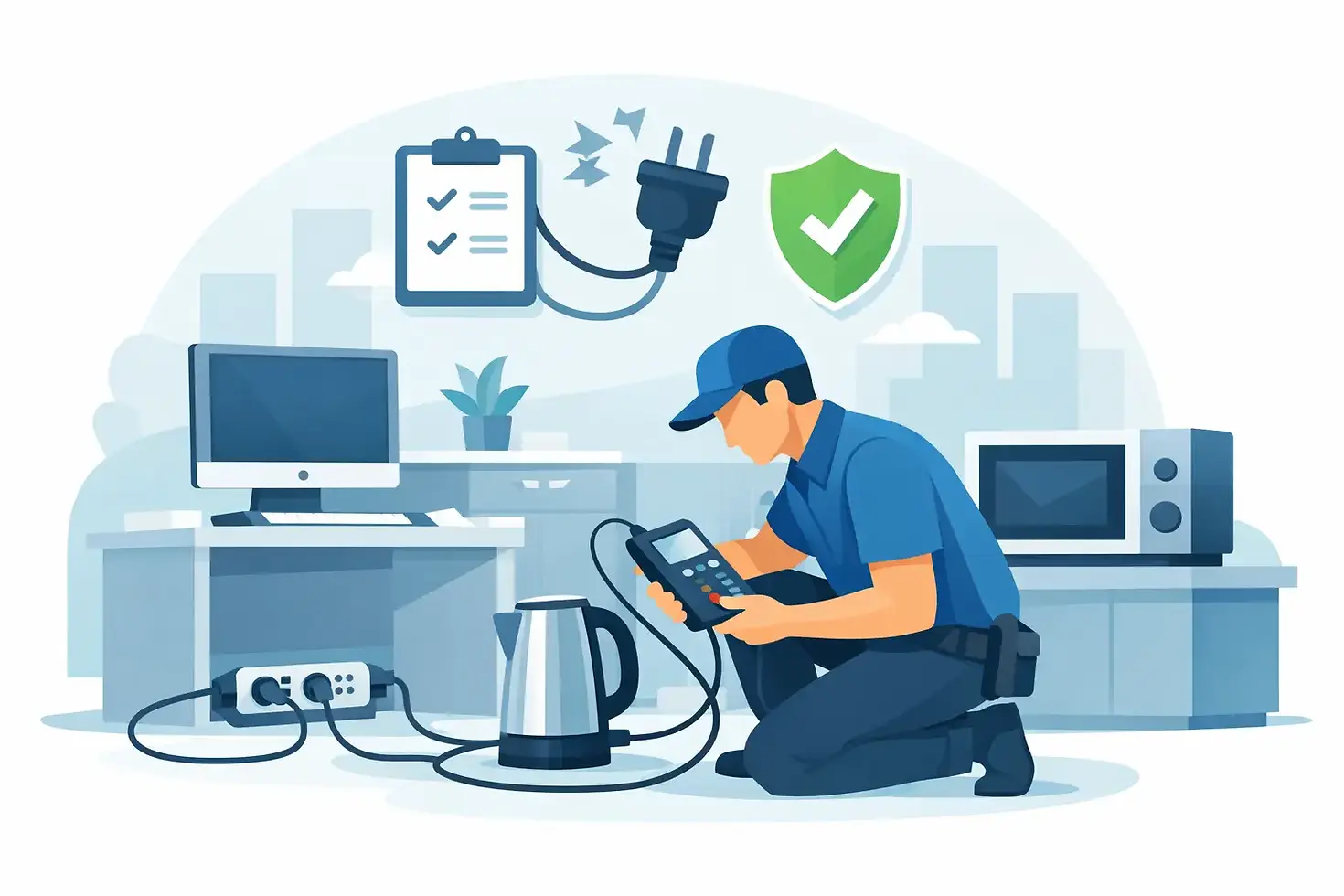
Aldershot Appliance Testing for Businesses

A failed kettle in a staff kitchen may seem minor, but a damaged lead, loose plug or faulty extension block can create a real risk of electric shock or fire. Aldershot appliance testing gives organisations a practical way to identify issues with portable electrical equipment before they become a safety incident, an insurance query or a difficult audit question.
For busy workplaces, the aim is not to add another administrative task. It is to keep equipment safe, records clear and disruption low. A well-planned Portable Appliance Testing (PAT) visit should fit around the way your organisation operates, whether that means an early morning office appointment, testing between school sessions or an out-of-hours visit for a customer-facing business.
What Aldershot appliance testing covers
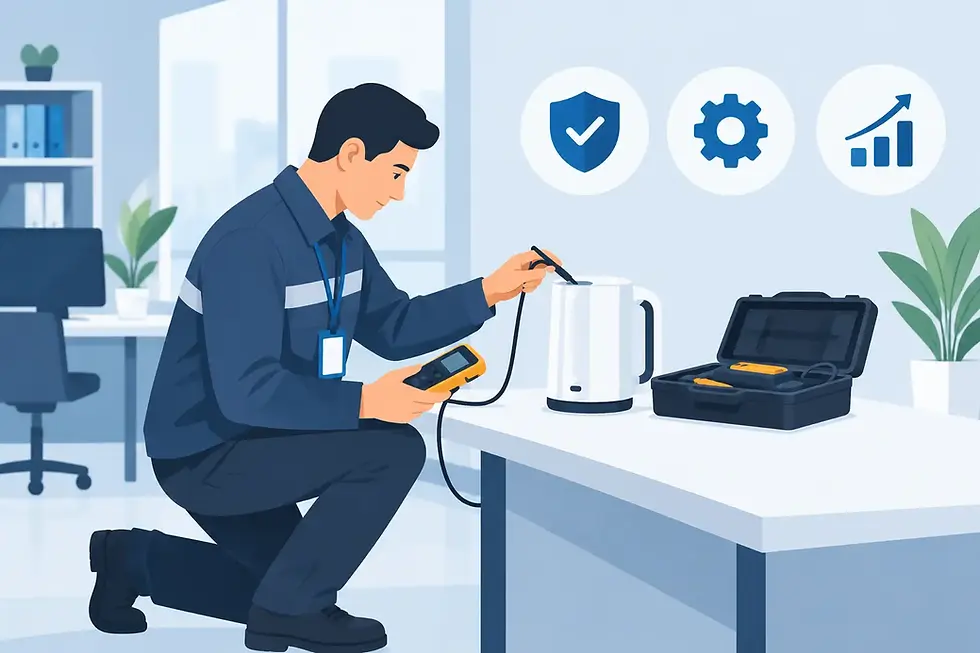
PAT testing is a combination of visual inspection and electrical checks on portable equipment and the leads that supply it. It applies to items that can be moved, plugged in or connected to a socket, including office equipment, kitchen appliances, chargers, extension leads and workshop tools.
The visual inspection matters more than many people realise. A competent tester will look for cracked plugs, exposed wiring, damaged casings, signs of overheating, unsuitable adaptors and cables trapped under furniture or doors. These are common faults that may be visible before any test instrument is used.
Electrical tests then help check whether the equipment is safe to continue using. The exact tests depend on the appliance type and its construction. Some modern or sensitive equipment needs an appropriate testing method rather than a one-size-fits-all approach. This is one reason it is worth using an experienced provider who can explain what has been checked in plain English.
Typical items tested during a visit include:
Computers, monitors, printers and desk fans
Kettles, microwaves, coffee machines and fridges
Extension leads, multiway adaptors and cable reels
Power tools, chargers and portable heaters
Hairdryers, lamps and other equipment used in public-facing spaces
Fixed electrical installations, such as consumer units, sockets and building wiring, are not covered by PAT testing. They require a separate electrical installation inspection. The distinction is useful because both areas form part of a sensible workplace safety plan, but they are different services.
Is PAT testing a legal requirement?
There is no single law that says every appliance must be PAT tested annually. However, employers, landlords and duty holders do have responsibilities to maintain electrical equipment so it is safe to use. PAT testing is an established and practical method of supporting those duties, alongside routine visual checks and sensible record keeping.
How often equipment should be tested depends on the environment, how it is used and the type of item. A low-use computer in a tidy office may need a different inspection interval from a heavily used extension lead in a workshop, community hall or busy healthcare setting. Equipment that is hired out, moved frequently or used by members of the public may also need closer attention.
This risk-based approach avoids both extremes: leaving equipment unchecked for too long, or paying for unnecessary testing simply because a calendar date has arrived. A clear report can help you set appropriate retest dates and show that your decisions are based on the equipment and its working environment.
Keeping disruption to a minimum
The concern for most office managers and facilities teams is straightforward: how can equipment be tested without stopping the day? The answer is preparation and flexible scheduling.
Before the appointment, it helps to identify equipment that is usually stored away, such as spare monitors, event equipment, maintenance tools or appliances in locked cupboards. Let staff know that their desk equipment may need to be switched off briefly. In most cases, individual items can be checked quickly, and a planned route through the premises keeps interruptions manageable.
For organisations that cannot afford daytime disruption, out-of-hours appointments can be a better fit. This is particularly useful for schools, clinics, retail premises, gyms, hospitality venues and businesses with busy reception areas. The best time depends on your operation, not on a standard testing schedule.
A professional tester should also make the process easy to follow on site. Appliances that pass can be labelled clearly, while failed items should be identified so they are not put straight back into use. If a minor issue can be resolved safely, such as replacing an unsuitable fuse where appropriate, it may be dealt with during the visit. More serious faults should be explained clearly, with practical next steps.
The records your organisation needs
The testing itself is only part of the job. Good documentation is what makes the work useful when you need to show your insurer, management team, governing body or auditor that electrical equipment has been considered properly.
After testing, you should receive a report and certificate that records the appliances checked, their results, any failures and the date of testing. Asset details can help you identify exactly which item has been tested, especially where an organisation has several similar devices. Branded appliance labels provide a quick visual reference for staff, but they should support the report rather than replace it.
Jargon-free reporting is particularly valuable when responsibility sits with someone whose role is not electrical maintenance. A school business manager, charity trustee, landlord or office administrator should be able to see what passed, what failed and what needs attention without trying to interpret technical codes.
Keep the certificate and report with your other health and safety records. It is also sensible to retain details of repairs, replacements and equipment removed from service. This creates a clearer record over time and makes future visits quicker to organise.
Choosing a PAT testing provider in Aldershot
Price matters, but the cheapest quote is not always the most useful option if it excludes reporting, certificates, labels or the flexibility needed to avoid downtime. Ask what is included and whether the provider has suitable insurance and the competence to test the equipment you use.
Local availability can make a genuine difference when you have a short deadline, a new site opening or an upcoming inspection. For Aldershot businesses and organisations, choosing a provider that can offer convenient appointments and respond clearly to questions is often more valuable than a generic, high-volume service.
It is also worth asking how failed appliances are handled. You need more than a pass or fail number. You need to know whether the item should be removed from use immediately, whether a simple repair may be possible and how that decision will appear in the report. Clear communication helps prevent unsafe equipment being overlooked after the tester has left.
Pax Animi PAT Testing provides qualified testing with full certification, straightforward reports and appointment options designed around working hours. A free, no-obligation quotation makes it easier to budget before arranging a visit.
A simple way to prepare for testing
You do not need to carry out a technical inspection before the tester arrives. A little organisation, however, can make the appointment faster and more complete. Make sure portable equipment is accessible, identify anything that is usually kept in cupboards or vehicles, and decide who can provide access to locked rooms.
If staff bring electrical items from home, such as mobile phone chargers, desk lamps or heaters, set a clear workplace policy. These items can be easily missed, yet they still form part of the electrical equipment being used on site. The right policy depends on your organisation, but consistency is more useful than an informal arrangement that nobody can explain later.
Between formal testing visits, encourage staff to report damaged cables, loose plugs, scorch marks or equipment that trips a circuit. Taking an item out of use promptly is a simple precaution, and it is far better than waiting for the next scheduled test.
Aldershot appliance testing works best when it becomes a straightforward part of your wider safety routine: equipment is accessible, results are recorded and any concerns are dealt with promptly. That gives your team a safer place to work and gives the person responsible for compliance one less uncertainty to carry.

Comments