

Electrical Safety Compliance Checklist

If you are responsible for a workplace, a rental property, a school, or a charity, an electrical safety compliance checklist is not just paperwork. It is the difference between feeling confident everything is under control and scrambling for records when something goes wrong, an insurer asks questions, or an audit lands with very little notice.
Most organisations do not struggle because they ignore safety. They struggle because electrical compliance gets spread across different people, different sites, and different bits of paperwork. A few appliances are added, someone moves offices, a kettle gets replaced, extension leads appear, and before long nobody is completely sure what has been tested, what needs checking next, or where the latest report is stored.
What an electrical safety compliance checklist should cover
A useful checklist should help you answer three practical questions. What equipment do we have, is it safe to use, and can we prove we have managed it properly?
That means your checklist needs to cover more than the test itself. It should include your equipment register, visual checks, formal inspection and testing where appropriate, record keeping, labelling, and a clear review date. If one of those pieces is missing, compliance becomes harder to manage.
For many businesses, portable appliance testing forms part of that wider process. It is especially relevant where equipment is moved, unplugged, shared between staff, or used in higher-risk environments. Offices, schools, workshops, rented properties, healthcare settings, and community buildings all tend to have a mix of low-risk and higher-risk appliances, so a one-size-fits-all approach rarely works.
Start with a complete equipment register
The first part of any electrical safety compliance checklist is knowing what you actually own or provide for use. That sounds obvious, but it is where many gaps begin.
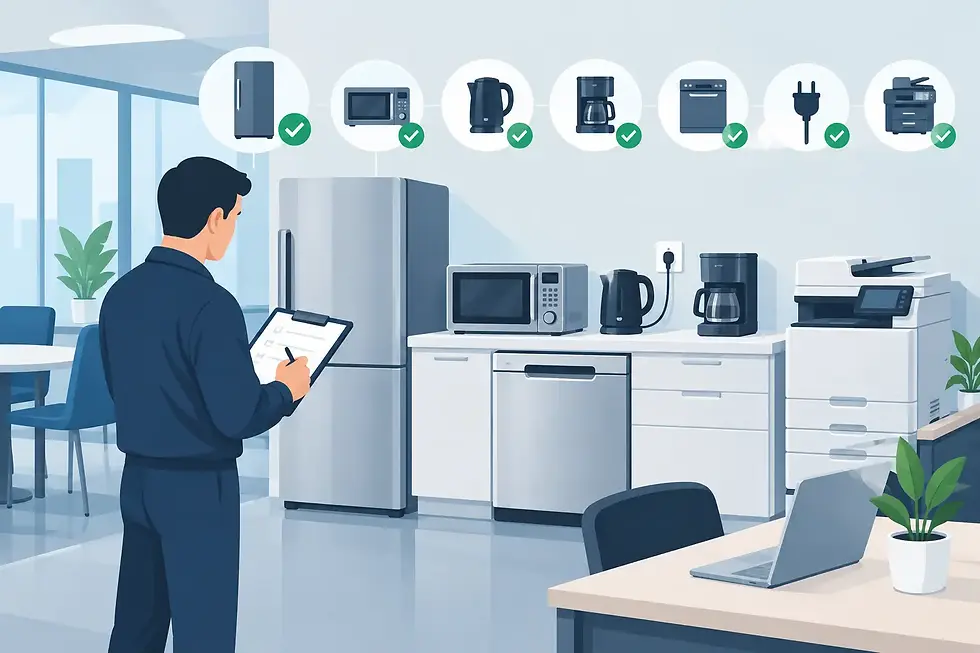
Your register should include portable appliances, chargers, extension leads, desktop equipment, kitchen appliances, cleaning equipment, heaters, fans, and anything else plugged into the mains. If staff bring in their own equipment, that should be addressed in your policy too, because personal devices can create confusion if nobody knows whether they are permitted or checked.
The register does not need to be complicated. What matters is that it is current. Each item should be identifiable, linked to a location if relevant, and easy to match with its inspection history. Branded appliance labelling can make that much easier on larger sites where equipment moves around regularly.
Include routine visual checks
One of the most overlooked parts of compliance is the simple visual check. In many cases, visible damage tells you more than a test result alone.
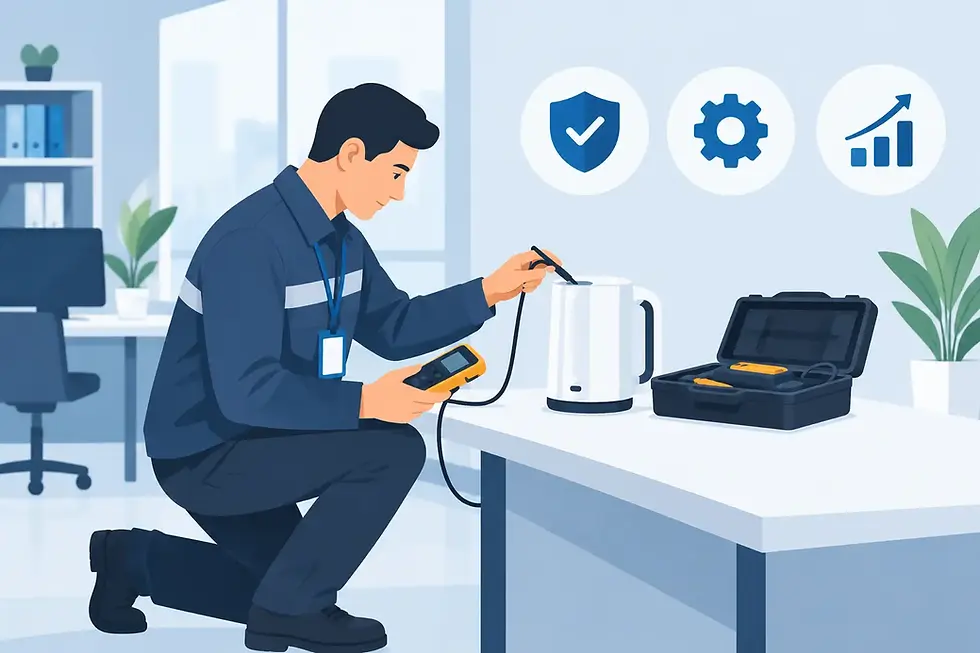
Plugs, cables, casings, sockets and leads should be checked for wear, cracking, overheating, loose connections, bent pins, taped repairs, or signs that the appliance has been misused. Staff should also know what to look for and what to do if they spot a problem. There is little value in having a formal testing programme if damaged equipment stays in use because no one wants to report it.
This is where practical procedures matter. If an item fails a visual inspection, it should be taken out of use straight away, clearly marked, and either repaired by a competent person or disposed of properly. A checklist is only useful if it leads to action.
Decide what needs formal testing and how often
A good electrical safety compliance checklist should never treat every appliance as if it carries the same level of risk. Testing frequency depends on the type of equipment, how often it is used, who uses it, and the environment it is used in.
A computer screen in a tidy office is different from a vacuum cleaner used daily across several rooms. A kettle in a staff kitchen is different from equipment used in a workshop or clinical setting. The law does not usually demand a single fixed PAT testing interval for everything, which means judgement matters.
That is why many organisations prefer to work with a qualified provider who can recommend a sensible testing schedule rather than simply testing every item on the same date every year. It can save time, reduce disruption, and avoid paying for unnecessary repeat work while still keeping standards high.
Keep records that are clear enough for real-world use
A compliance file is not helpful if nobody can understand it. Records should be easy to read, easy to retrieve, and suitable for inspections, insurance queries, internal audits, and health and safety reviews.
At a minimum, your records should show what was inspected, when it was checked, the outcome, any failures identified, and what action was taken. If equipment has been repaired, replaced, or removed from use, that should be reflected too.
Plain-English reporting makes a real difference here. If a report is technically correct but too dense for office staff, site managers, landlords, or administrators to use with confidence, it creates more friction than it removes. Good compliance records should make your life simpler, not harder.
Your electrical safety compliance checklist for everyday use
The most effective checklist is the one your team can actually keep up to date. In practice, it should cover these areas:
Maintain an up-to-date list of all portable electrical equipment.
Identify who is responsible for electrical safety records.
Carry out routine visual checks for damage or wear.
Remove unsafe items from use immediately.
Arrange formal inspection and testing based on risk.
Keep certificates and reports together in one place.
Label equipment clearly so items match the records.
Review new, repaired, moved, or staff-supplied equipment.
Set reminders for retesting and compliance reviews.
Make sure staff know how to report faults quickly.
That may look straightforward, and that is the point. The goal is not to create a complicated document. The goal is to make sure nothing important gets missed.
Common gaps that cause problems
Most compliance issues do not come from one major failure. They come from small gaps that build up over time.
A common example is relying on old reports after equipment has changed. Another is assuming that because one site is in order, every site is in order. We also see problems when extension leads and chargers are left off the asset list, or when failed items are recorded but not followed through to repair or disposal.
There is also the question of timing. If testing has to happen during busy trading hours, in teaching time, or while teams are using critical equipment, compliance can feel disruptive. Flexible appointments, including out-of-hours visits where needed, can make a big difference for organisations that cannot afford downtime.
When to get outside help
Some businesses are comfortable managing the checklist internally and bringing in a specialist just for testing. Others want more support because the admin side is what causes the real headache.
If your records are spread across folders, inboxes, and different members of staff, getting professional help is often the faster option. The right service should not make the process feel more technical. It should make it easier to understand what has been tested, what needs attention, and when the next review is due.
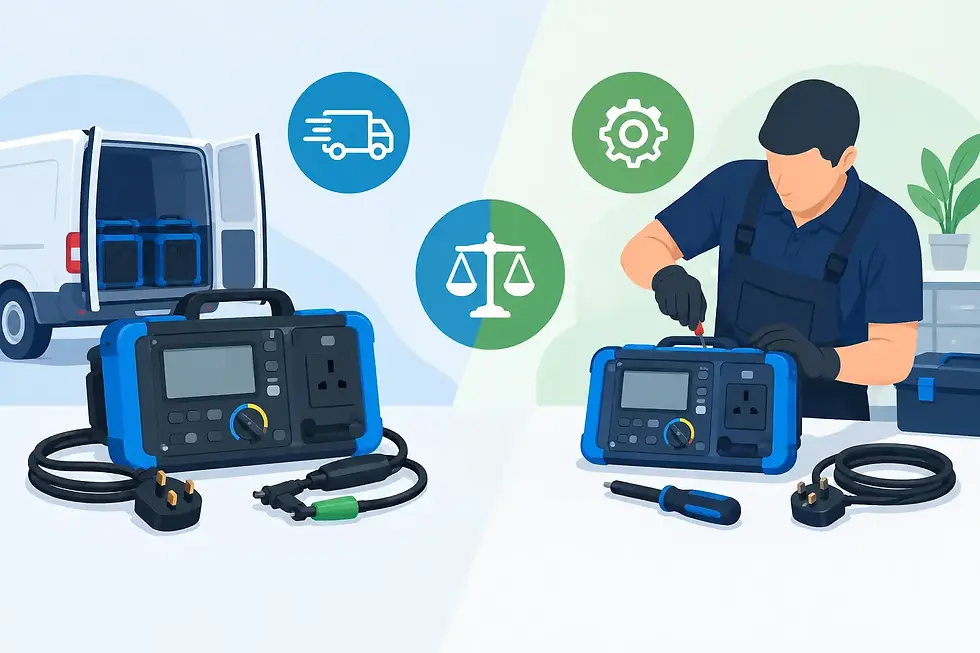
For organisations across Basingstoke and the surrounding area, that often means looking for a provider who can work around your schedule, keep disruption low, and supply clear reporting and certification without jargon. That practical support matters just as much as the test itself.
Electrical safety compliance checklist vs wider legal duties
It is worth being clear about one point. An electrical safety compliance checklist supports compliance, but it is not a substitute for broader health and safety responsibilities.
You may also need fixed wire inspection arrangements, maintenance procedures, risk assessments, staff training, landlord duties, or sector-specific policies depending on your premises and how equipment is used. Portable appliance testing sits within that bigger picture.
That is not a reason to overcomplicate things. It simply means your checklist should fit your setting. A small office needs a different level of control from a workshop, school, or care environment. Good compliance is proportionate, documented, and reviewed regularly.
If your current process feels messy, start with the basics. Create a reliable equipment list, make visual checks part of routine practice, keep your records in one place, and use qualified support where it saves time and reduces uncertainty. Safety is much easier to manage when the process is clear before anyone asks to see the paperwork.
Comments